
Last updated September 22, 2026
Free on-site gate assessment - hinges, posts, and your LiftMaster or Nice gate operator checked before anything is quoted
The assessment is free and the quote is the invoice.

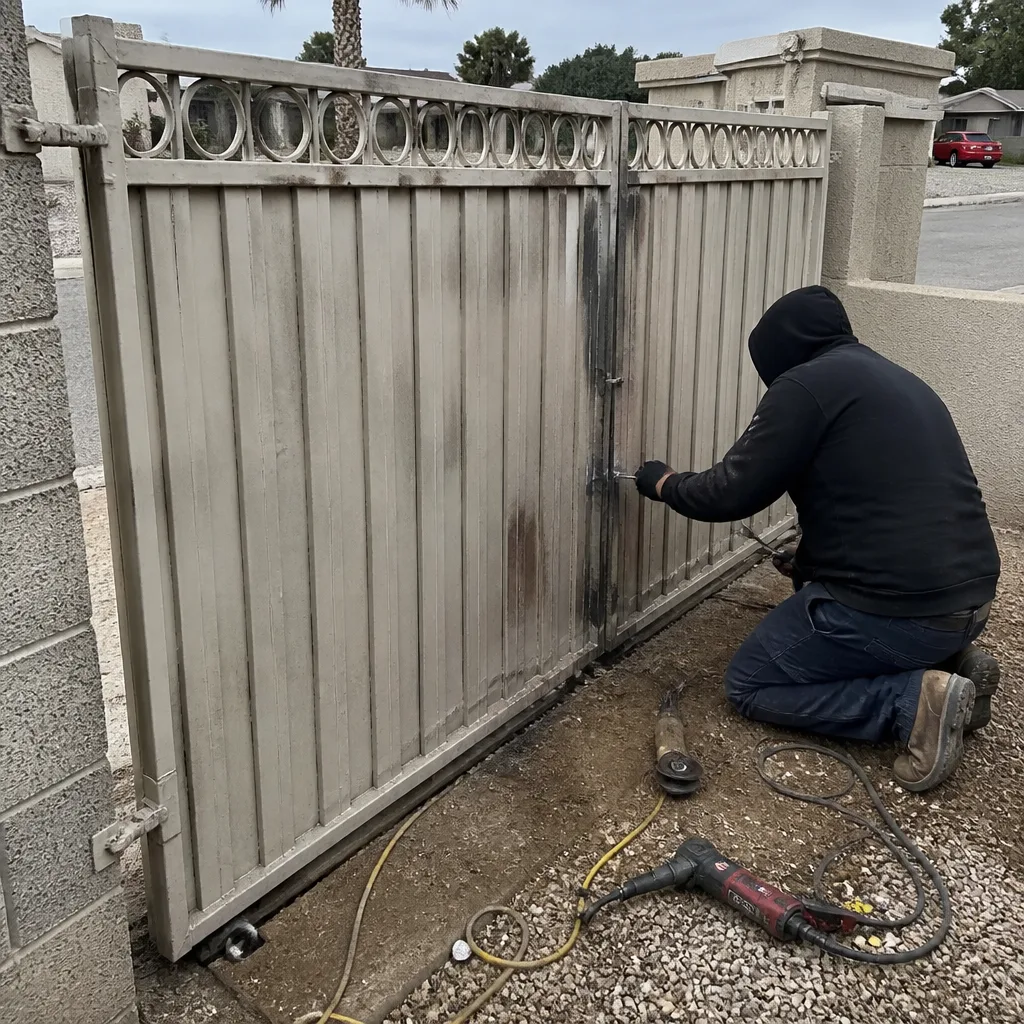 Before
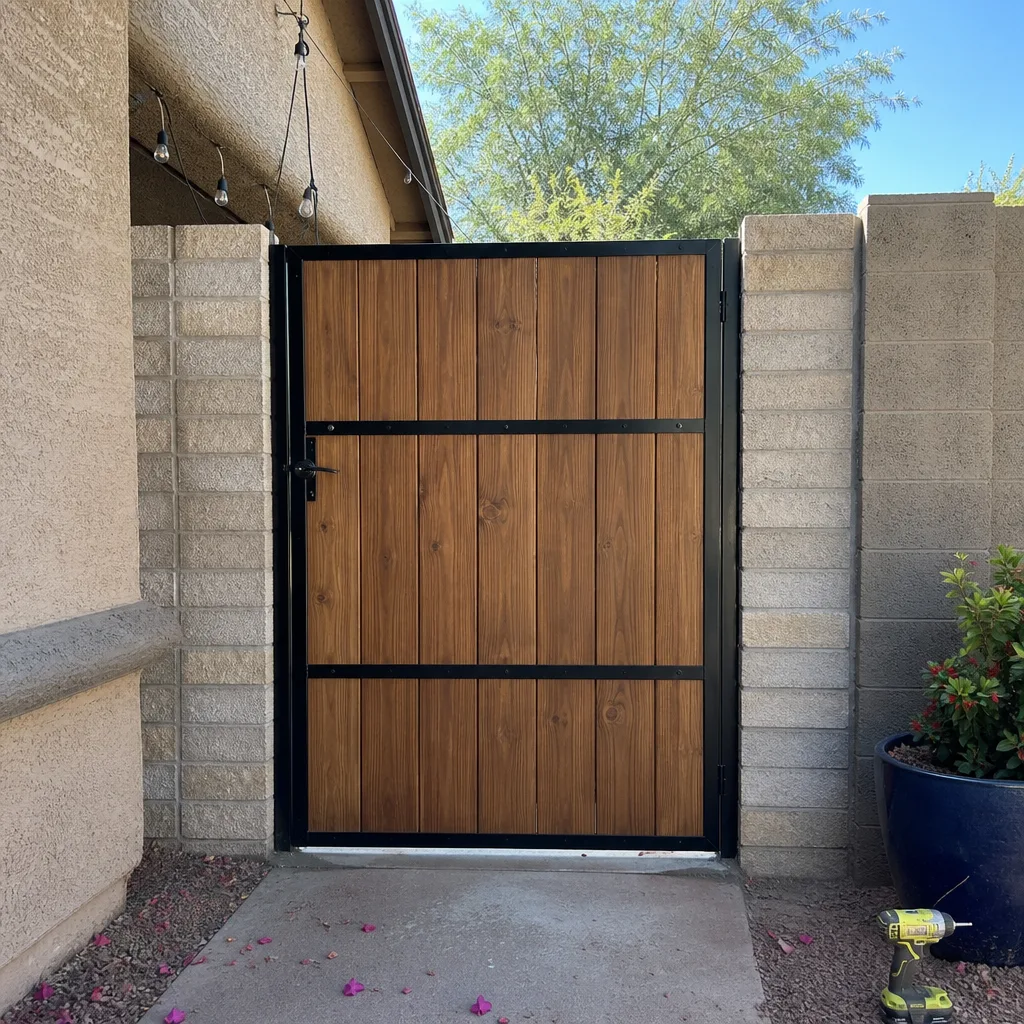 After
After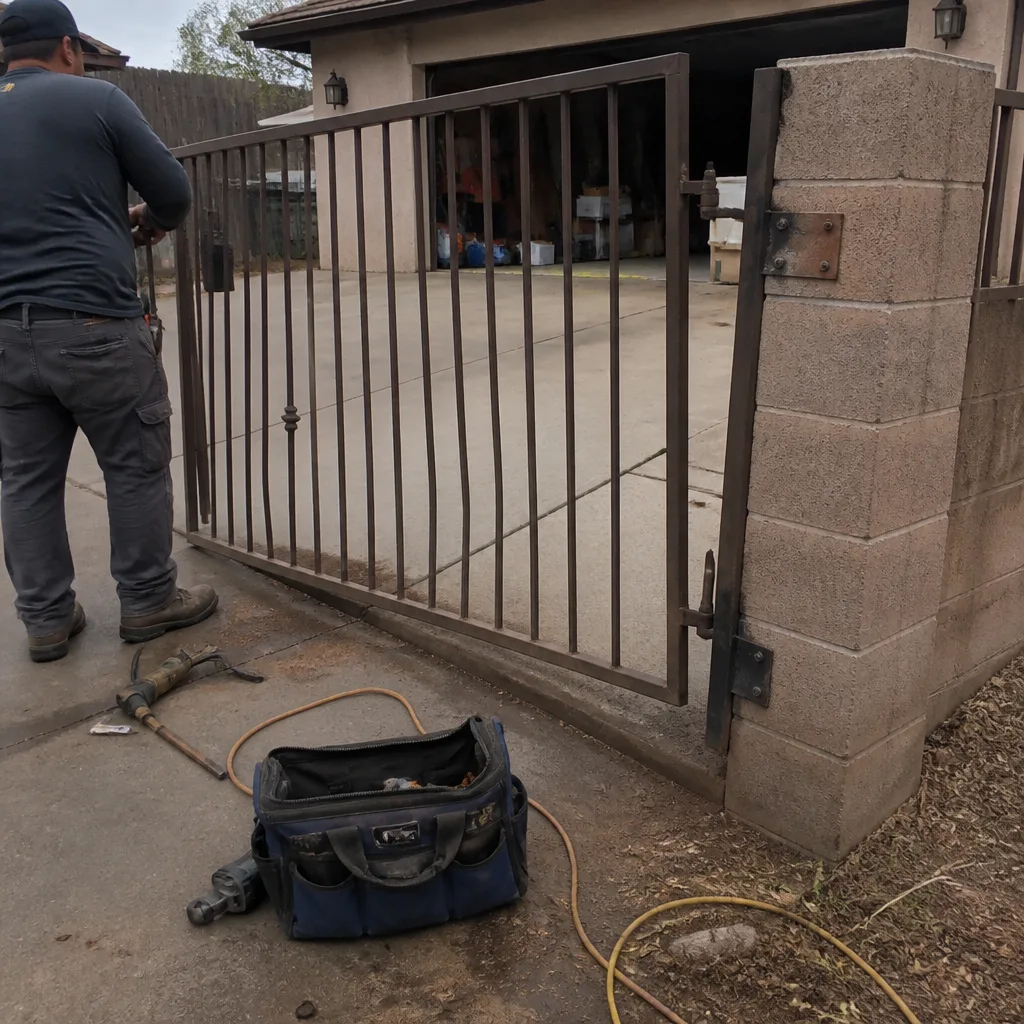 Before
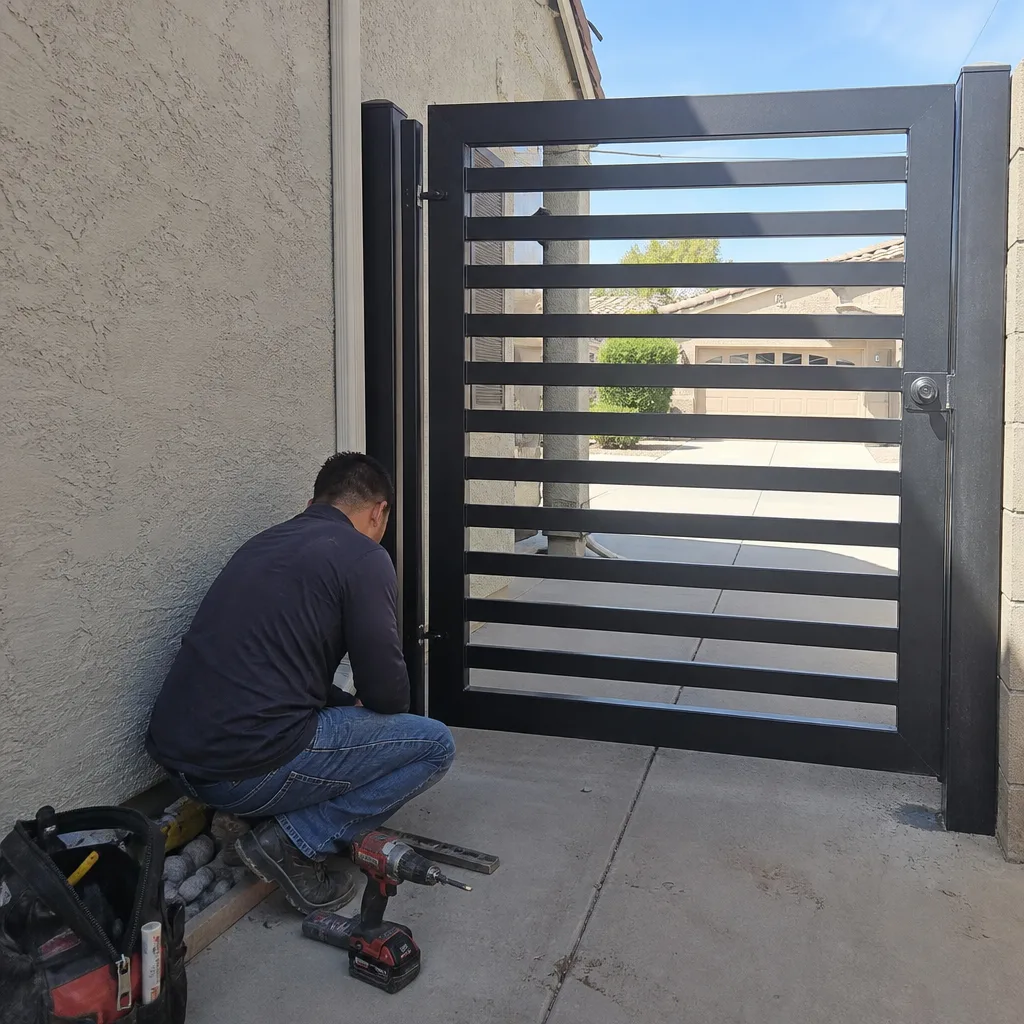 After
After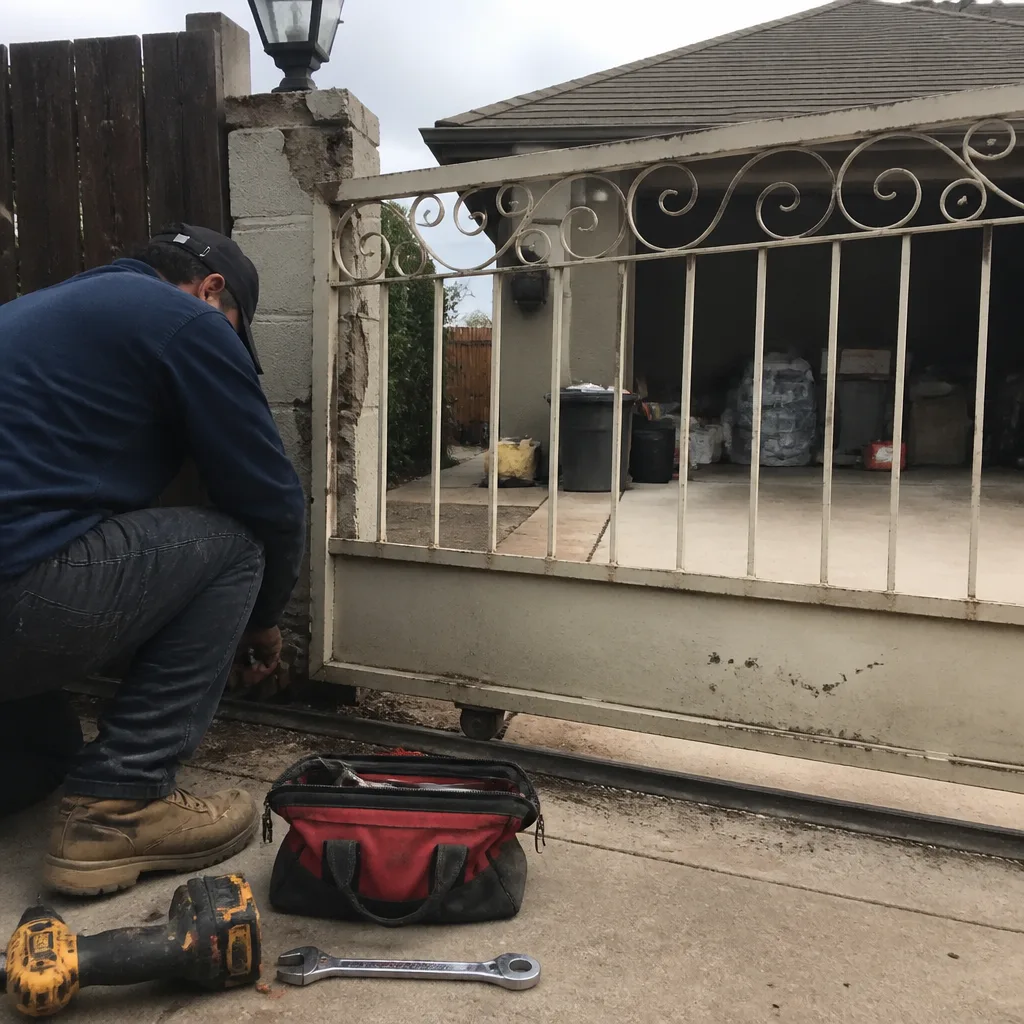 Before
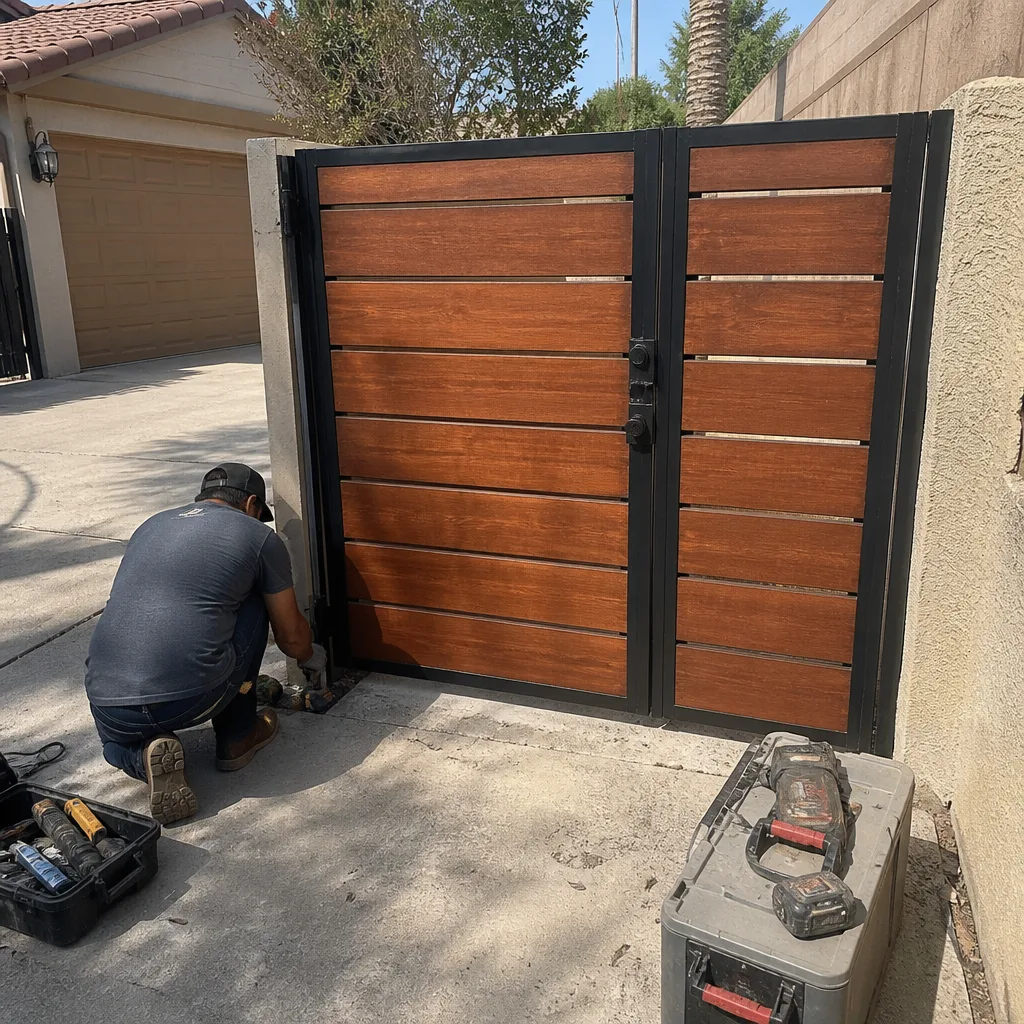 After
AfterSeasonal Gate Repair Care for Mesa: Year-Round Homeowner’s Guide
A quarterly gate maintenance schedule was designed for a climate with four distinct seasons. Mesa has two that matter: before monsoon and after monsoon. The conventional spring-summer-fall-winter calendar sends homeowners chasing freeze-thaw cracks that don’t exist here, while the real threats - thermal overload in July, caliche mud in August, and ground-shifted limit switches by October - go unaddressed. Since 2014, we’ve documented over 22,000 gate repair service calls, and the pattern in Mesa is unmistakable. Gates that survive the monsoon season intact are the ones that were prepared in May and inspected in July. Everything else is cleanup.
Quick Answer
Mesa homeowners need a three-window maintenance schedule, not four: pre-monsoon preparation in May, thermal stress verification in July, and post-monsoon recovery in October. Skip freeze-thaw tasks that don’t apply to the Sonoran Desert. Focus on motor heat ratings, track clearing, caliche mud removal, and limit switch recalibration after seasonal ground movement.
Table of Contents
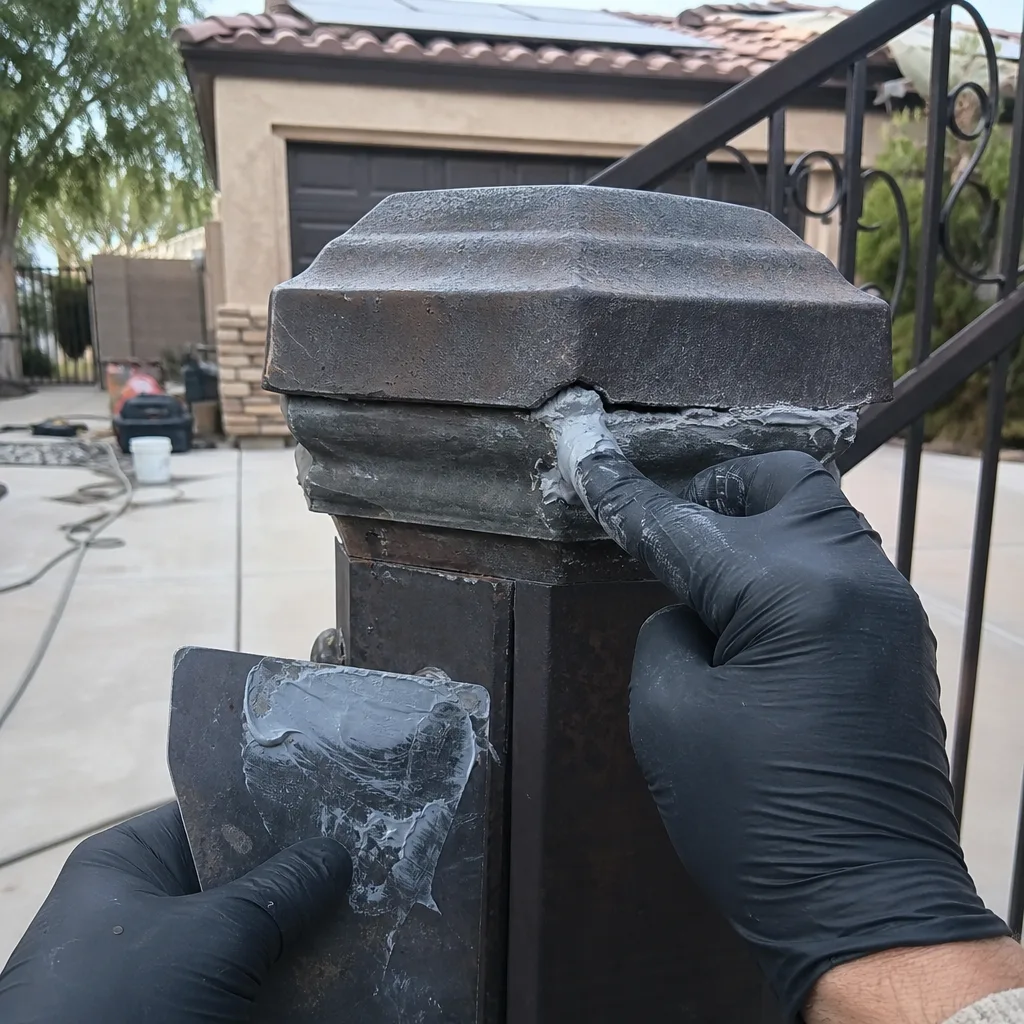
- Why Mesa Needs Two Seasons, Not Four
- May: Pre-Monsoon Preparation Window
- July: Peak-Heat Thermal Stress Check
- October: Post-Monsoon Recovery
- What to Skip: Freeze-Thaw Tasks That Don’t Apply in Mesa
- Building Your Seasonal Photo Log
- Common Mistakes to Avoid
- When to Call a Professional
- Frequently Asked Questions
- The Bottom Line
 Before
 After
AfterWhy Mesa Needs Two Seasons, Not Four
The standard gate maintenance guide assumes you live somewhere with frost heave, leaf fall, and snow load. Mesa has dust, caliche, and 110°F afternoons. The damage mechanisms are completely different, and so should be your calendar.
Here’s what actually happens to gates in Mesa over a typical year:
- March-April: Dry, stable, low stress. Good time for major work, not urgent maintenance.
- May-June: Temperatures climb toward 105°F. Monsoon humidity builds. This is your last chance to verify motor ratings and clear drainage paths before the storms hit.
- July-August: Peak thermal load on motors. Dust storms and sudden downpours. The highest failure rate of any two-month window in our Mesa records.
- September-October: Ground dries and shifts. Hinge alignment drifts. Limit switches need rechecking. Caliche mud hardens in tracks and rollers.
- November-February: Mild, dry, stable. Minimal gate stress. Ideal for planned upgrades or replacement projects.
The 365-Day Done Right Promise we offer on every gate repair in Mesa covers failures that proper seasonal maintenance would have prevented. But we’d rather document a healthy gate in May than return to fix a thermally overloaded motor in August. The three-window schedule below is built from those 22,000+ service records - what failed, when, and what the homeowner could have checked beforehand.
May: Pre-Monsoon Preparation Window
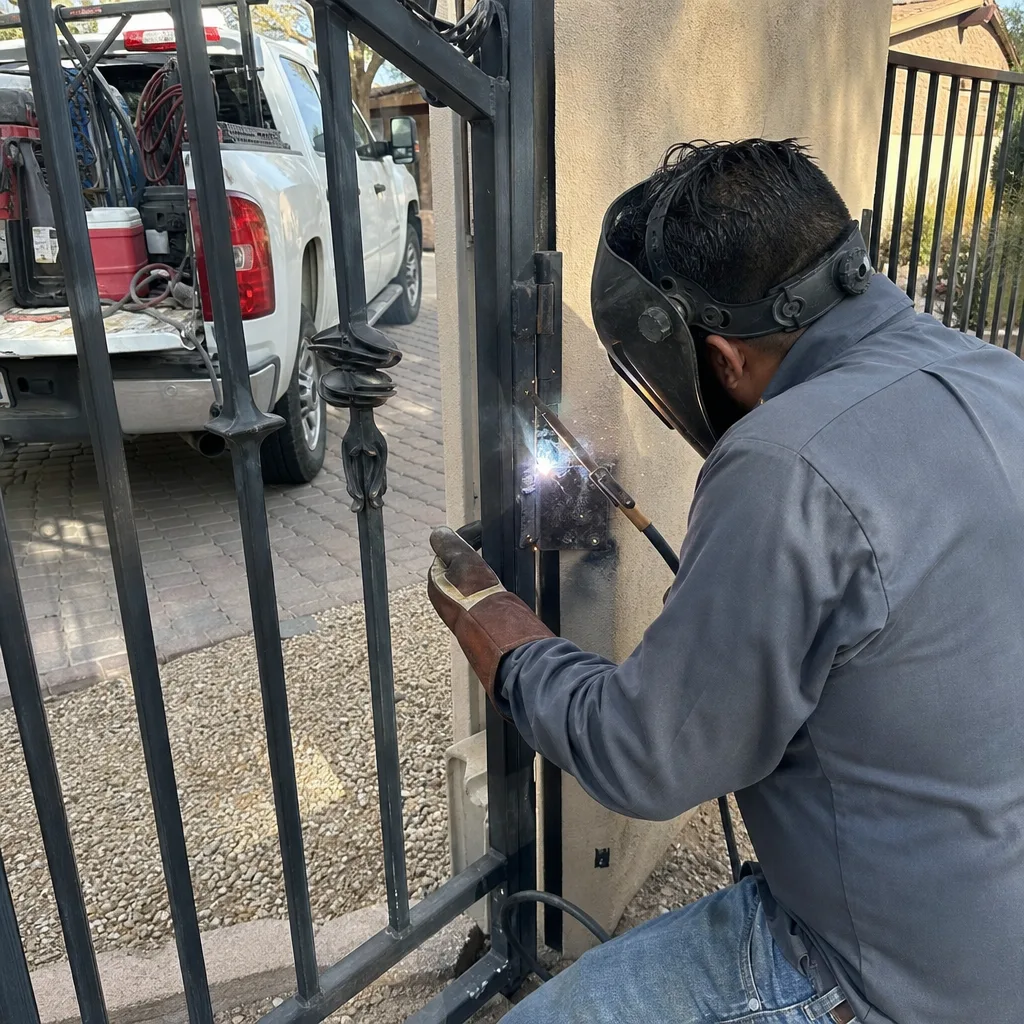
By mid-May in Mesa, you’re roughly six weeks from the first serious monsoon surge. The afternoon highs are already touching 100°F. This is your preparation window, and it’s non-negotiable if you want to avoid emergency service calls at premium summer rates.
Task 1: Verify Motor Heat Rating Against Actual Load
Every gate motor has a thermal rating, usually printed on a metal tag or sticker near the wiring compartment. Look for two numbers: the duty cycle (expressed as a percentage, often 30% or 50%) and the maximum ambient temperature (frequently 140°F or 158°F for commercial-grade units, sometimes lower for residential models).
The duty cycle means the motor can run for that percentage of a ten-minute window without overheating. A 30% duty cycle equals three minutes of runtime, seven minutes of rest. In Mesa’s July heat, a motor running near its limit in May will trip its thermal overload by August.
Here’s what to check:
- Find the duty cycle and ambient max on your motor tag. If the tag is sun-faded, photograph it and call us - we can identify most units from a clear photo, including FAAC, BFT, Linear, and Viking models.
- Time your gate through ten cycles. A typical residential swing gate takes 12-16 seconds to open or close. If your household generates more than 40 cycles per day, you’re likely exceeding a 30% duty cycle in summer heat.
- Listen for thermal cutout. If the motor stops mid-cycle and restarts after 10-20 minutes, it’s already overheating. This is not a “quirk.” It’s a failure in progress.
We replace motors every July that were running at their thermal edge in May. Under the Haven Standard, we document the old motor’s duty cycle, photograph the new unit’s rating plate, and leave you with both images. The price for a typical swing-gate motor replacement in Mesa runs between $1,200 and $2,400 depending on brand, arm geometry, and whether the existing bracket hardware is reusable.
Task 2: Clear Tracks and Drainage Paths
Monsoon rain in Mesa doesn’t soak in. It sheets across hardpan and caliche, collecting in low spots. A gate track with six months of dust, leaf litter, and gravel becomes a channel for that water. When it evaporates, it leaves concrete-hard sediment that seizes rollers and strains the motor.
Walk your gate’s full travel path. Remove accumulated material with a stiff brush and a shop vacuum. Check the track drainage: does water have somewhere to go, or will it pool at the low point? In neighborhoods near the Salt River bed - particularly in parts of northeast Mesa - the caliche layer is especially shallow and drainage is poor. We’ve replaced roller assemblies in September that were buried in hardened mud from a single July storm.
Task 3: Inspect Control Board Enclosure
The control board is the computer that runs your gate. It’s usually housed in a metal or plastic box near the motor. In Mesa, this enclosure faces two threats: dust infiltration during haboobs, and condensation when humid monsoon air hits the hot interior surfaces.
Open the enclosure (power off at the breaker first). Look for dust accumulation on the board itself, corrosion on terminal screws, and any sign of moisture staining. If you find moisture, the enclosure seal has failed. This is not a DIY fix - the board needs inspection, the seal needs replacement, and the grounding needs verification. We document this under Clause 4 (Evidence on every job) with enclosure photos before and after.
July: Peak-Heat Thermal Stress Check
July in Mesa is when gate motors die. Not gradually. Often in the middle of a Saturday afternoon when the gate has cycled forty times already and the ambient temperature at the motor housing - not the air temperature, the motor housing temperature - exceeds 160°F.
This section is about reading your gate’s stress signals before they become failure codes.
Reading Duty Cycle Against Reality
In May, you verified the motor’s rated duty cycle. In July, you verify what it’s actually experiencing. Here’s the method we use on service calls:
- Place a digital thermometer probe on the motor housing (not the arm, not the cover - the metal housing itself) at 2 PM on a day over 105°F.
- Run the gate through five complete cycles. Record the housing temperature after the fifth cycle.
- If the housing temperature climbs more than 25°F above ambient, or if the motor stalls, hums, or trips thermal protection during this test, the duty cycle is being exceeded.
The fix is not “let it cool down.” The fix is reducing cycle frequency, adding shade to the motor housing, or replacing the motor with a higher-duty unit. In our Mesa records, motors that exceed thermal limits in July have a 70% failure rate by September. The replacement cost is the same in July as it would have been in May, but the urgency premium and the inconvenience are not.
Checking for Thermal Expansion Binding
Metal expands. In Mesa’s July heat, a steel gate frame can elongate by 1/8 inch per ten feet of length. That doesn’t sound like much until it’s enough to bind a roller, stress a hinge, or drag a track joint. Walk your gate’s travel at peak afternoon heat. Listen for scraping, watch for hesitation, and feel for vibration through the frame. These are binding indicators.
Binding increases motor load, which increases heat, which increases binding. It’s a self-accelerating failure loop. We find it most often on welded-steel driveway gates in east Mesa, where the afternoon sun is direct and the gates are large. The adjustment is usually a track realignment or hinge shim, documented with before-and-after photos under the Haven Standard.
Verifying Photo-Eye Function in Dust
The photo-eye - the infrared beam that stops the gate if something crosses the path - is a dust magnet. July haboobs in Mesa can coat the lens in fine silt that scatters the beam and causes false obstruction errors. The gate opens fine, then refuses to close, or reverses randomly.
Clean both lenses with a lint-free cloth and mild glass cleaner. Check alignment: the LED indicators on most units (LiftMaster, Linear, FAAC, others) show green when aligned and red or flashing when interrupted. If you can’t get a steady green in full sun, the mounting may have shifted. We see this after every major dust storm. The fix is usually a bracket adjustment, not a replacement.
October: Post-Monsoon Recovery
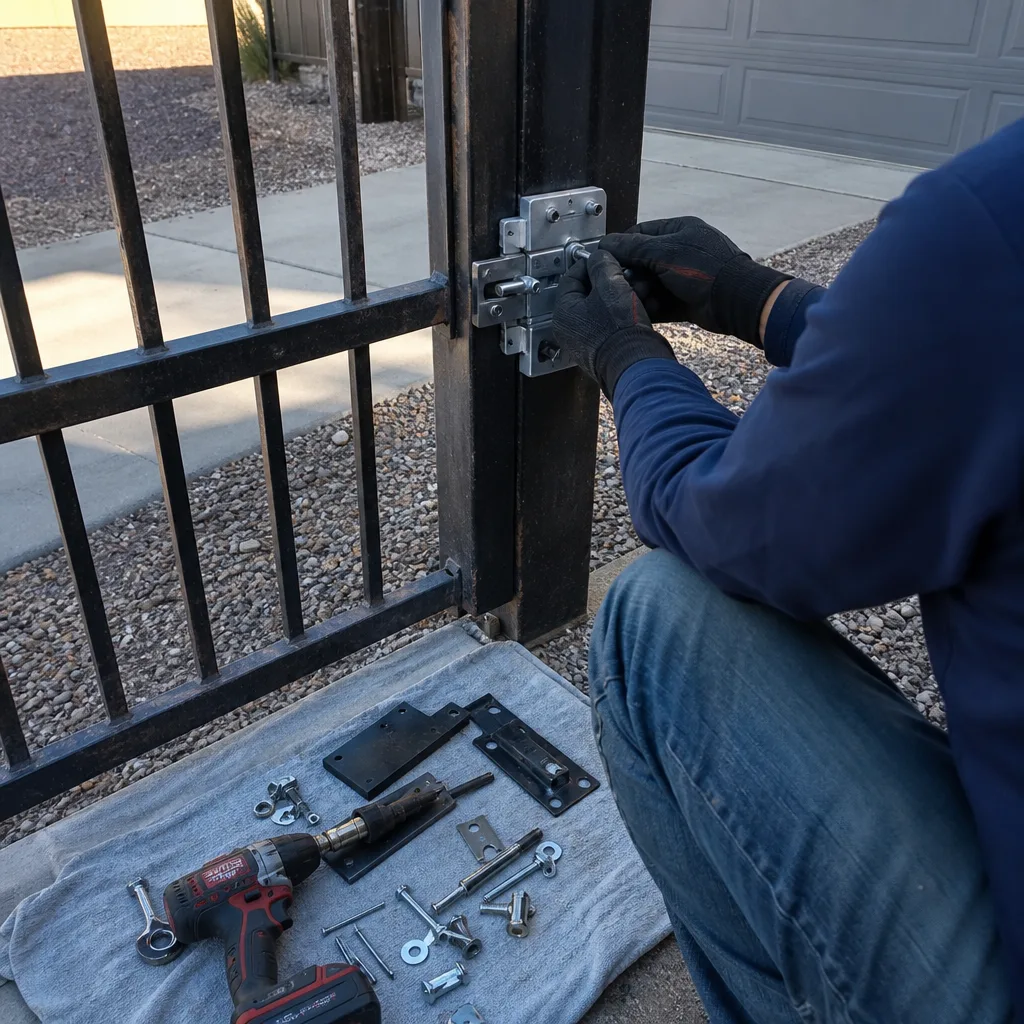
By October, Mesa’s monsoon season has typically passed. The ground is drying, shrinking, and shifting. Caliche mud that washed into tracks in August has hardened. Hinge pins that were lubricated in May have collected grit. This is your recovery window, and skipping it means carrying hidden damage into the low-stress winter months where it will quietly worsen.
Caliche Mud Removal from Rollers and Tracks
Caliche is calcium carbonate cemented soil. When wet, it’s sticky. When dry, it’s nearly as hard as concrete. In gate tracks, it forms a crust that lifts rollers out of proper contact, increases rolling resistance, and transmits vibration to the motor.
Removal requires patience and the right tool: a narrow putty knife or a dedicated track scraper, not a screwdriver that will gouge the track surface. Chip away the hardened material, vacuum thoroughly, and inspect the track for corrosion where moisture was trapped. In our Mesa experience, rollers running on caliche-coated tracks fail 40% faster than those on clean tracks. The replacement cost for a standard V-groove roller set runs $180-$340 including labor.
Hinge Corrosion Inspection
Mesa’s monsoon humidity is brief but intense. Hinge pins and bushings that were dry in June may have seen moisture in July and August, and the resulting corrosion often doesn’t show until the hinge starts squeaking or binding in October.
Check each hinge for:
- Visible rust or oxidation on the pin surface
- Play or wobble in the hinge barrel
- Grease that has turned gray or gritty (indicates water contamination)
- Uneven gate swing - a dragging corner often means a seized or worn hinge
We replace hinge pins and bushings most often in October and November, on gates that “were fine until they weren’t.” The Haven Standard documentation includes photos of the worn bushing, the new part number installed, and the torque setting on the retaining hardware.
Limit Switch Recalibration After Ground Movement
The limit switch tells the motor when to stop opening and when to stop closing. It’s set to precise travel positions. When Mesa’s clay-caliche soil dries and shrinks in autumn, gate posts can shift slightly. That shifts the entire gate geometry. The limit switch, still set for the old position, now tries to drive the gate into a post or leaves a gap at the closed position.
Signs of limit switch drift:
- Gate stops short of full open or closed position
- Gate bumps the stop post and reverses
- Gate closes with increasing force (motor is running longer to reach a shifted target)
- Gap appears between gate leaves or between gate and jamb
Limit switch adjustment is precision work. On screw-driven operators (common on Linear and Viking residential units), the adjustment is mechanical - cams or potentiometers that must be set while the gate is in motion. On programmable units (FAAC, BFT, some LiftMaster models), the adjustment is electronic and requires navigating the control menu. We document the original limit position, the new setting, and the gate travel measurement in our photo record. This matters because if the post continues to settle, the next technician needs to know where the baseline was.
What to Skip: Freeze-Thaw Tasks That Don’t Apply in Mesa
Standard seasonal gate guides include tasks that are irrelevant or even counterproductive in Mesa. Here’s what to remove from your calendar:
| Conventional Task | Why It’s Wrong for Mesa | What to Do Instead |
|---|---|---|
| Winterize drain holes to prevent freeze damage | Mesa’s record low is 15°F; sustained freeze is virtually unknown. Sealed drain holes trap monsoon water. | Ensure drain holes are open and unobstructed year-round. |
| Apply heavy grease before cold weather | Heavy grease attracts dust and hardens in heat. Mesa’s “cold” is 40°F. | Use light synthetic lubricant rated for 0°F to 300°F. Reapply after dust storms. |
| Inspect for ice damage to photo-eyes | Ice formation on photo-eyes is not a Mesa failure mode. | Inspect for dust coating and sun glare alignment issues instead. |
| Check snow load on gate frame | Snow load on a Mesa gate is statistically negligible. | Check wind load: haboobs generate lateral forces that stress hinges and latches. |
| Fall leaf removal from track | Mesa has few deciduous trees in gate-adjacent landscaping. “Fall” is not a leaf season. | Remove palo verde flower litter and dust accumulation before monsoon. |
The time you save on irrelevant tasks should go toward the thermal and monsoon-specific checks that actually protect your gate in this climate.
Building Your Seasonal Photo Log
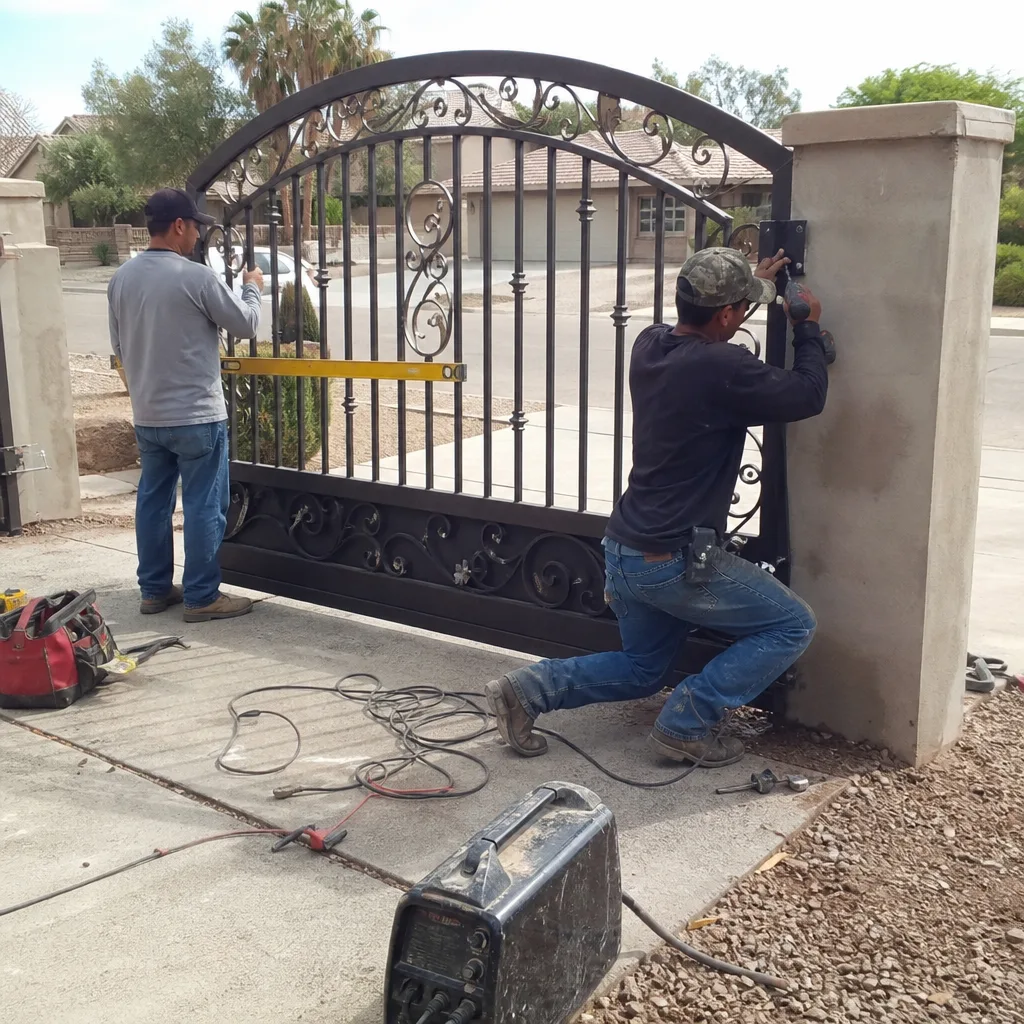
Every gate installation in Mesa we complete includes a baseline photo record. Every service call adds to it. But homeowners can build their own simple log that makes any future technician’s job faster, cheaper, and more accurate.
The key is consistency: same four angles, same lighting conditions, same time of year. This creates a visual timeline that reveals gradual changes invisible in isolation.
The Four Angles
- Full gate, closed position, straight-on: Shows overall alignment, gap symmetry, and latch engagement. Take this from the property side, at a height of roughly five feet.
- Motor and control enclosure, cover open: Documents wiring condition, dust accumulation, and any corrosion. Flash on, even in daylight.
- Track or guide system, full length: Shows roller position, track debris, and wear patterns. Crouch to track level for this shot.
- Hinge side, close-up: Captures pin condition, bushing wear, and any rust staining on the post or frame.
Store these with the date in the filename: 2024-05-15_Gate_Front_Closed.jpg. After three years, you’ll have nine data points that show whether a hinge is progressively degrading, whether a track is slowly accumulating debris, or whether a motor enclosure seal is failing.
When you call Vance Gate Repair Mesa home for service, mention that you have a photo log. We’ll incorporate it into our documented record under Clause 4, and the technician who arrives will have context that normally takes twenty minutes of inspection to establish.
Common Mistakes to Avoid
- Waiting for the gate to fail completely before calling. A motor that trips thermal overload twice is not “having a bad day.” It’s in pre-failure. The emergency call costs the same as the scheduled replacement, but the timing is never convenient.
- Using WD-40 on gate hinges and tracks. WD-40 is a water displacer, not a lubricant. It evaporates and leaves a sticky residue that collects Mesa’s fine dust. Use a synthetic gate lubricant rated for high-temperature, dusty environments.
- Ignoring the control board enclosure because “it’s just a box.” In our Mesa records, enclosure seal failures cause 30% of control board replacements. A $12 gasket prevents a $400 board failure.
- Assuming all gate motors handle heat equally. Residential Mighty Mule units and commercial FAAC units have vastly different thermal envelopes. Know what’s on your property, or have us identify it and document the rating.
- Skipping the October check because “the gate worked fine all summer.” Summer is when the damage accumulated. October is when it becomes visible. The post-monsoon recovery window exists for a reason.
- Power-washing the motor or control enclosure. This seems obvious but happens. High-pressure water forces past seals and destroys electronics. Clean enclosures with a dry brush and low-pressure air only.
When to Call a Professional
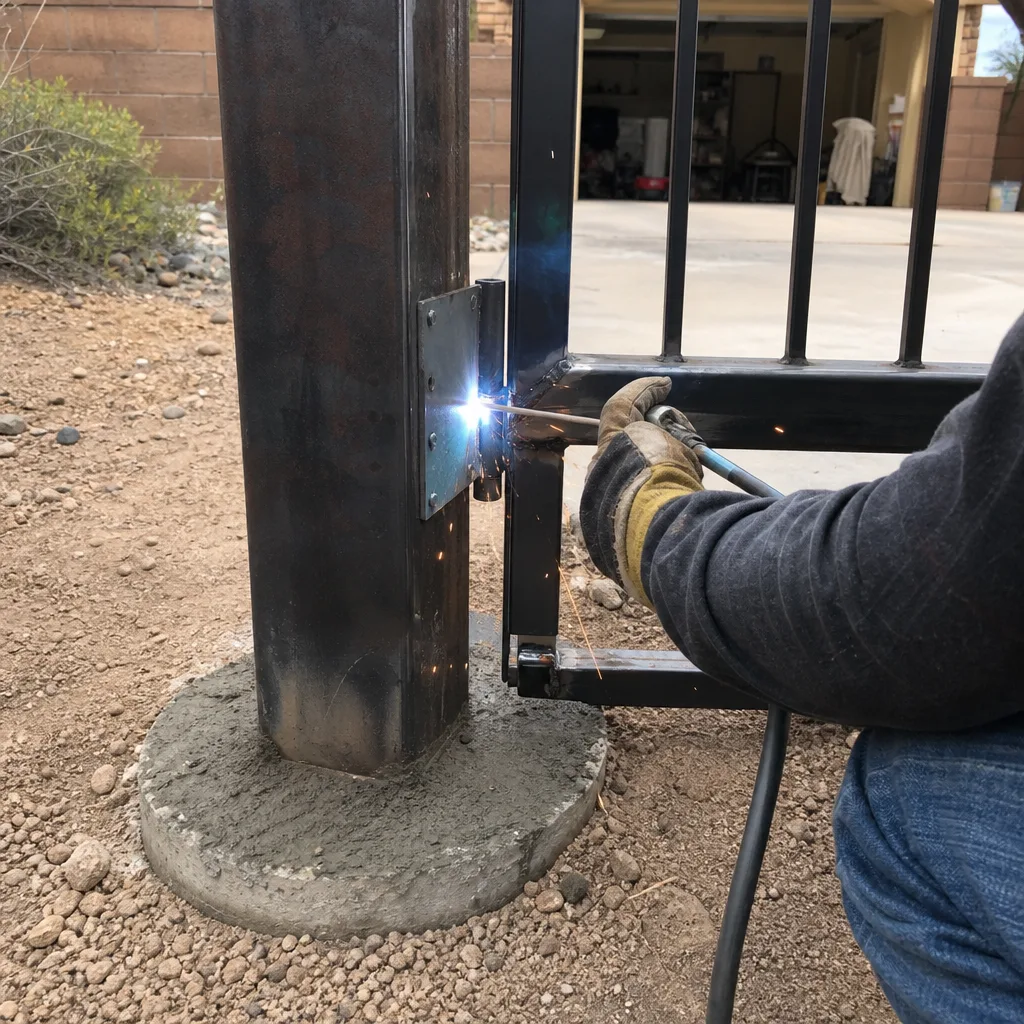
Some gate conditions require trained diagnosis and documented repair. Call for service when you observe:
- Thermal overload trips more than once in a week
- Gate movement that is uneven, hesitant, or accompanied by new noises
- Control board error codes you cannot clear with a power cycle
- Visible corrosion on wiring terminals or board components
- Post-movement or concrete footing cracks that affect gate alignment
- Any safety system malfunction - photo-eye, edge sensor, or auto-reverse failure
Vance Gate Repair Mesa offers free estimates in Mesa. A technician will arrive with a written scope and price before any work begins, under Haven Standard Clause 1. Every visit includes a documented photo record under Clause 4. Call (520) 666-6834 to schedule.
Frequently Asked Questions
A professional seasonal inspection and tune-up in Mesa typically runs between $150 and $280, depending on gate type, access conditions, and whether minor adjustments or parts replacement are needed. Vance Gate Repair Mesa provides a written price before any work starts, with no charge for the estimate itself. Call (520) 666-6834 for an exact quote on your specific gate.
Homeowners can safely perform visual inspections, track cleaning, and photo-eye lens cleaning. Any work involving the motor housing interior, control board, high-tension spring systems, or electrical connections should be handled by a trained technician. We document what we find and what we adjust, so you have a record even for tasks you could have done yourself. For a free assessment of what’s safe to DIY on your specific gate, call us.
We recommend the three-window schedule: pre-monsoon in May, peak-heat in July, and post-monsoon in October. Gates with high cycle counts - more than 30 operations per day - benefit from the July check. Gates in exposed locations or near unpaved roads, where dust loading is higher, may need additional attention. The 365-Day Done Right Promise covers any repair we complete, regardless of when you call.
We service nine major automation brands: LiftMaster, FAAC, BFT, Linear, Viking, Ghost Controls, DoorKing, Elite, and Mighty Mule. We do not steer customers toward replacement with a “preferred” brand. Our approach is to repair what you have when repair is viable, document the condition, and replace only when the motor’s duty cycle, parts availability, or safety standards require it. For gate motor and opener service in Mesa, we bring parts and expertise for all nine brands.
This pattern almost always indicates thermal overload. The motor housing cools overnight, operates within limits in cool morning air, then exceeds its thermal capacity as ambient temperature rises and cycle count accumulates. Verify the motor’s duty cycle rating against your actual usage, and measure housing temperature at peak afternoon heat. If the pattern persists, the motor is undersized for your application or approaching end of life. We can diagnose this in a single visit and give you a written replacement price if needed.
First, disconnect power at the breaker to prevent electrical hazard or further damage from erratic operation. Photograph the damage for insurance and service documentation. Do not attempt to force the gate manually if the motor or track is visibly damaged - the mechanical advantage of gate operators can cause sudden, uncontrolled movement. Call for emergency service. Vance Gate Repair Mesa answers live 24 hours a day, and we prioritize storm-damage calls for same-day response when safety is compromised.
The Bottom Line
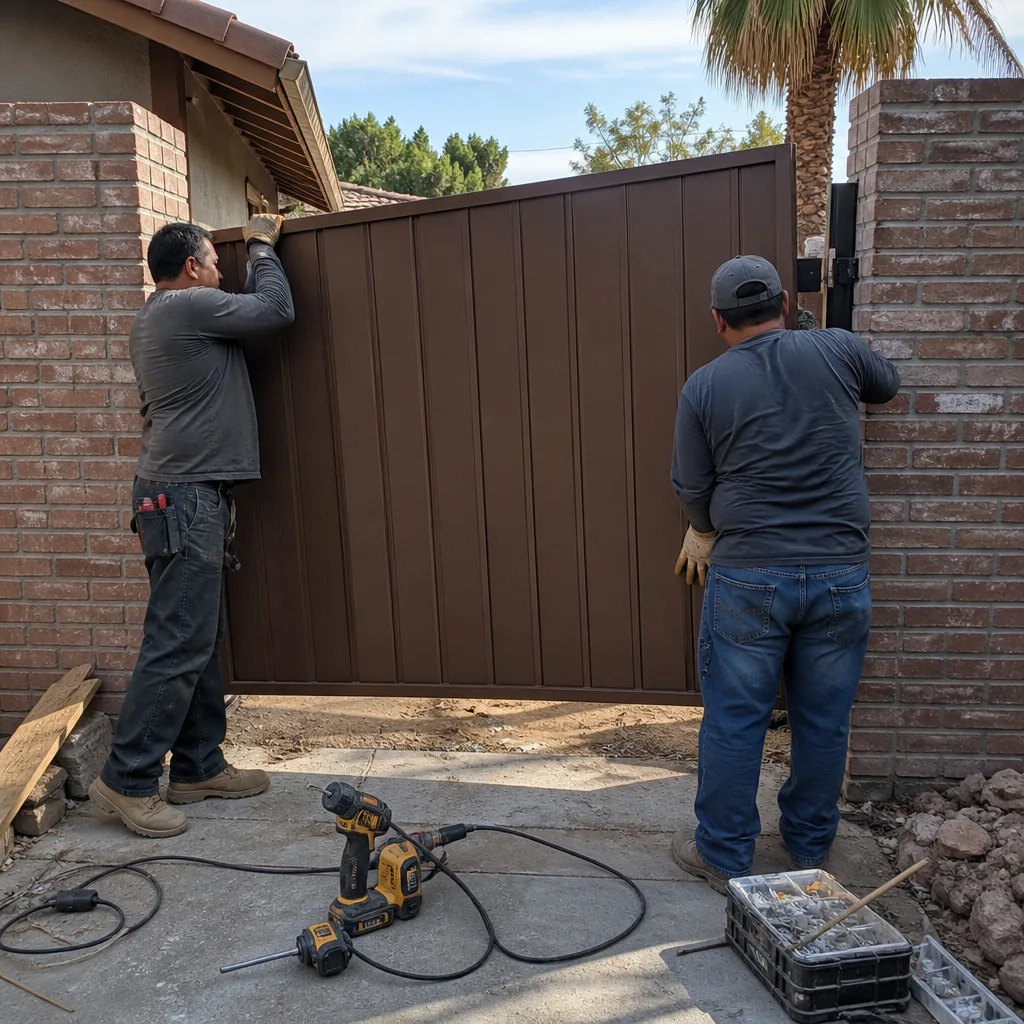
Mesa’s gate maintenance calendar has three windows, not four. Prepare in May for the thermal and monsoon stress ahead. Verify in July that your motor is handling the load it was rated for. Recover in October from the ground movement and debris accumulation that the monsoon left behind. Skip the freeze-thaw rituals that belong to other climates. For a deeper dive, see The Complete Guide to Gate Repair in Mesa. Build a simple photo log that gives any technician - us or another company - the context to diagnose faster and charge less for guesswork. And when you need professional service, demand what the Haven Standard requires: a written price before work starts, a documented record when the technician leaves, and a full year to verify the repair was done right.
Written by Adrian Vance, Owner at Vance Gate Repair Mesa, serving Mesa since 2014.