
Last updated September 22, 2026
Free on-site gate assessment - hinges, posts, and your LiftMaster or Nice gate operator checked before anything is quoted
The assessment is free and the quote is the invoice.

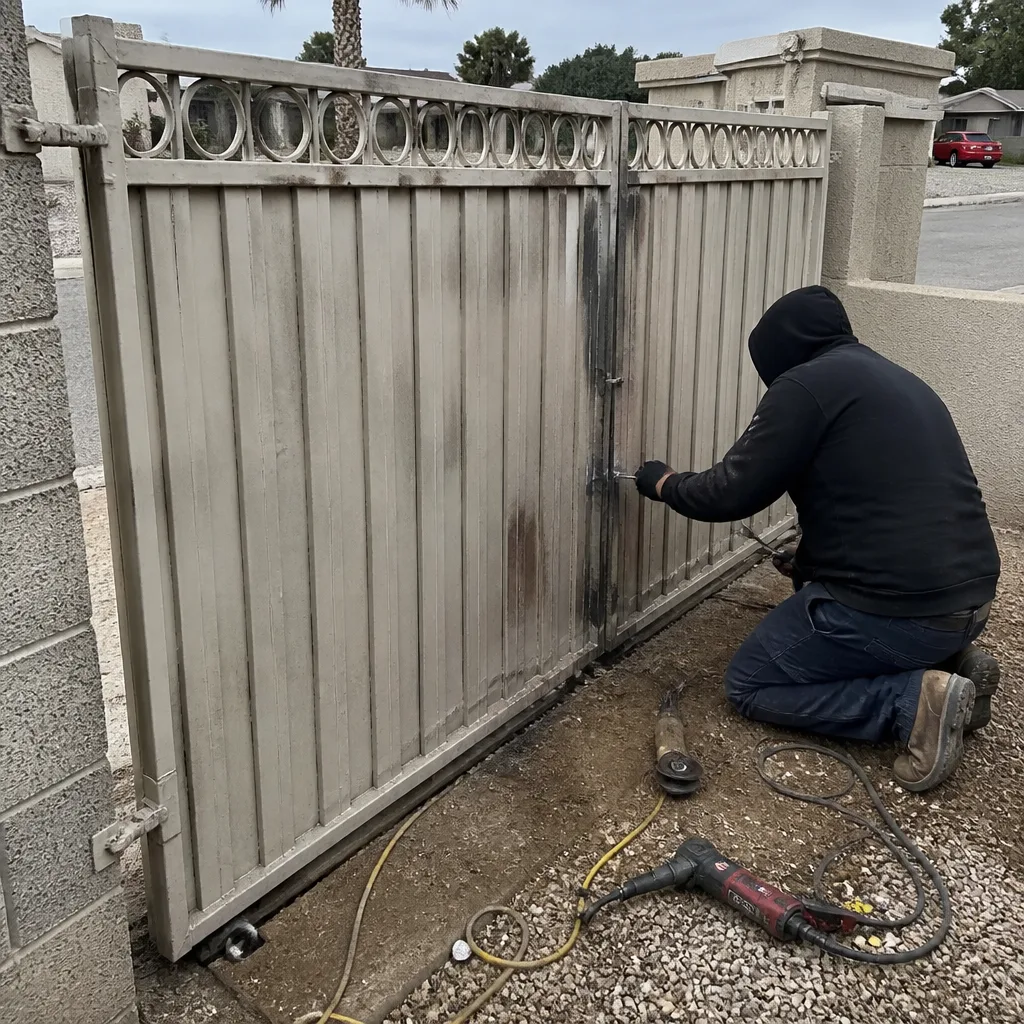 Before
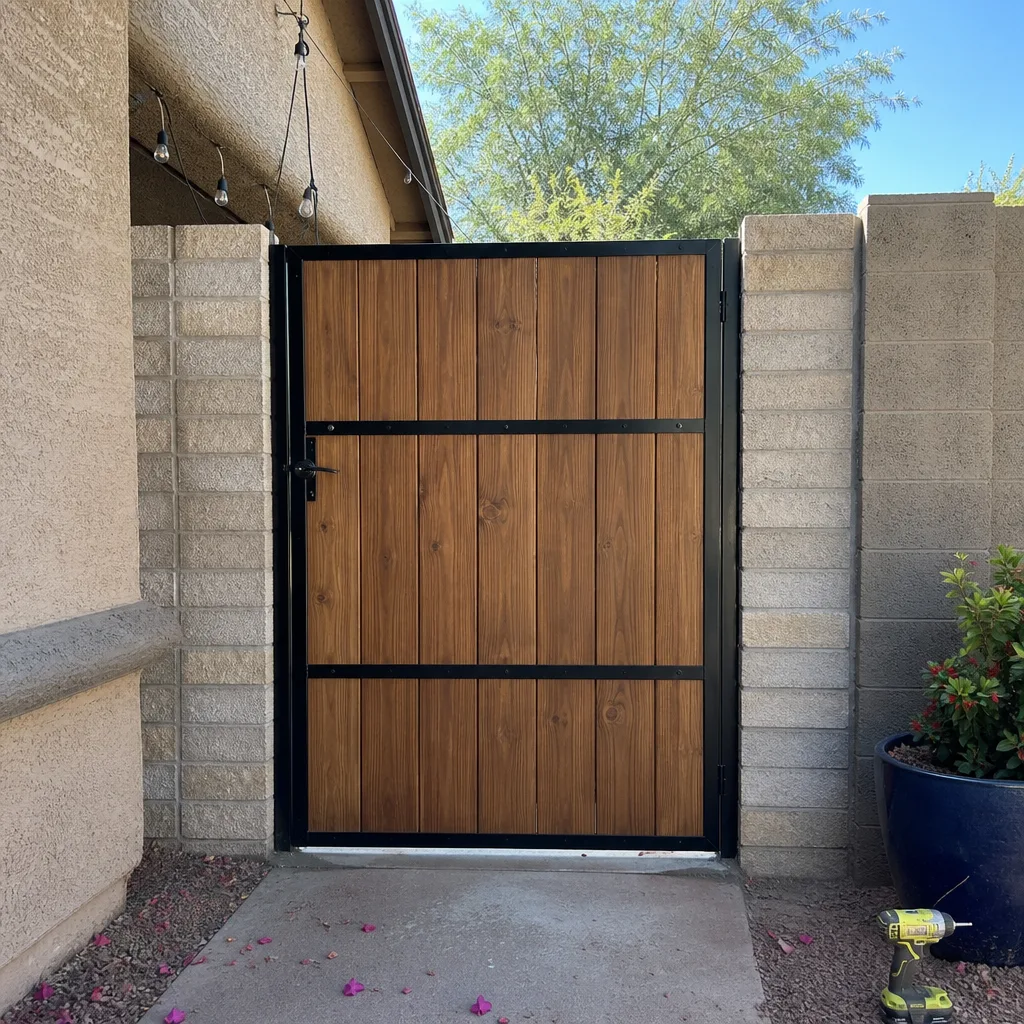 After
After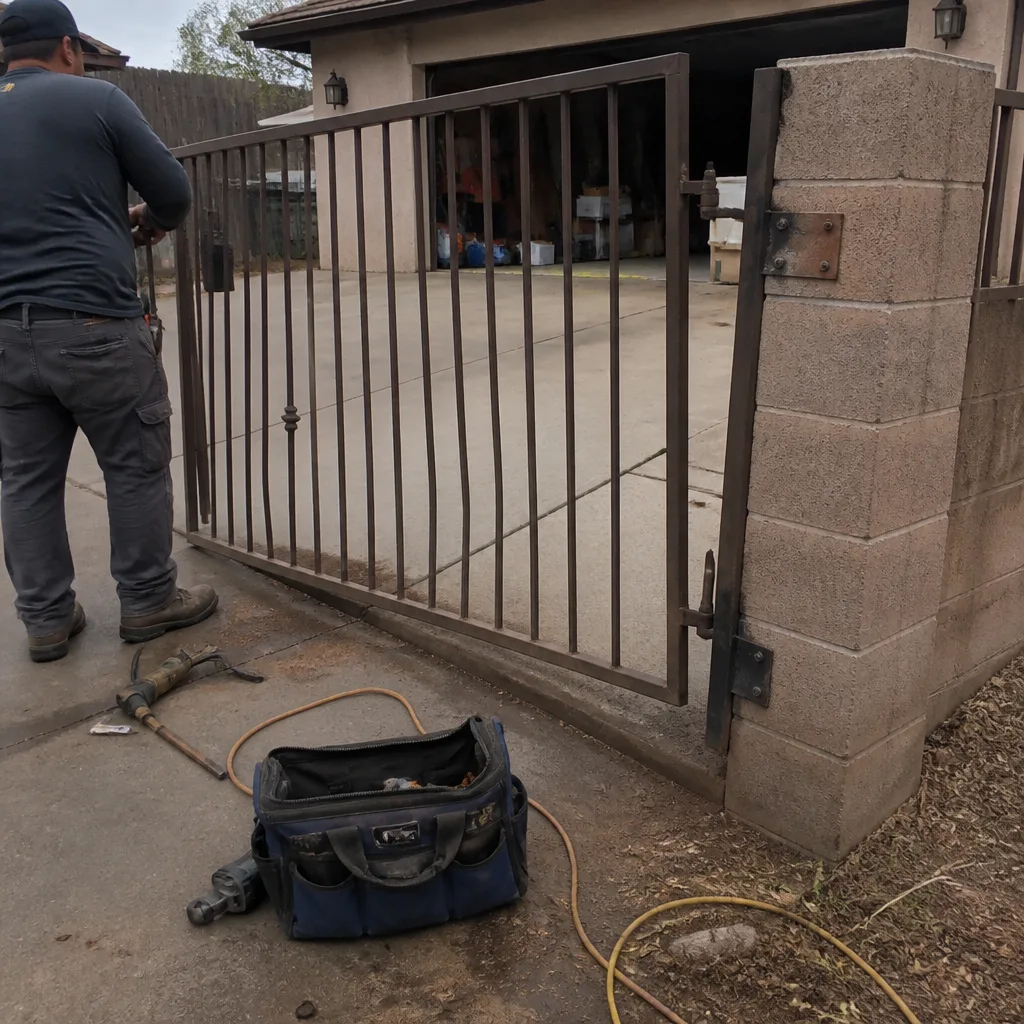 Before
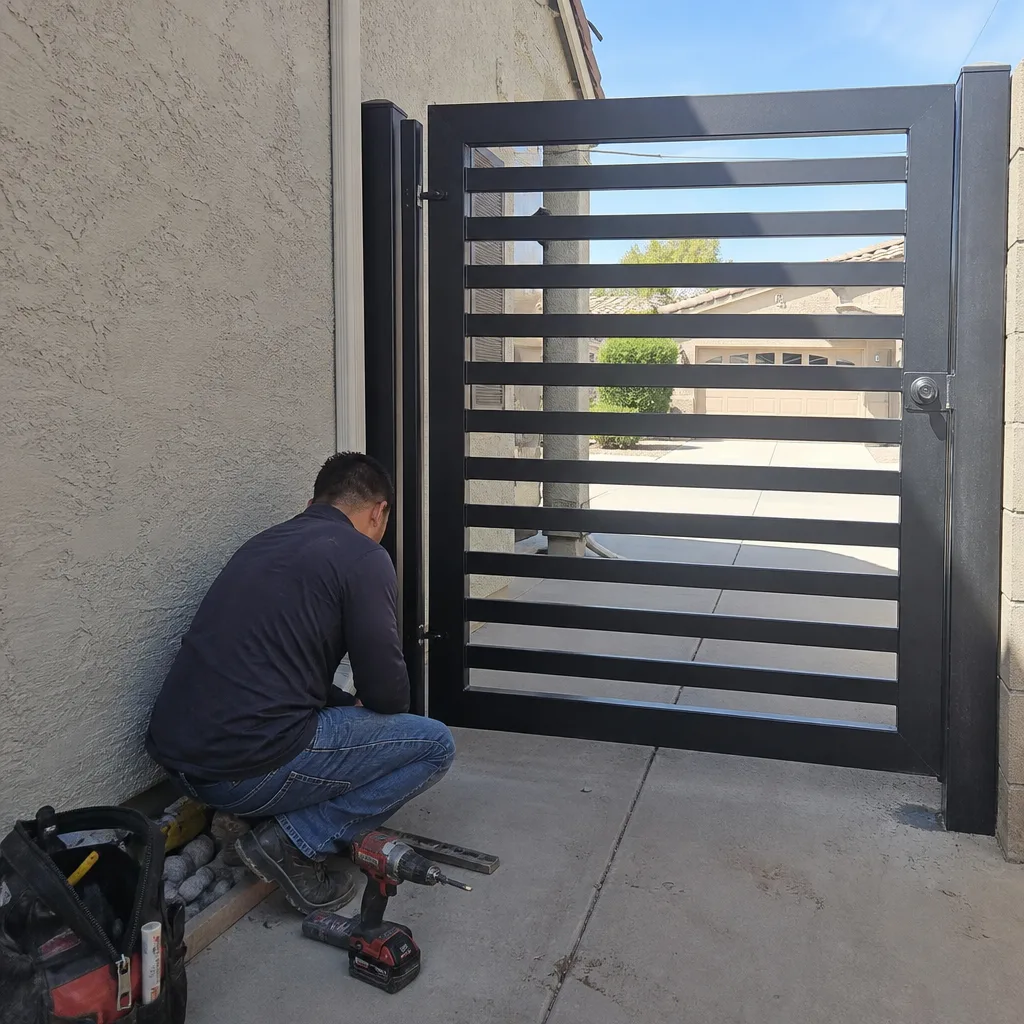 After
After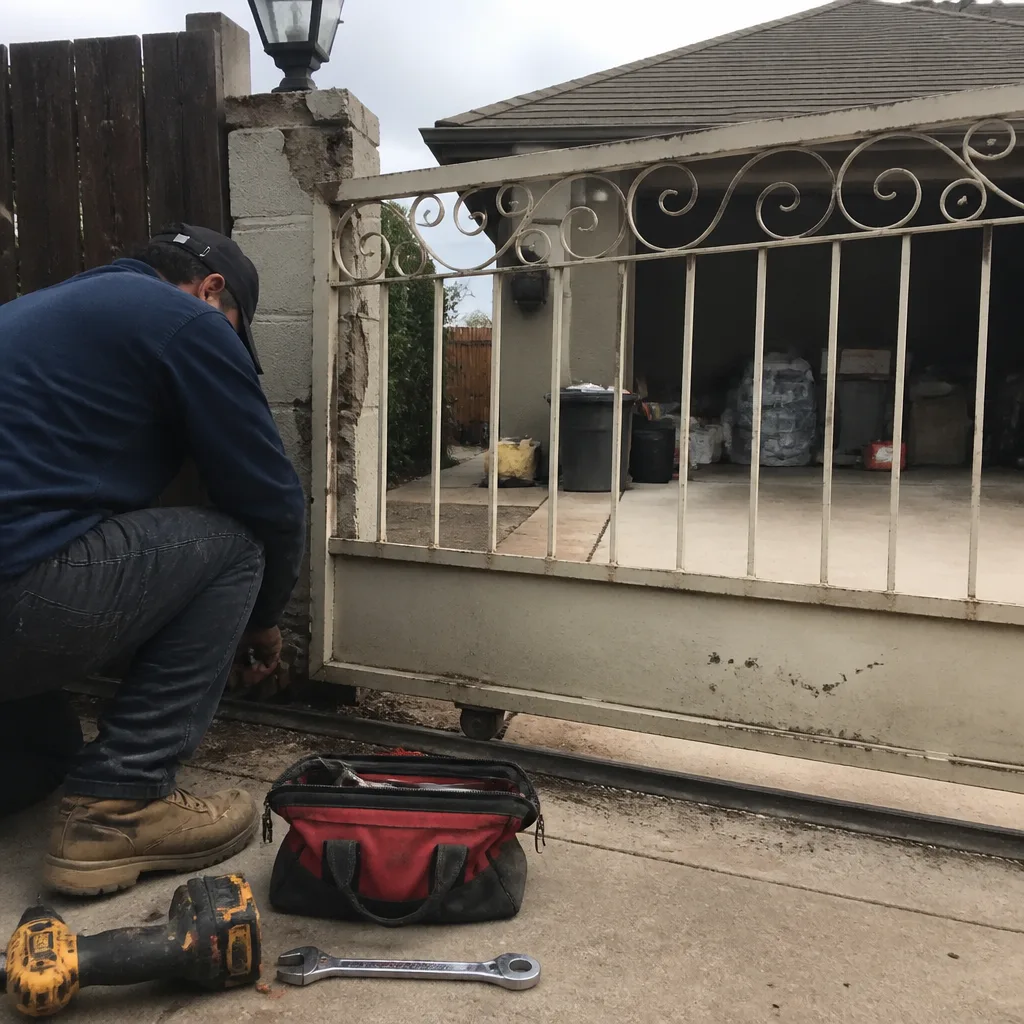 Before
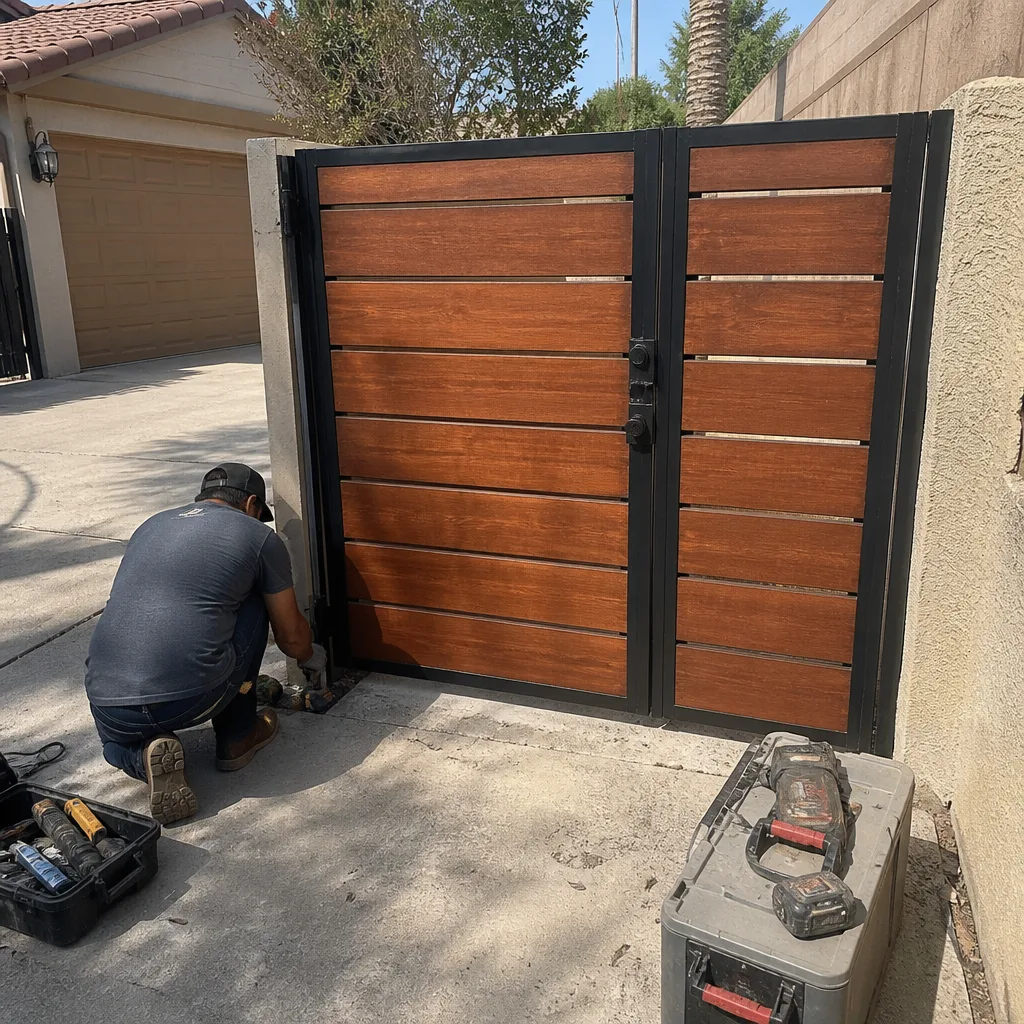 After
AfterGate Repair Cost Breakdown: The Mesa Homeowner’s Reference for 2026
The $250 difference between two gate repair quotes in Mesa is almost never about labor. It’s about whether a $180 actuator is marked up 40% or 120%, whether a “miscellaneous hardware” line item hides a $45 trip fee, and whether the estimate you signed actually lists the parts being installed. Most gate contractors in the Mesa market quote labor and parts as a single number, which makes comparison shopping nearly impossible and leaves homeowners paying for duplicate diagnosis on the next service call. This guide-along with our Gate Repair Maintenance Checklist for Mesa Homeowners-separates every cost layer, names actual part costs at Mesa-area supply houses, and shows you how to read a quote for markup and omissions before you sign anything. Our goal isn’t to help you find the lowest price. It’s to make sure you know exactly what you’re buying.
Quick Answer
Gate repair in Mesa typically ranges from $180 for a simple hinge rebuild or roller replacement to $1,400+ for a dual-swing actuator replacement with OEM parts. Most single-component repairs fall between $320 and $680 when parts and labor are itemized separately. A written, pre-work scope with separated parts and labor costs almost always produces a lower final invoice than a bundled “free estimate” that buries diagnosis into markup.
Table of Contents
- Component-Level Pricing: What Parts Actually Cost in Mesa
- How to Read a Gate Repair Quote for Hidden Charges
- OEM vs. Aftermarket Parts in Mesa’s Heat Environment
- Why Paying for Diagnosis Upfront Saves Money
- What a Written Scope Prevents: Documented Cases of Duplicate Charges
- Repair Costs by Gate Type and Mechanism
- How Mesa’s Climate Affects Gate Repair Pricing
- Common Mistakes to Avoid
- When to Call a Professional
- Frequently Asked Questions
 Before
 After
AfterComponent-Level Pricing: What Parts Actually Cost in Mesa
We buy our actuators, control boards, and safety hardware from the same Mesa-area supply houses that sell to most local contractors. The difference is that we show you the numbers. Here’s what common components cost at the wholesale level in early 2026, what typical labor runs, and what you should expect to see on an itemized quote.
Actuator Replacement (Swing Gates)
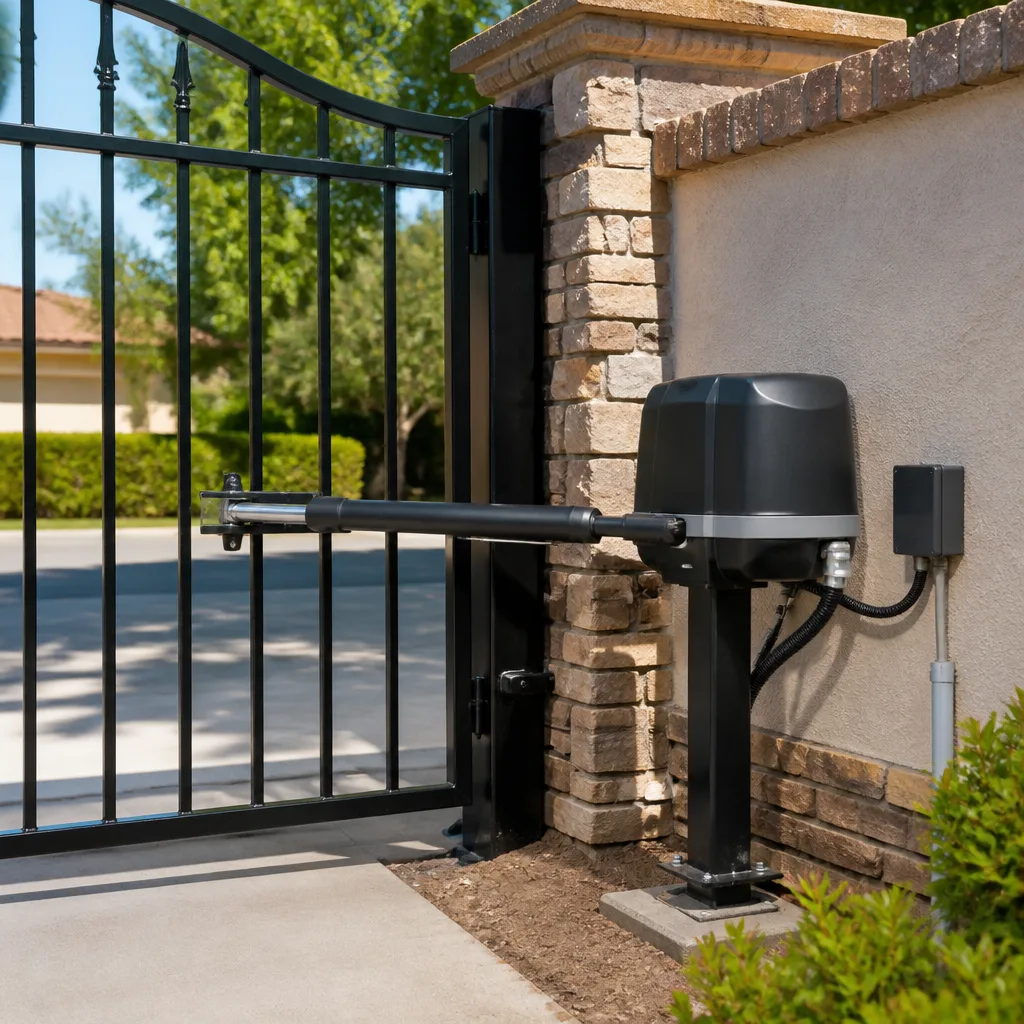
A single linear actuator for a residential swing gate, the motorized arm that pushes and pulls the gate leaf, wholesales for $140 to $380 depending on brand and push-force rating. A LiftMaster LA500 series actuator runs roughly $290 at Mesa supply houses. A Mighty Mule FM502 equivalent runs closer to $165. Labor to remove the old unit, fabricate or adjust the mounting bracket, set limit switches, and test safety reversal typically runs 2.5 to 3.5 hours.
| Component | Part Cost (Wholesale) | Labor Range | Total Itemized |
|---|---|---|---|
| Single actuator, economy brand | $140-$190 | $225-$315 | $365-$505 |
| Single actuator, mid-grade (LiftMaster, Linear) | $240-$340 | $225-$315 | $465-$655 |
| Dual actuator replacement | $280-$680 | $375-$525 | $655-$1,205 |
| High-torque commercial-grade arm | $420-$580 | $300-$420 | $720-$1,000 |
If your quote shows a single line item of “$850” for a dual actuator job with no breakdown, you’re paying somewhere between $145 and $495 in markup and labor with no way to verify either.
Control Board Swap
The control board is the computer that reads remote signals, safety inputs, and limit-switch positions. In Mesa, we replace more control boards than actuators because summer heat and monsoon humidity corrode solder joints and fry capacitors. A replacement board for a DoorKing 9100 series runs $180 to $240 wholesale. An Elite CSW200 board runs $155 to $210. Labor is typically 1.5 to 2.5 hours because the technician must transfer all field wiring to the new terminal block, program remote codes, and test every safety input.
| Component | Part Cost (Wholesale) | Labor Range | Total Itemized |
|---|---|---|---|
| Standard control board, single-brand operator | $120-$210 | $135-$225 | $255-$435 |
| Multi-brand universal replacement board | $85-$140 | $150-$240 | $235-$380 |
| Board with integrated WiFi/phone module | $210-$320 | $150-$240 | $360-$560 |
Hinge Rebuild and Roller Replacement
Hinge rebuilds are the most common repair we perform in Mesa’s older neighborhoods, particularly in Dobson Ranch and the original Mesa subdivisions where gates were installed in the 1980s and 1990s with steel hinges that weren’t galvanized for desert exposure. A heavy-duty ball-bearing hinge pair wholesales for $35 to $75. Labor to cut off the seized hinge, grind the post or pillar flat, drill and tap new mounting holes, and align the gate leaf runs 1.5 to 2.5 hours.
Roller replacement on slide gates follows a similar pattern. A set of four V-groove or cantilever rollers runs $45 to $120 depending on load rating and bearing quality. Labor includes removing the gate from track, pressing old rollers off the axle, installing new rollers with proper torque on castle nuts, and resetting the gate to clear the track without binding.
| Component | Part Cost (Wholesale) | Labor Range | Total Itemized |
|---|---|---|---|
| Hinge pair, residential grade | $35-$75 | $135-$225 | $170-$300 |
| Hinge pair, heavy-duty with grease fittings | $65-$120 | $150-$240 | $215-$360 |
| Roller set (4), standard V-groove | $45-$85 | $150-$240 | $195-$325 |
| Roller set (4), sealed-bearing cantilever | $85-$140 | $150-$240 | $235-$380 |
These are the repairs where bundled quotes hide the most markup. A contractor quoting “$285 for hinge service” on a job with $45 in parts and 1.5 hours of labor is charging an effective labor rate of $160 per hour without ever naming it.
How to Read a Gate Repair Quote for Hidden Charges
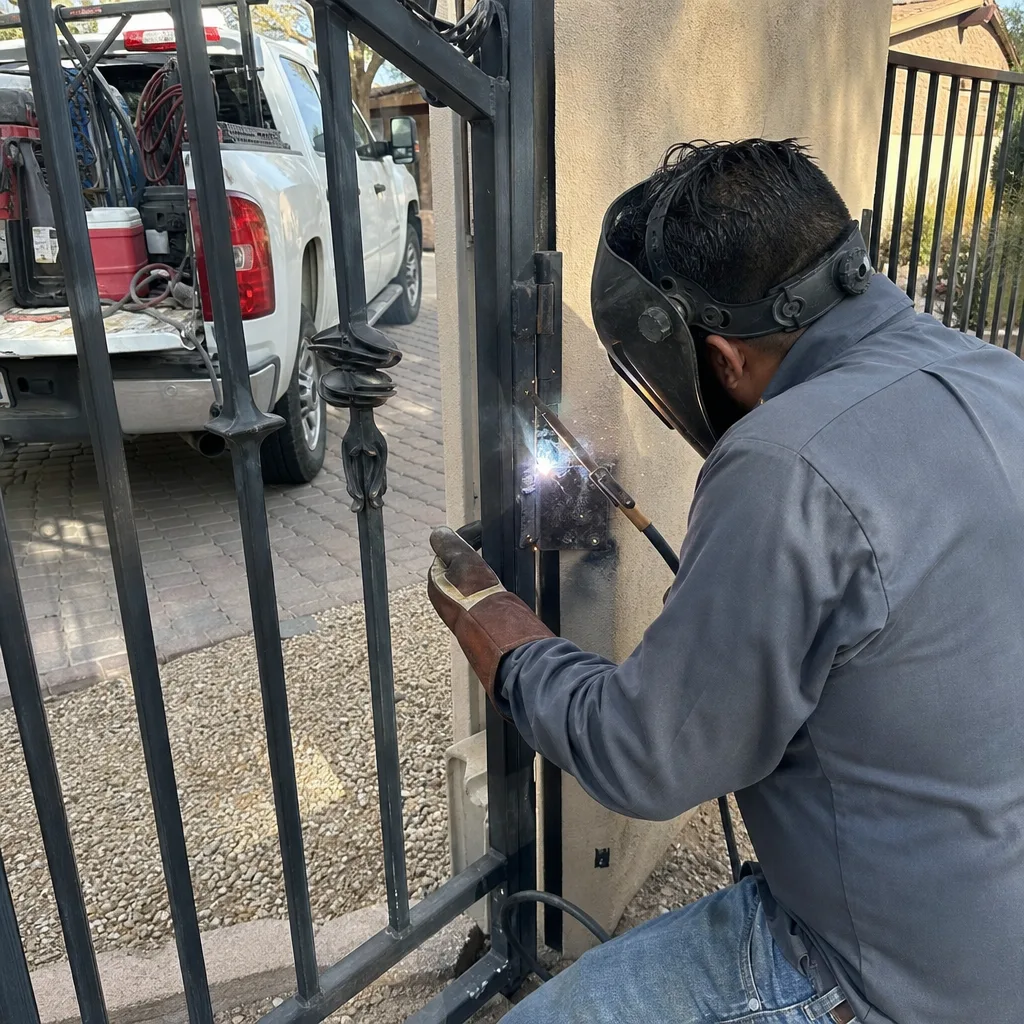
We’ve reviewed hundreds of competitor quotes brought in for our Gate Repair services free second-opinion program. The same patterns appear repeatedly. Here’s what to look for, line by line.
The Buried Trip Fee
Mesa covers 138 square miles. A technician driving from north Mesa to south Mesa in rush hour can spend 45 minutes each way. Some contractors quote “$85 service call” that includes “diagnosis and first hour of labor.” Read carefully: if the actual repair takes 20 minutes, you’ve paid $85 for a trip fee disguised as labor. An honest quote lists trip charges separately, typically $35 to $65 depending on distance from the contractor’s dispatch point.
The Disposal Fee Surprise
Old actuators, control boards, and metal gate sections are recyclable and often have scrap value. A few Mesa-area contractors add “$25 disposal fee” or “$40 environmental handling” that wasn’t mentioned when you scheduled. On an itemized quote, disposal should be listed upfront if it applies at all. Under the Haven Standard, we don’t charge separate disposal fees; the cost of responsible handling is built into our labor rate and disclosed in writing.
“Miscellaneous Hardware” and “Shop Supplies”
This is the widest-open line item in gate repair quoting. We’ve seen “miscellaneous hardware” run from $15 to $180 on quotes for jobs that used four bolts and two washers. An itemized quote names every fastener, bracket, and conduit fitting. If you see “miscellaneous hardware” without a parts list, ask for one. A legitimate contractor can produce it in 30 seconds from their inventory system.
Labor Bundling
The most expensive hidden charge is labor bundling with parts markup. A quote reading “actuator replacement: $650” gives you no basis to compare. The same job itemized as “LiftMaster LA500 actuator: $320; labor 2.5 hrs at $125/hr: $312.50; trip charge: $45; total: $677.50” lets you verify every number against market rates.
Here’s a checklist for reading any Mesa gate repair quote:
- Does the quote list every part by name, manufacturer, and part number?
- Is labor shown in hours with an hourly rate, or as a single bundled figure?
- Are trip charges, disposal fees, and permit costs listed separately or buried?
- Does the quote specify whether parts are OEM or aftermarket?
- Is the total price guaranteed not to exceed without written change order?
- Does the quote include a warranty term in writing?
If the answer to any of questions 1 through 4 is “no,” you’re not looking at a binding scope. You’re looking at an estimate that can grow.
OEM vs. Aftermarket Parts in Mesa’s Heat Environment
Mesa’s climate is harder on gate components than most homeowners realize. Summer highs regularly exceed 110°F. Surface temperatures on metal gate frames hit 140°F. Monsoon season brings humidity swings from 15% to 85% in a single afternoon. These conditions matter enormously for the OEM versus aftermarket decision, and most contractors default to whichever option is on their truck without explaining the tradeoff.
OEM Parts: When They’re Worth the Premium
OEM actuators and control boards are built to the original manufacturer’s thermal specifications. A LiftMaster LA500 actuator, for example, is rated for operating temperatures up to 140°F ambient with sealed housings that keep dust and monsoon moisture out of the gear train. The OEM control board for a DoorKing 9100 includes conformal coating on the circuit board that resists the salt and alkaline dust common in Mesa’s desert soil.
In our experience, OEM parts in Mesa last 40% to 60% longer than generic equivalents on gates with direct sun exposure and no shade structure. The premium is typically 30% to 80% over aftermarket. For a gate on the west side of a Mesa home with no shade, that premium pays back in avoided replacement labor within three to four years.
Aftermarket Parts: When They Make Sense
Aftermarket control boards and actuators have improved significantly. Several Chinese-manufactured brands now offer comparable thermal ratings at half the OEM price. The risk isn’t the part itself; it’s the warranty and technical support. When an aftermarket board fails in July, you’re often waiting two weeks for a replacement while the manufacturer processes a return from overseas. OEM distributors in Phoenix typically stock same-day replacements for Elite, Linear, and LiftMaster boards.
For gates with partial shade, for seasonal homes where the gate cycles less frequently, or for homeowners planning to sell within two years, aftermarket parts can be the rational choice. We stock both and specify which we’re proposing on every quote, under Haven Standard Clause 1.
The Mesa-Specific Factor: UV and Dust Seals
One specification that separates adequate parts from failing parts in Mesa is the IP rating on actuator housings and control enclosures. IP65 means dust-tight and protected against water jets. IP54 means dust-protected but not dust-tight. We’ve replaced dozens of “waterproof” aftermarket actuators in Mesa that failed because dust infiltrated the housing and ground the nylon gears to powder. OEM actuators for desert markets typically specify IP65 or higher. Aftermarket equivalents often don’t, and the difference isn’t visible until the housing is opened.
Why Paying for Diagnosis Upfront Saves Money
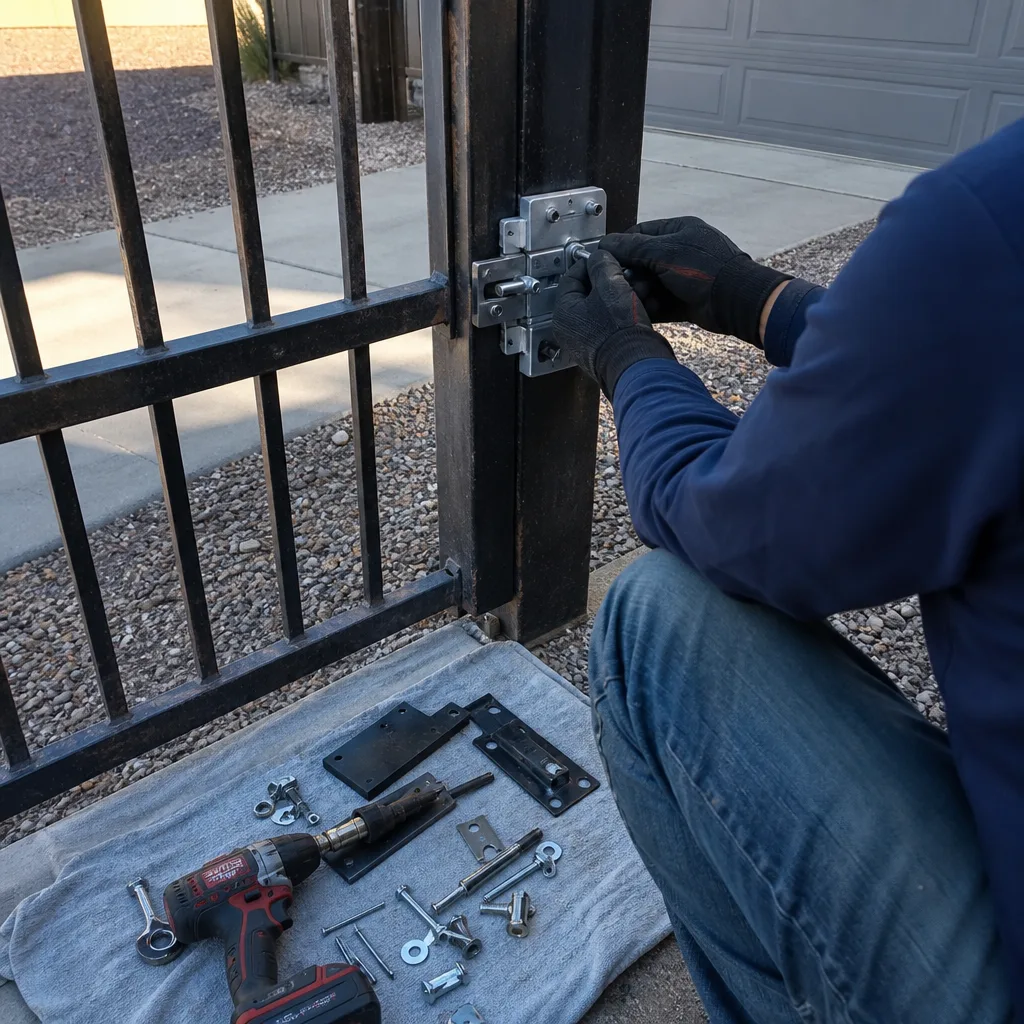
The “free estimate” is the most expensive service call in gate repair. Here’s why.
When a contractor offers free diagnosis, they’re not working for free. They’re building the cost of that diagnostic time into parts markup. A 45-minute diagnosis, travel time, fuel, and vehicle overhead runs $85 to $140 in real cost. If the contractor doesn’t charge it upfront, they recover it by marking up a $180 control board to $320, or by finding additional “recommended” repairs that weren’t part of the original complaint.
We’ve traced this pattern through dozens of second-opinion calls in Mesa. A homeowner receives a “free estimate” quoting $740 for an actuator replacement. They call us for comparison. Our diagnostic fee is $95, applied to the repair if we perform it. Our itemized quote for the same job: actuator at wholesale-plus-15%, 2.5 hours labor at our published rate, trip charge, total $585. The “free” estimate cost $155 more because the original contractor buried $180 in diagnostic cost into a $320 markup on a $140 part.
The diagnostic fee also produces a better repair. When a technician is paid for diagnosis, they have time to test every input, photograph every finding, and identify root causes rather than symptoms. We’ve found failed limit switches misdiagnosed as actuator failures, corroded terminal blocks misdiagnosed as control board failures, and misaligned photo-eyes misdiagnosed as motor problems. Each misdiagnosis costs the homeowner a second service call and another day with a non-working gate.
Under the Haven Standard, our diagnostic fee includes a written assessment with photographs, a ranked list of recommended repairs with priority levels, and a flat-price quote for each option. You can take that document to any other contractor for comparison. Most homeowners don’t, because the document already shows them exactly what they’re buying.
What a Written Scope Prevents: Documented Cases of Duplicate Charges
Every visit from Vance Gate Repair Mesa home leaves a documented record: what we found, what we adjusted, what we replaced, and the part numbers involved. This isn’t paperwork for its own sake. It’s how we prevent the most common financial injury in gate repair, paying twice to rediscover the same problem.
Case 1: The Limit Switch That Wasn’t Documented
A Mesa homeowner in the Las Sendas area called us in March 2025 with a swing gate that wouldn’t close fully. The previous contractor, six months earlier, had “adjusted the motor” for $285 with no written scope. Our diagnosis: the limit switch was set 14 degrees past full travel, a known issue with that Elite operator model when temperature swings cause thermal expansion in the actuator housing. The previous technician had adjusted the mechanical stop rather than the electronic limit, which is faster but doesn’t hold calibration. We reset the limit switch, photographed the new position on the adjustment dial, and recorded the degree setting in the job file. Total cost: $185. If the first visit had included documentation, the homeowner would have known the limit was adjusted and could have monitored it. Instead, they paid for partial diagnosis twice.
Case 2: The Control Board with No Part Number
A commercial property near Falcon Field had a slide gate operator replaced in 2023 by a contractor who installed an aftermarket board with no visible part number and no documentation. When the board failed in June 2025, the property manager called three contractors; none could identify the board without disassembling the housing. We traced it through connector pinout and firmware version, ordered a compatible replacement, and installed it with a printed wiring diagram and part number label inside the enclosure. The two hours of identification work added $240 to a job that should have been a simple swap. A written scope with part numbers would have prevented it entirely.
Case 3: The “Repaired” Hinge That Wasn’t
In the Alta Mesa neighborhood, a homeowner paid $340 for “hinge service” in 2024. The quote said only “service hinges.” When the gate sagged again eight months later, our inspection found that the original contractor had welded the seized hinge rather than replacing it, a faster repair that concealed the underlying galling in the pin bore. The weld cracked under thermal stress. We cut off the hinge, installed a new ball-bearing pair with grease fittings, and left a photo showing the weld fracture surface. The homeowner paid for two hinge repairs in eighteen months because the first one was undocumented and improperly performed.
These cases illustrate Haven Standard Clause 4: Evidence on every job. The photo record and written scope aren’t for our convenience. They’re for the next technician, who may be us in three years or someone else tomorrow. Either way, nobody pays to rediscover what was already found.
Repair Costs by Gate Type and Mechanism
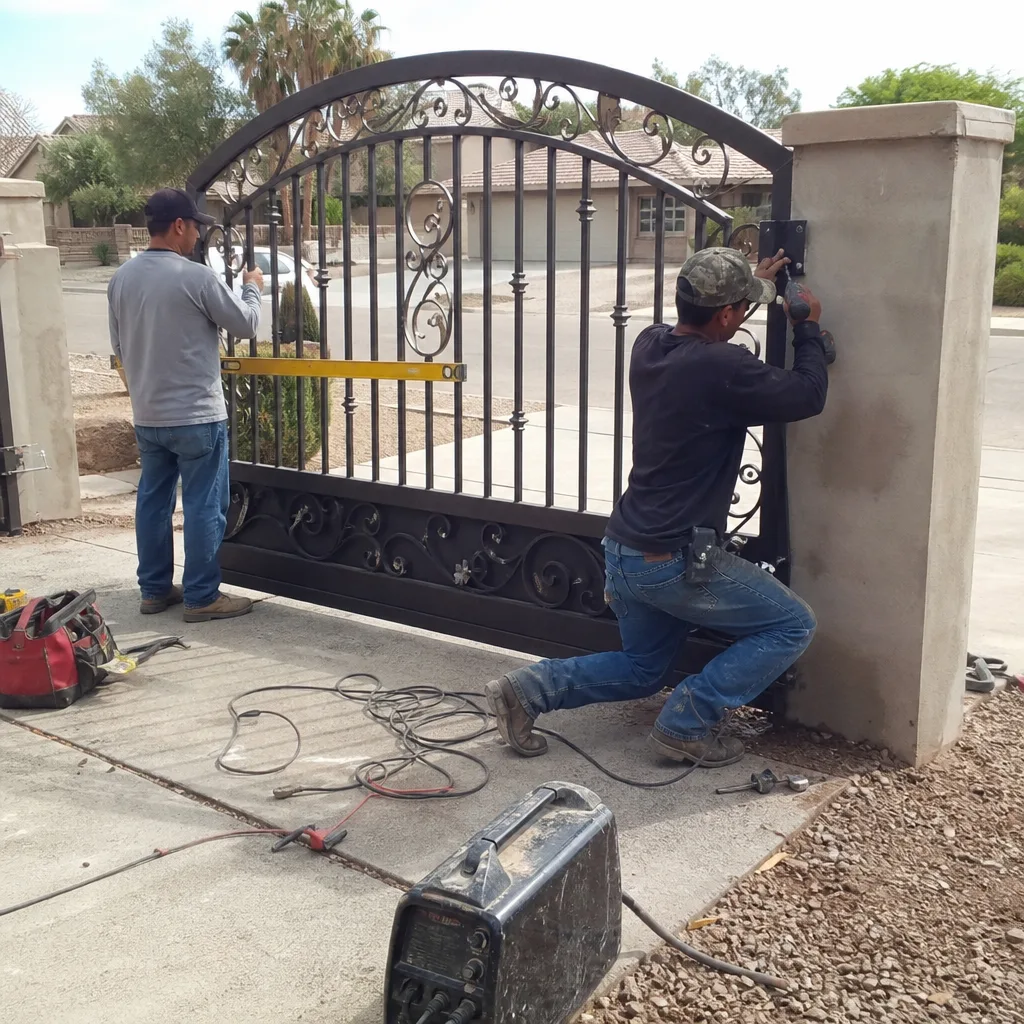
Different gate types in Mesa develop different failure patterns, and the repair costs vary accordingly. For more guides & resources on specific gate mechanisms, see our blog; here’s what we see in the field, organized by mechanism.
Swing Gates (Single and Dual)
Single swing gates are the simplest and cheapest to repair. Common issues: actuator arm failure ($365-$655), control board replacement ($255-$435), hinge seizure ($170-$360), and photo-eye misalignment ($125-$225 for realignment and testing). Dual swing gates double the actuator cost but don’t always double labor, since both arms are typically accessible from one service position.
In Mesa, swing gates on the west and south exposures show actuator failure 30% faster than shaded gates. We note exposure in our documentation and recommend OEM thermal-rated parts for unshaded installations.
Slide Gates (V-Track and Cantilever)
Slide gates have more moving parts and higher repair complexity. V-track gates suffer from track deformation, roller wear, and chain or belt tension issues. Cantilever gates add counterbalance spring and trolley wheel maintenance. Typical repairs: roller replacement ($195-$380), chain or belt replacement ($240-$420 including tension adjustment), motor/gearbox service ($320-$580), and track realignment ($185-$340).
Mesa’s hard water and alkaline soil accelerate corrosion on V-track hardware. We see more stainless-steel roller upgrades in Mesa than in Phoenix or Scottsdale because the desert environment destroys zinc-plated hardware in four to six years.
Barrier Arms and Vertical Pivot Gates
Commercial installations in Mesa, particularly near Falcon Field, Mesa Gateway Airport, and the industrial parks along Loop 202, use barrier arms and vertical pivot gates that require specialized knowledge. Barrier arm repairs typically run $280-$520 for motor or clutch service. Vertical pivot gates, with their hydraulic or heavy-duty electromechanical operators, range from $450-$1,200 for major component replacement. These mechanisms are less common in residential Mesa but worth mentioning because some homeowners inherit them with commercial-to-residential conversions.
How Mesa’s Climate Affects Gate Repair Pricing
Mesa’s climate isn’t an abstract concern for gate longevity. It directly affects which parts fail, how often they fail, and what the rational repair strategy looks like.
Thermal Cycling and Electronic Failure
Mesa’s daily temperature swing from 65°F at 6 AM to 110°F at 4 PM creates thermal cycling that fatigues solder joints on control boards. Capacitors dry out faster. Connectors work loose. We see a 40% increase in control board failures in July and August compared to March and April. This isn’t random; it’s physics. The repair implication is that a control board replacement in Mesa should include thermal inspection of the enclosure, verification of ventilation, and often installation of a sun shield or relocation to shaded mounting. A contractor who swaps the board without addressing the thermal environment is setting up a repeat failure.
Monsoon Moisture and Corrosion
July and August monsoons bring brief, intense humidity that condenses on metal surfaces cooled by overnight radiation. Gate frames, track hardware, and actuator housings that ran hot all day flash-rust when moist air hits them at 85°F dew points. We’ve replaced hinge pins in Mesa that looked fine in May and were frozen solid by September. The repair implication: grease type matters. Standard lithium grease washes out in monsoon conditions. We use calcium-sulfonate complex grease with corrosion inhibitors on all Mesa hinge and roller services, and we document the grease type so the next technician knows what’s in there.
Dust and Sealing
Mesa’s dust is alkaline and abrasive. It infiltrates any housing below IP65 rating and turns gear grease into grinding compound. The repair implication: when we replace an actuator or motor in Mesa, we inspect the enclosure seals and recommend replacement if they’re hardened or cracked. This adds $25-$65 to the parts list but typically extends component life by two to three years. A bundled quote rarely includes this because the contractor doesn’t profit from selling a $12 seal kit.
Soil and Foundation Movement
Mesa’s expansive clay soils, particularly in the eastern mesa areas near Red Mountain, shift with moisture changes. Gate posts tilt. Track alignment drifts. Hinge bind develops gradually until the actuator overloads and fails. The repair implication: we check post plumb and track level on every service call, photograph the measurements, and flag gradual movement before it causes component failure. Catching a 2-degree post tilt early means a $200 post adjustment instead of a $680 actuator replacement six months later.
For Gate Installation in Mesa, these climate factors are designed in from the start. For repairs, they’re diagnosed and documented so the fix lasts.
Common Mistakes to Avoid
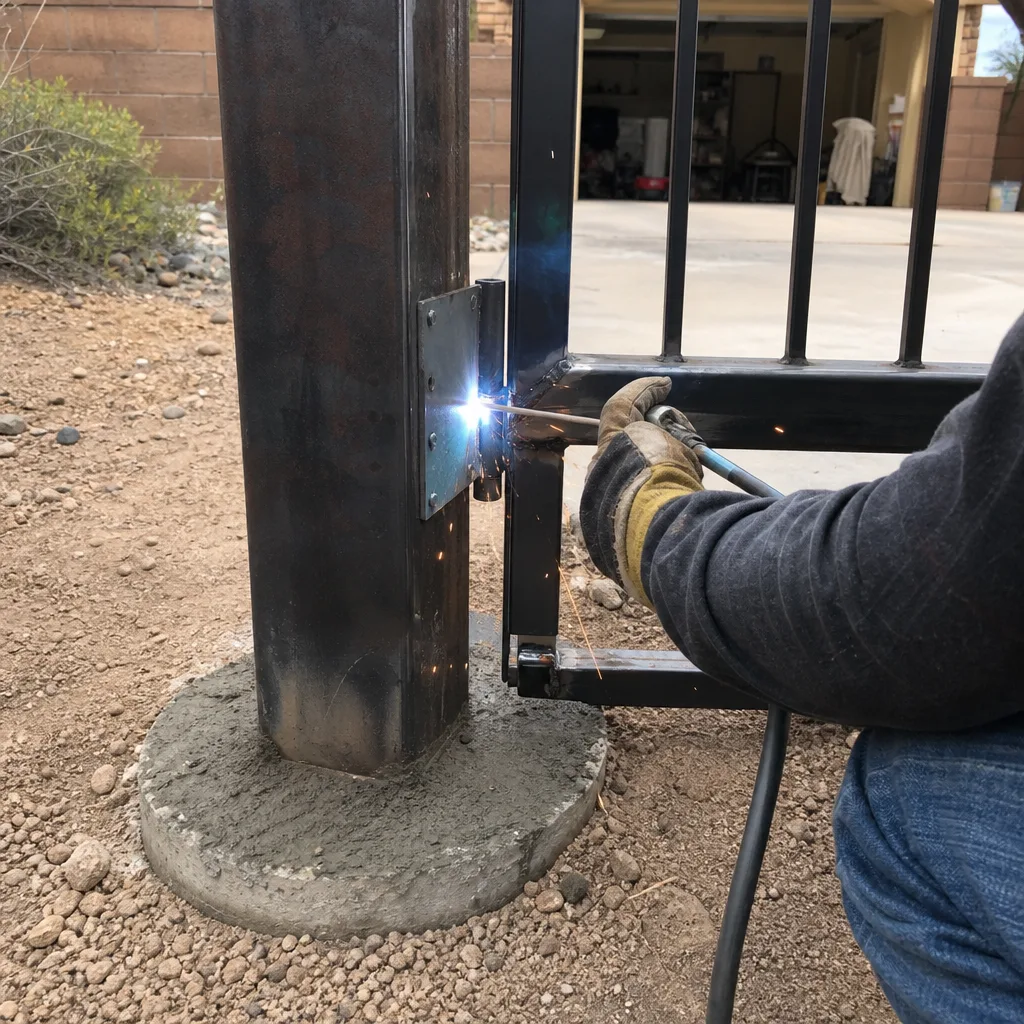
- Accepting a verbal estimate. In Mesa, a verbal estimate isn’t enforceable and leaves no record of what was promised. Every quote should be written, itemized, and signed before work starts. Haven Standard Clause 1 exists because we’ve seen too many homeowners pay for “surprise” charges that contradict what they were told on the phone.
- Ignoring the actuator brand. Some contractors install whatever actuator they have on the truck, even when it doesn’t match the existing control board or remote system. This forces you to replace working components for compatibility. We service nine major brands so we can match what’s already installed rather than steering you toward unnecessary replacement.
- Paying for “gate tuning” or “preventive maintenance” without scope. These are legitimate services when defined, but vague language lets contractors charge $200 for spraying WD-40 and wiggling a connector. A proper maintenance scope lists every point inspected, every measurement taken, and every adjustment made, with photos.
- Assuming all technicians are qualified for all gate types. A swing-gate specialist may never have worked on a cantilever slide gate. Ask specifically about experience with your mechanism. We’ve been called to fix other contractors’ work on barrier arms and vertical pivot gates that were clearly outside their experience.
- Neglecting the photo-eye alignment after any repair. Any work that disturbs the gate leaf, actuator mounting, or control settings can throw off photo-eye alignment. A contractor who finishes without testing the safety reversal system has left a hazard. We test and document photo-eye function on every visit, under Haven Standard Clause 3 (Safety verification).
- Choosing the lowest quote without comparing line items. The lowest bundled quote often becomes the highest final invoice. Itemized comparison is the only valid method. Our free second-opinion service exists specifically to help Mesa homeowners decode competitor quotes.
- Waiting for complete failure. A grinding actuator, sagging gate, or intermittent remote response is cheaper to fix than a seized mechanism or burned-out motor. The diagnostic fee for early assessment is typically one-third the cost of emergency repair after catastrophic failure.
When to Call a Professional
Some gate issues are genuinely hazardous and should not be approached without training. High-tension spring systems on vertical pivot gates and some slide-gate counterbalance mechanisms can cause serious injury if released improperly. Electrical work on 240V operators requires proper lockout procedures. Welding on load-bearing gate frames affects structural integrity.
Call a professional if: the gate is stuck partially open and cannot be secured; the actuator makes grinding or clicking sounds indicating internal gear failure; the control board shows burn marks or melted connectors; the gate reverses unpredictably or fails to reverse when obstructed; or any welding, cutting, or electrical modification is needed.
Gate Repair in Mesa from Vance Gate Repair Mesa includes a written scope, itemized pricing, and documented photo record on every job. We offer free estimates, and our free second-opinion service lets you bring any competitor’s written quote for review at no cost. Call (520) 666-6834 to schedule. A live person answers 24 hours a day.
Frequently Asked Questions
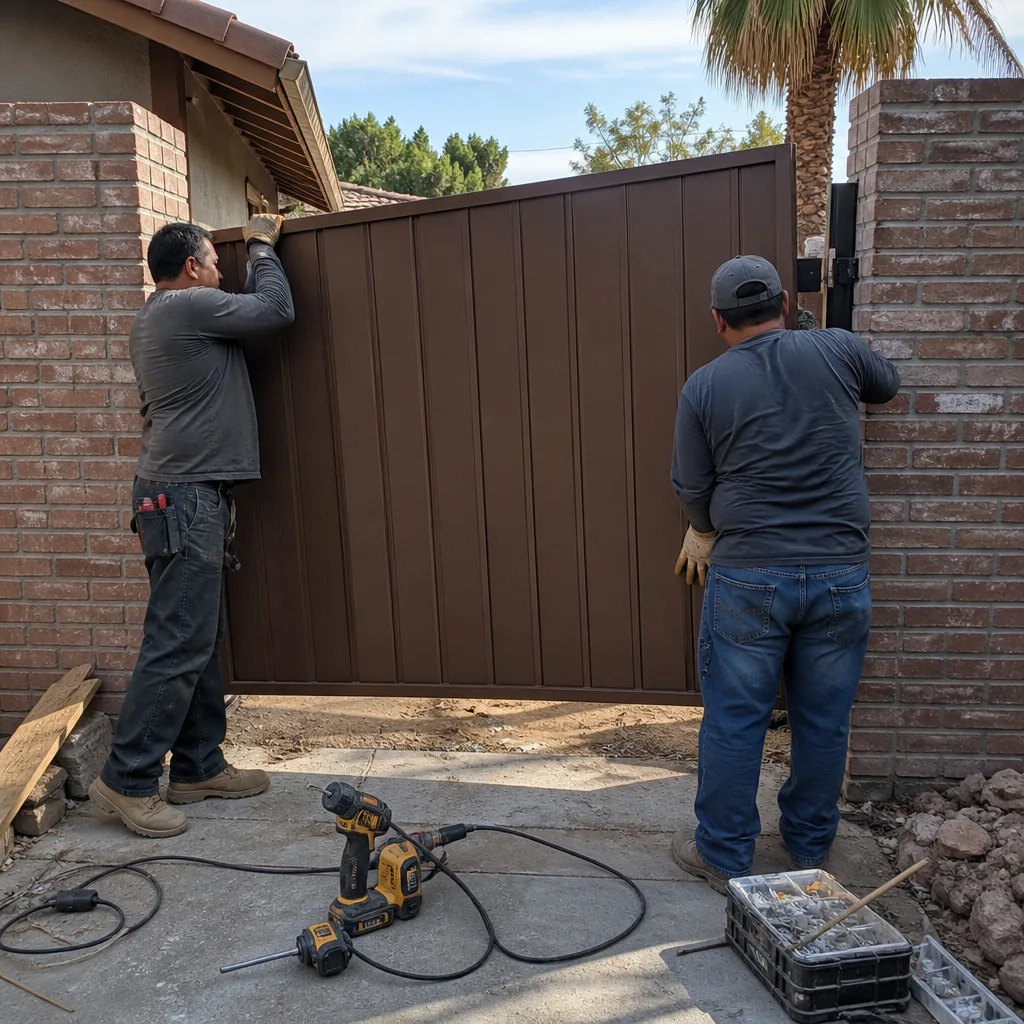
Most single-component gate repairs in Mesa range from $180 to $680 when parts and labor are itemized separately. Common repairs like hinge rebuilds and roller replacements fall at the lower end, while actuator replacements and control board swaps with OEM parts run higher. Call (520) 666-6834 for an exact quote on your specific gate, estimates are free.
The difference usually comes from three sources: parts markup percentage, whether diagnosis is bundled or charged separately, and what’s actually included in the scope. A $450 quote and a $720 quote for the same “actuator replacement” may reflect different part brands, different labor hour assumptions, or hidden trip and disposal fees. Only itemized quotes can be compared accurately.
Yes. A paid diagnostic produces a written assessment with photographed findings that you own. A “free estimate” typically buries diagnostic cost into parts markup, making the final invoice higher than an itemized repair from a company that charges for diagnosis upfront. We’ve documented cases where the “free” estimate cost $150+ more than our itemized equivalent.
A quality actuator with proper installation and periodic maintenance typically lasts 8 to 12 years in Mesa. Unshaded west-facing installations, gates that cycle more than 20 times daily, and actuators below IP65 sealing rating often fail in 4 to 6 years. OEM parts with thermal ratings appropriate for desert conditions last 40% to 60% longer than unrated aftermarket equivalents in our experience.
OEM parts are built to the original manufacturer’s specifications, including thermal ratings and environmental sealing. Aftermarket parts are typically less expensive but may lack desert-specific ratings. For unshaded gates in Mesa, OEM is usually the better long-term value. For shaded gates, seasonal homes, or planned resale within two years, quality aftermarket parts can be appropriate. We specify which we’re proposing on every quote.
We service nine major automation brands: LiftMaster, FAAC, BFT, Linear, Viking, Ghost Controls, DoorKing, Elite, and Mighty Mule. We also work on custom and legacy systems. Because we service multiple brands, we can repair what’s installed rather than steering you toward replacement for compatibility. For Gate Motor & Opener in Mesa, we match the repair to your existing system.
A proper scope lists every part by name, manufacturer, and part number; labor in hours with an hourly rate; trip charges and any permit or disposal fees separately; whether parts are OEM or aftermarket; the total guaranteed price; and warranty terms. Under the Haven Standard, we also include a photographed record of findings and adjustments, provided to you before we leave.
The Bottom Line
Gate repair pricing in Mesa doesn’t have to be opaque. The $250 difference between quotes is almost always explainable, line by line, if the contractor will show you the lines. Demand itemized quotes. Ask for part numbers. Pay for diagnosis that produces a document you can compare. And choose a contractor who leaves a record, because the next repair will come, and nobody should pay twice to rediscover the same problem.
At Vance Gate Repair Mesa, every job starts with a written price and ends with photographic evidence. That’s Haven Standard Clause 1 and Clause 4, and it’s how we’ve operated since 2014. Call (520) 666-6834 for a free estimate or bring any competitor’s written quote for our free second-opinion review. A live person answers 24 hours a day.
Written by Adrian Vance, Owner at Vance Gate Repair Mesa, serving Mesa since 2014.