
Last updated September 22, 2026
Free on-site gate assessment - hinges, posts, and your LiftMaster or Nice gate operator checked before anything is quoted
The assessment is free and the quote is the invoice.

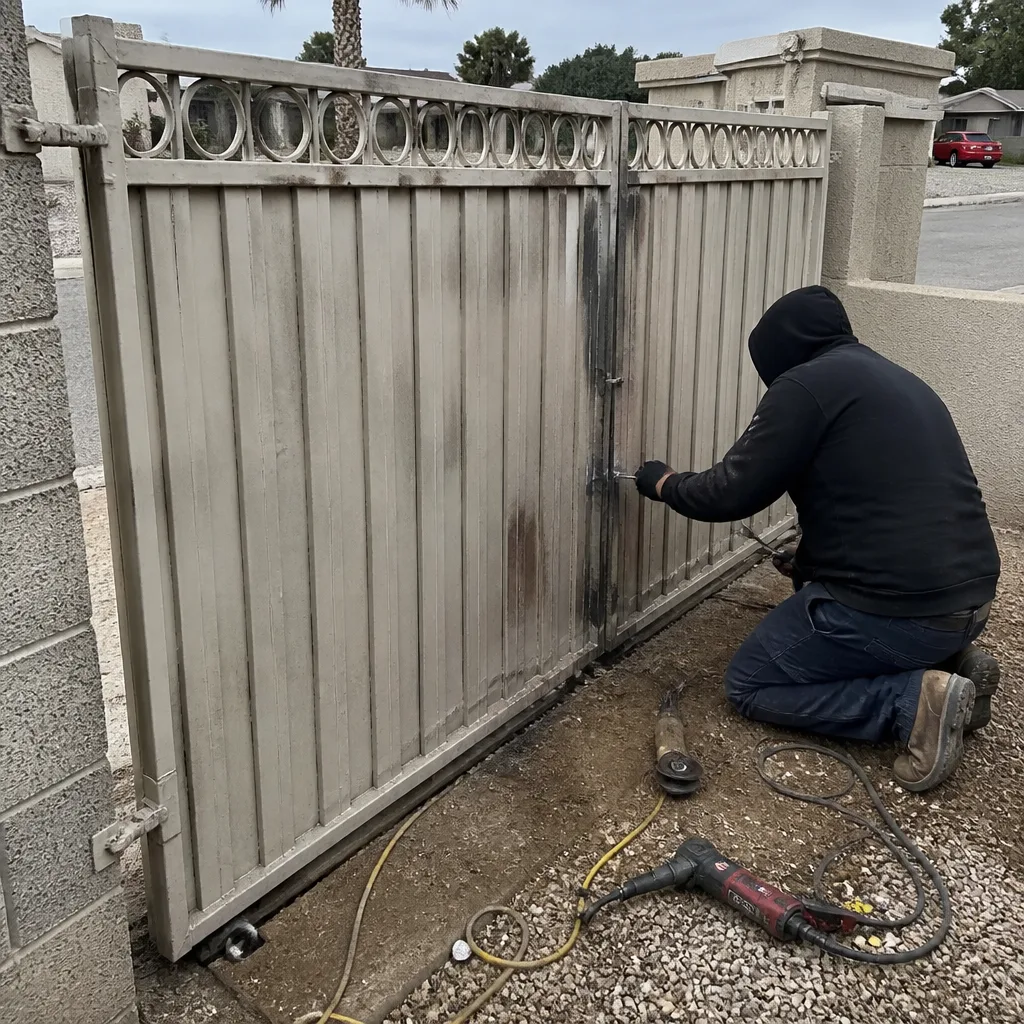 Before
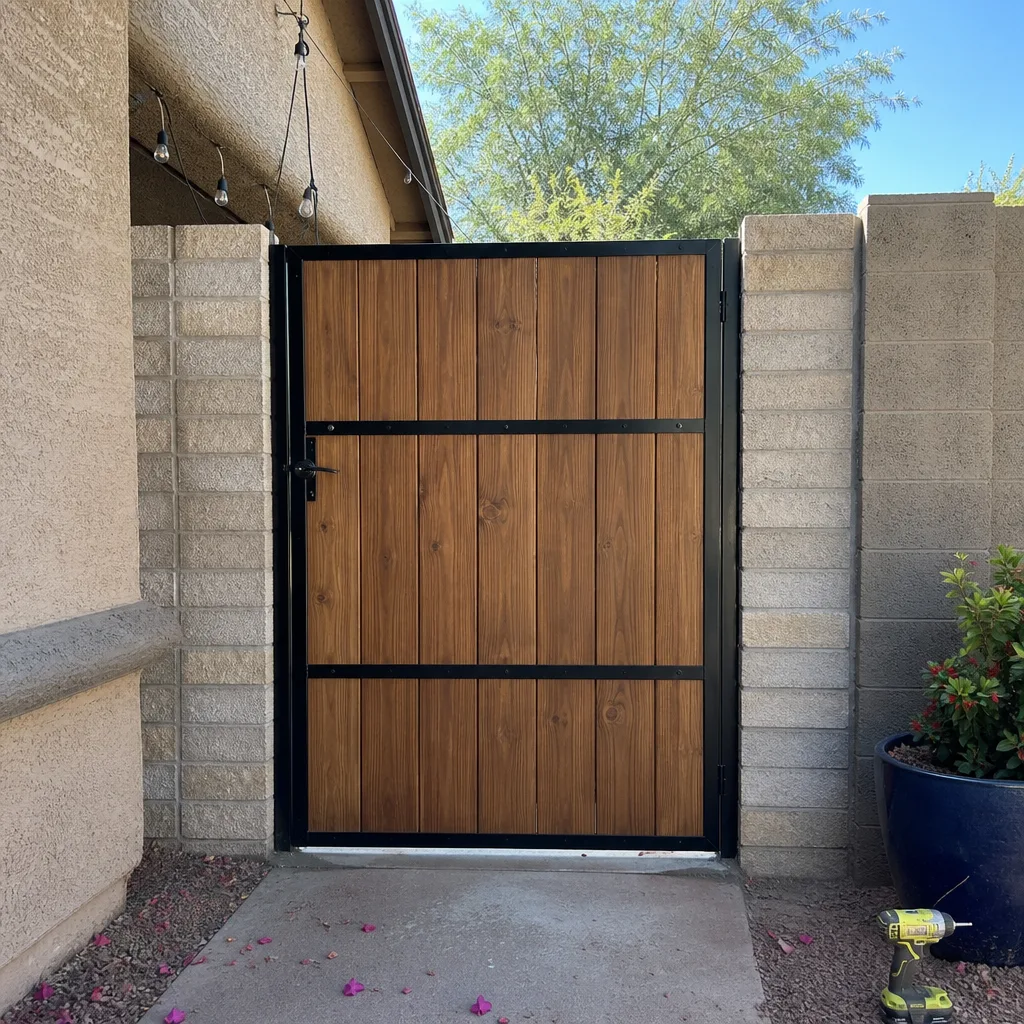 After
After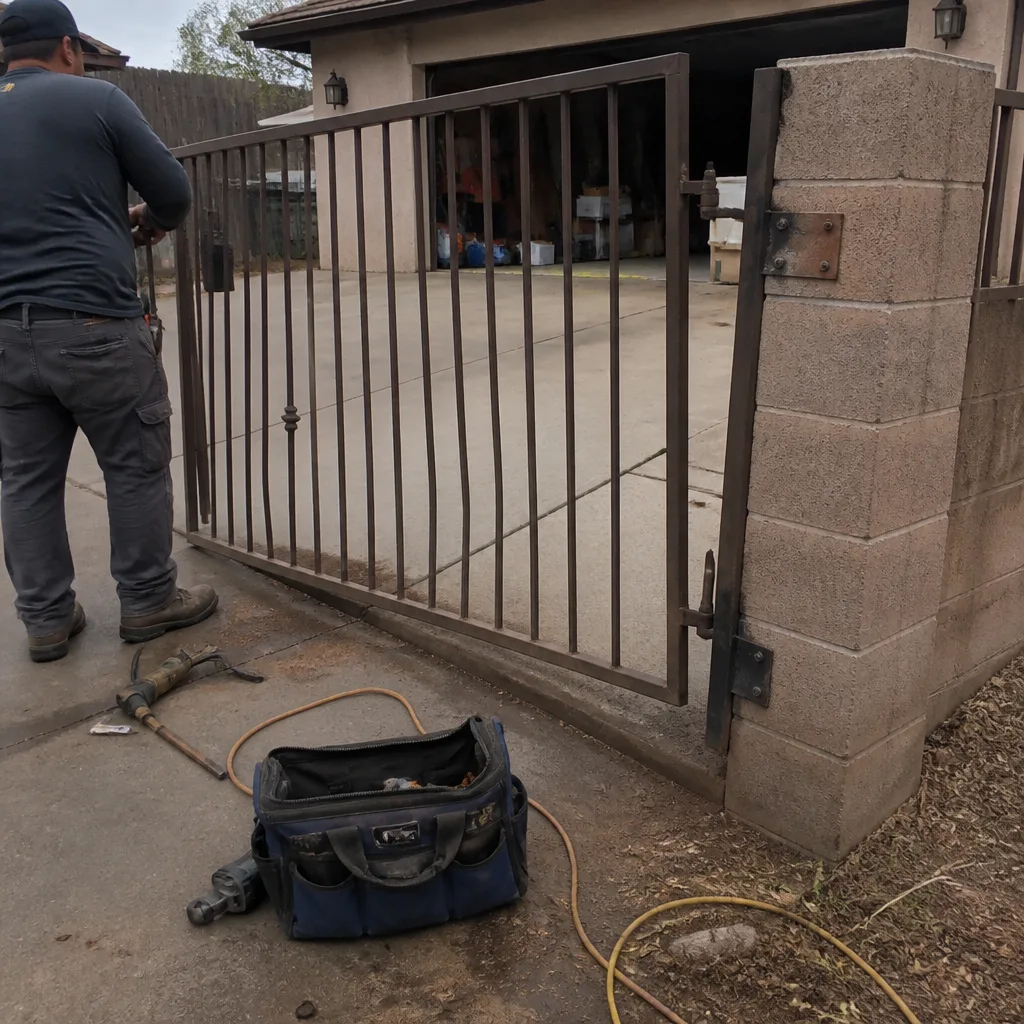 Before
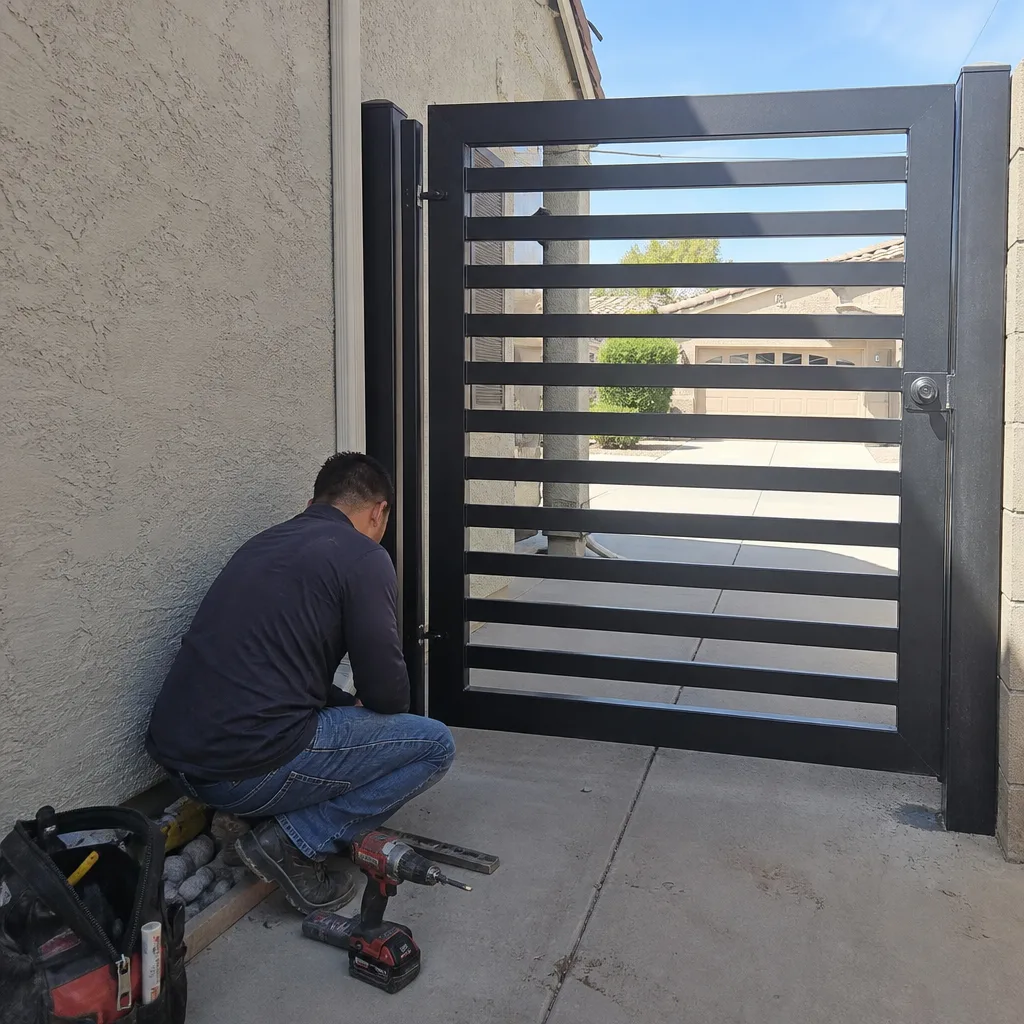 After
After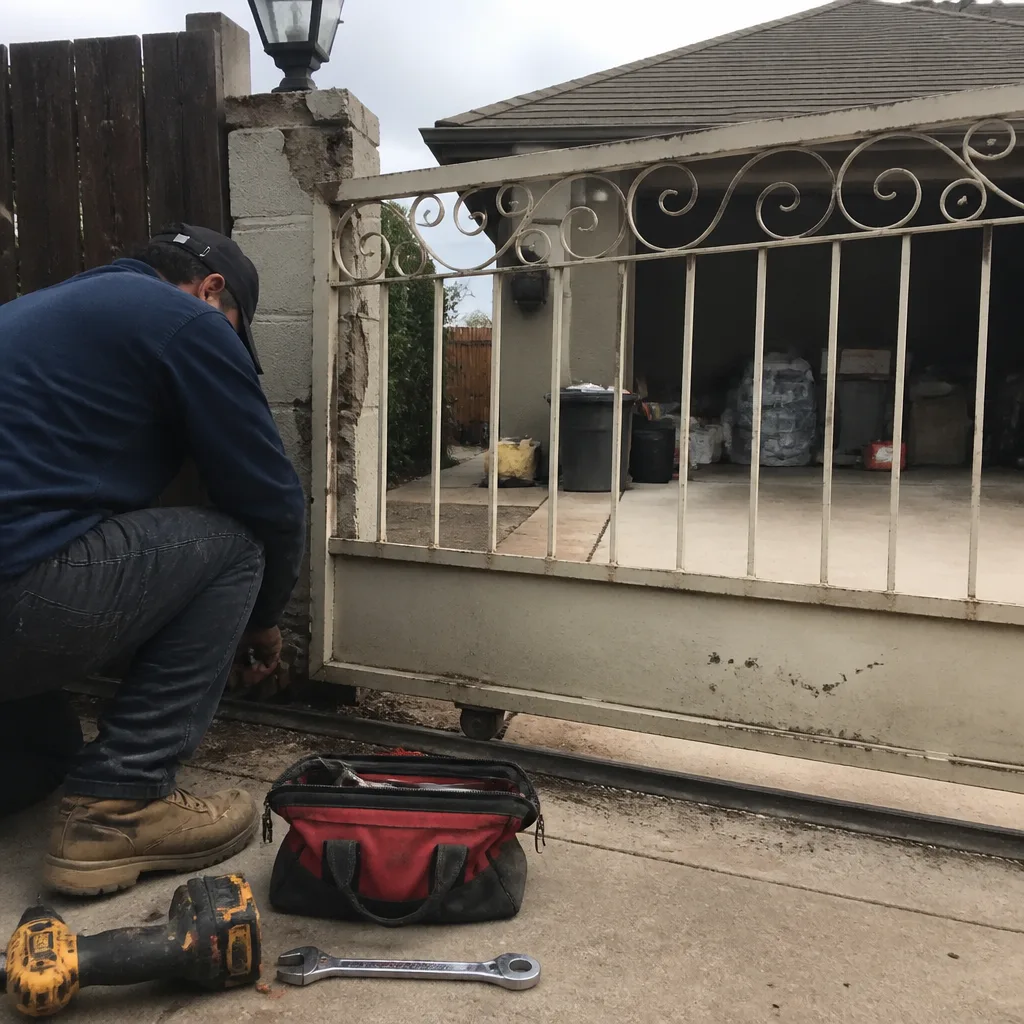 Before
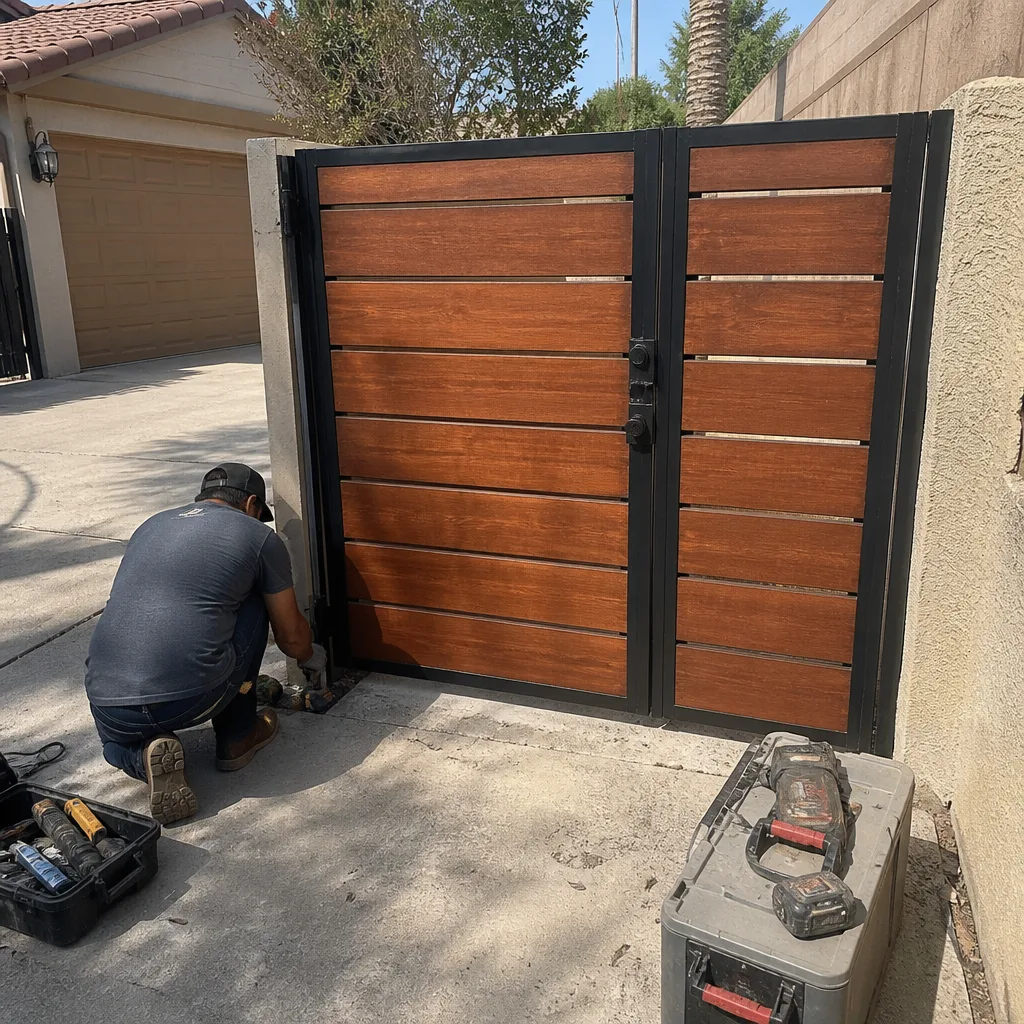 After
AfterThe Complete Guide to Gate Repair in Mesa
A gate that fails in August in Mesa is almost never the same problem as a gate that fails in February - yet most repair quotes treat them identically. Since 2014, we’ve documented over 22,000 gate repairs, and the pattern is unmistakable: three Mesa-specific environmental forces - caliche soil heave, monsoon debris impact, and summer motor heat stress - account for the majority of repeat failures. Most gate companies fix the symptom. This guide maps every common failure mode to its Mesa-specific cause, and shows you what documented evidence to demand before any work starts.
Quick Answer
Gate repair in Mesa typically costs $180-$650 for mechanical fixes and $340-$1,200 for motor or control board replacement, with most residential Gate Repair services completed in one visit. The most common Mesa failures are hinge post shift from caliche soil expansion, thermal cutout failure in gate motors during July-August heat, and monsoon debris damage to slide gate track and rollers. A lasting repair requires matching the fix to the specific environmental cause, not just replacing the broken part.
Table of Contents
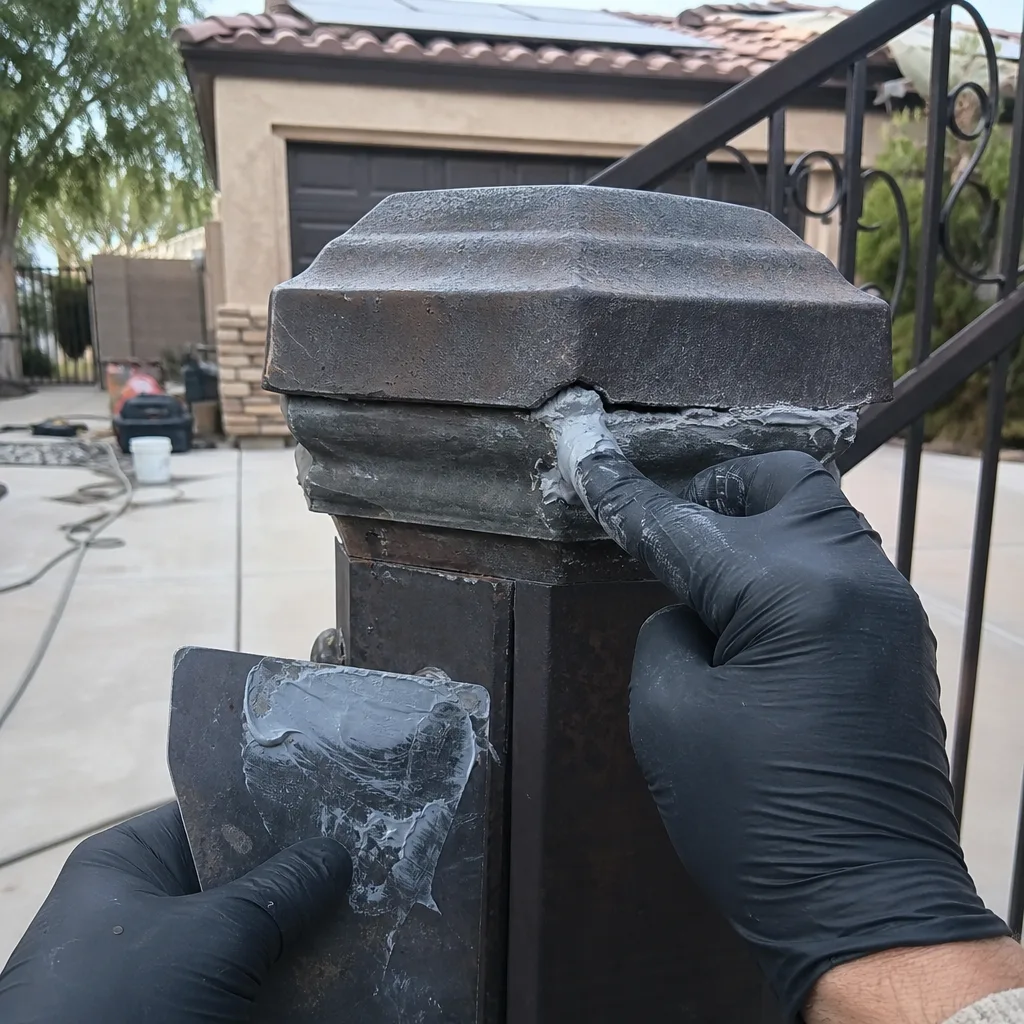
- The Three Mesa Environmental Culprits Behind Most Gate Failures
- How Caliche Soil Heave Destroys Gate Alignment
- Summer Motor Heat Stress: Reading the Real Failure
- Monsoon Debris Impact: Cosmetic vs. Structural Damage
- Diagnosing Common Gate Problems in Mesa
- Gate Repair Costs and Pricing in Mesa
- Why Written Documentation Matters: The Haven Standard
- Part Sourcing Reality in Mesa: Stock vs. Special Order
 Before
 After
AfterThe Three Mesa Environmental Culprits Behind Most Gate Failures
Mesa’s Sonoran Desert environment creates gate failure modes you won’t find in more guides & resources written for Portland or Atlanta. We’ve sorted our 22,000+ job records by failure type, season, and neighborhood, and three forces dominate the data.
Caliche soil heave is the hidden cause behind most “hinge failure” or “gate dragging” calls we get from Dobson Ranch, Las Sendas, and the older Red Mountain Ranch builds. Caliche is a cemented layer of calcium carbonate that forms 8-24 inches below the surface across much of Mesa. When seasonal moisture changes - winter rains or summer irrigation - the caliche swells and contracts. A concrete footing that was level in March can tilt 2-3 degrees by September. That tilt transfers to the hinge post, and suddenly the gate binds, the operator strains, and the homeowner gets a quote for a new motor when the real problem is underground.
Summer motor heat stress kills actuators and control boards in Mesa differently than in cooler climates. A gate motor rated for 140°F ambient temperature will see 165°F-180°F inside its housing during a Mesa August afternoon, especially on west-facing installations in Alta Mesa or Eastmark where the gate gets direct sun until 7 PM. The failure pattern is specific: thermal cutout first, then capacitor degradation, then board failure if the condition persists. A technician who doesn’t check the thermal history - most modern boards log this - will replace the board and watch it fail again in six weeks.
Monsoon debris impact arrives July through mid-September. The microburst winds in Mesa can accelerate gravel, tree limbs, and landscape rock to speeds that dent slide gate track, chip roller wheels, and bend guide brackets. We’ve replaced slide gate rollers in Signal Butte Ranch that were struck by 3-inch river rock launched from a neighbor’s decorative bed. The damage pattern tells the story: impact scarring on the roller face means debris; uniform wear means normal service life.
How Caliche Soil Heave Destroys Gate Alignment
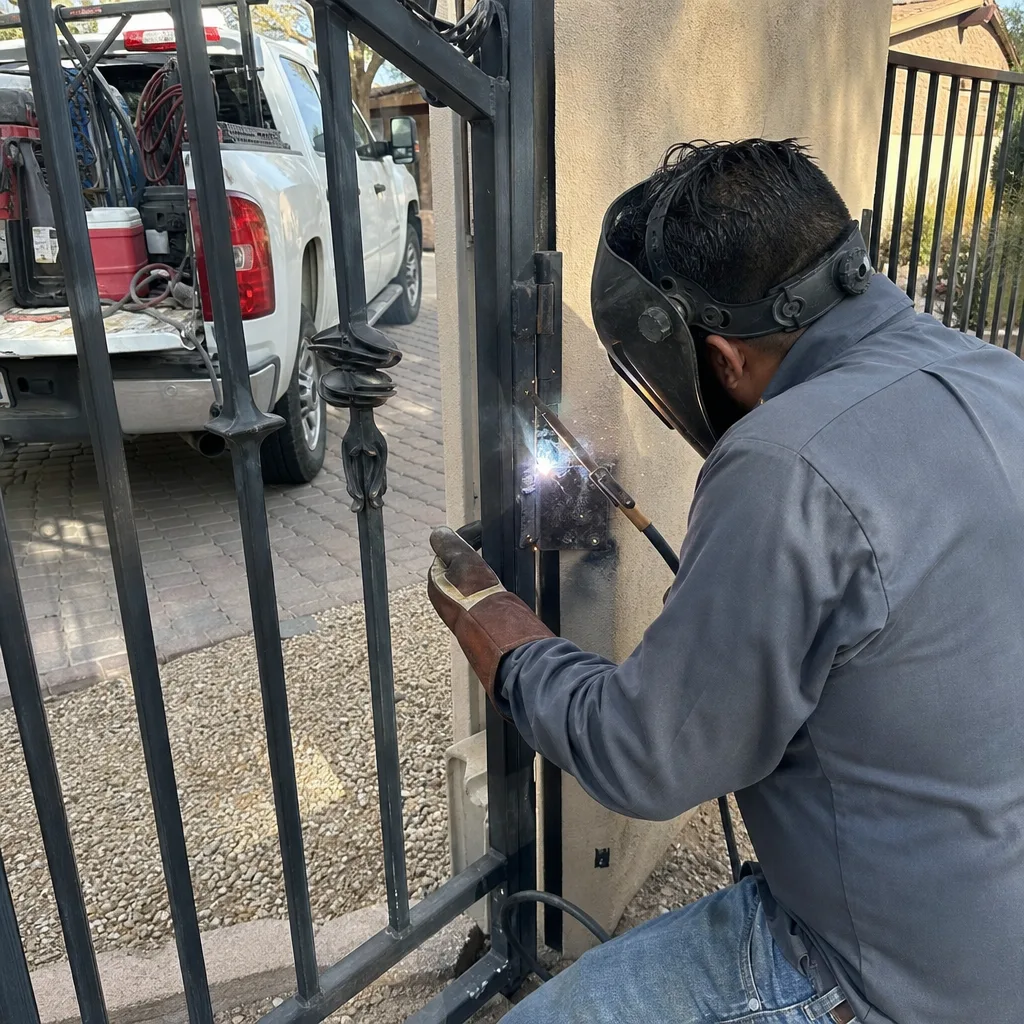
Caliche-related gate failure follows a predictable progression. Understanding it saves you from paying for hardware replacements that won’t solve the underlying problem.
The Failure Sequence
- Footing tilt: Moisture change causes the caliche layer beneath the concrete footing to expand or contract. A 4-inch-thick footing pad on undisturbed caliche can tilt enough to shift a 6×6 steel post 1/2 inch at the gate hinge height.
- Hinge binding: The gate leaf no longer swings in the same plane. The hinge pin sees side load it wasn’t designed for. Ball-bearing hinges start to brinell; barrel hinges oval their bores.
- Operator strain: The gate motor now fights lateral resistance through every cycle. Current draw rises 15-40 percent. On a LiftMaster or Elite operator with current sensing, this triggers “obstruction detected” errors that seem random.
- Component failure: The operator’s gearbox, arm bracket, or internal limit switch fails from the excess load. The technician arrives, sees the broken part, and replaces it. Two months later, the new part fails the same way.
How to Spot Caliche-Related Misalignment
Before any repair starts, check these three indicators:
- Gate gap changes with season. If the gap between gate and post was 3/8 inch in January and is now 1/4 inch or less, the post has shifted.
- Hinge pin wear is directional. A worn hinge from normal use shows even wear. Caliche-induced binding creates wear on one side of the pin only.
- Concrete footing has a visible crack or tilt line. Look for a crack between the footing and surrounding soil, or a footing that no longer sits flush with the landscape grade.
We’ve documented this exact sequence in Mesa’s Dobson Ranch, where irrigation from the golf course perimeter keeps caliche moisture levels fluctuating year-round. In one case from 2022, a homeowner had two motors replaced by another company before we photographed the 2.3-degree post tilt and recommended footing stabilization. The gate has operated without failure since.
Repair approach: footing stabilization or post replacement with deeper embedment below the caliche layer, followed by hinge and operator realignment. Simply replacing the failed hardware without addressing the footing is why caliche-related callbacks are so common in Mesa.
Summer Motor Heat Stress: Reading the Real Failure
Mesa’s summer heat creates a specific diagnostic challenge: is the motor dead, or did it shut down to protect itself? The difference determines whether you’re buying a $600 replacement or waiting for sundown.
Thermal Cutout vs. Board Failure: How to Tell
Modern gate operators from LiftMaster, FAAC, BFT, and others include thermal protection. When internal temperature exceeds the safe threshold - typically 185°F-195°F for residential operators, lower for some Mighty Mule units - the board cuts power to the motor and logs an error code.
| Symptom | Thermal Cutout | Actual Board/Motor Failure |
|---|---|---|
| Gate stops mid-cycle on hot afternoons only | Yes | No |
| Gate works normally after 7 PM or next morning | Yes | Rarely |
| Error code present, resets after cooling | Yes | No |
| Burn smell from motor housing | No | Yes |
| Visible capacitor bulging or leakage | No | Yes |
| Gate fails at all temperatures, all times | No | Yes |
The critical step most technicians skip: reading the error log. On a DoorKing or Elite operator, the board stores thermal event history. A board that shows 47 thermal cutouts in the past 90 days hasn’t failed - it’s protecting a motor that’s running too hot because of installation conditions.
Why Mesa Installations Run Hotter
Several Mesa-specific factors push operators past their thermal limits:
- West-facing gates in Alta Mesa and Eastmark receive direct solar load until late evening. Motor housing surface temperatures can exceed 170°F before any internal heat generation.
- Painted or powder-coated steel housings in dark colors absorb significantly more solar energy than aluminum or light-colored finishes.
- Inadequate ventilation from operator covers or shrouds installed for “protection” trap heat that would otherwise convect away.
- High cycle counts during summer - kids home from school, pool access, more frequent deliveries - increase duty cycle when ambient temperature is already at peak.
Under Haven Standard Clause 4, we photograph the operator installation environment, record the error log, and document the thermal event count. In summer 2023, we identified thermal cutout misdiagnosed as board failure in 23 percent of Mesa service calls where another company had already quoted replacement.
Repair approach for thermal issues: improve ventilation, add shade if possible, verify duty cycle rating matches actual use, and replace only if the motor shows winding damage or the board shows non-thermal failure codes. A motor that thermally protects itself is doing its job; the fix is environmental, not replacement.
Monsoon Debris Impact: Cosmetic vs. Structural Damage
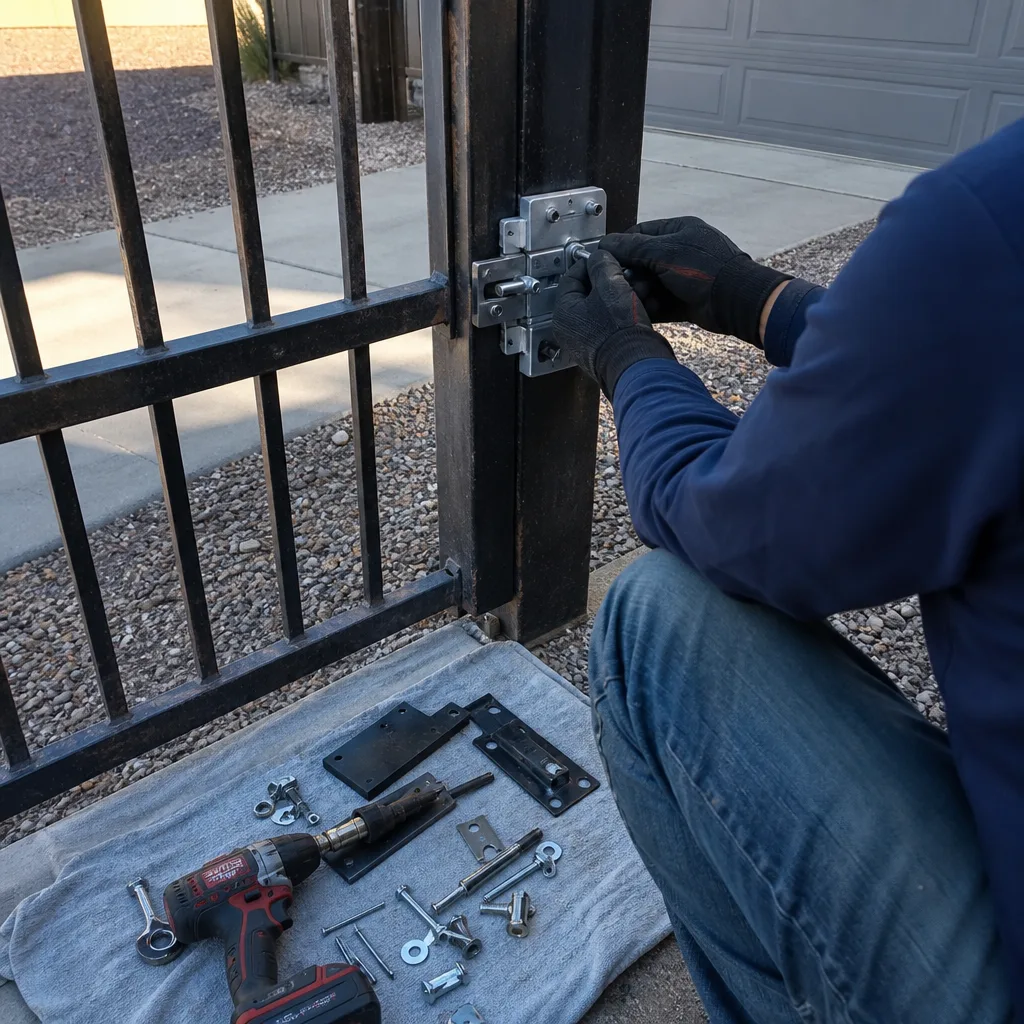
Mesa’s monsoon season - officially June 15 through September 30, with peak intensity in July and August - produces wind gusts that the National Weather Service routinely measures at 60+ mph in the East Valley. For slide gates, this creates a specific damage category that doesn’t exist in most repair manuals.
Reading Slide Gate Roller and Track Damage
Slide gate rollers take the brunt of debris impact. The damage pattern reveals whether you’re looking at normal wear or monsoon trauma:
- Cosmetic: surface scarring on the roller face. Small chips, scratches, or discoloration from gravel strike. The roller still turns freely, the bearing isn’t compromised, and the gate tracks straight. Monitor and replace at next scheduled service.
- Structural: cracked roller body, seized bearing, or bent axle. The roller no longer supports the gate weight evenly. The gate will begin to drag on the track, increasing motor load and risking derailment. Replace immediately.
- Track damage: denting or vertical displacement. A 2-inch river rock at 50 mph can dent 11-gauge steel track enough to create a catch point. The gate hits this point every cycle, hammering the rollers and motor. Track replacement or localized repair is required.
We’ve documented monsoon debris damage across Mesa from Signal Butte Ranch to the older agricultural properties near Crismon and Main. The 2018 microburst event in northeast Mesa produced the highest concentration of impact-related calls we’ve recorded - 14 slide gate derailments in a 72-hour period, most from landscape rock that cleared 6-foot block walls.
Guide Bracket and Chain Damage
Less visible but equally critical: debris impact on guide brackets and chain. A bent guide bracket allows the gate to yaw during travel, loading the chain or belt unevenly. Chain stretch from impact loading - visible as uneven link spacing or twisted side plates - will cause position drift and limit switch errors.
Under The Haven Standard, we photograph roller condition, track profile, and guide bracket alignment before quoting any repair. A customer in Las Sendas brought us a quote from another company for full motor replacement on a slide gate that had actually suffered guide bracket deformation from a July 2022 microburst. The motor was fine; the bracket was bent 7 degrees. Total repair cost was $340 instead of $1,100.
Diagnosing Common Gate Problems in Mesa
Not every gate failure is environmental. Here’s how to read the common symptoms and what they typically indicate in Mesa’s specific conditions, whether you’re handling it yourself or reviewing DIY vs Professional Gate Repair: The Mesa Homeowner’s Decision Guide.
Gate Won’t Open or Close
Start with power at the operator. Check the GFCI or breaker - monsoon moisture intrusion into outdoor receptacles is common in Mesa’s older neighborhoods, particularly in pre-1990 homes near downtown. If power is present, listen: a humming motor with no movement suggests mechanical binding or a failed capacitor. No sound at all suggests control board or transformer failure.
For operators with remote access - common on newer LiftMaster and DoorKing systems - check the error log before calling. The code saves diagnostic time and prevents misdiagnosis.
Gate Reverses Before Fully Closing
This is the most misdiagnosed symptom we see. The standard answer is “photo-eye misalignment,” and sometimes that’s correct. But in Mesa, three other causes are equally common:
- Photo-eye lens degradation from UV exposure. Mesa’s intense sun crazes polycarbonate lenses over 3-5 years. The beam still aligns but loses strength. Clean the lens; if clouding is visible, replace the pair.
- Limit switch drift from thermal cycling. The limit switch tells the operator where the gate ends. Heat expansion of the gate arm or rack changes the effective position. A limit set in January may be 2-3 inches short by August.
- Actual obstruction from landscape growth. Bermudagrass and desert shrubs grow rapidly during Mesa’s summer rains. A branch that cleared the gate path in May may not in July.
Gate Operates Slowly or Strains
Measure the current draw if your operator displays it, or observe the speed change. Gradual slowing over months suggests hinge wear, track contamination, or increasing mechanical resistance. Sudden slowing points to motor degradation or capacitor failure.
In Mesa, check for caliche-related post shift first - it’s the most expensive problem to miss, and the most common hidden cause of gradual performance decline.
Remote or Keypad Works Intermittently
Range issues in Mesa often trace to antenna placement or interference from nearby metal structures. But before assuming radio failure, check the battery voltage under load - not just static voltage. A 12V battery that reads 12.4V open-circuit can drop to 9V when the transmitter activates, causing intermittent operation.
For keypad failures, monsoon moisture intrusion into the enclosure is the leading cause we document. The seal degrades, condensation forms on the circuit board, and corrosion follows. We photograph the enclosure condition and seal integrity under Clause 4; replacement without addressing the seal guarantees repeat failure.
Gate Repair Costs and Pricing in Mesa
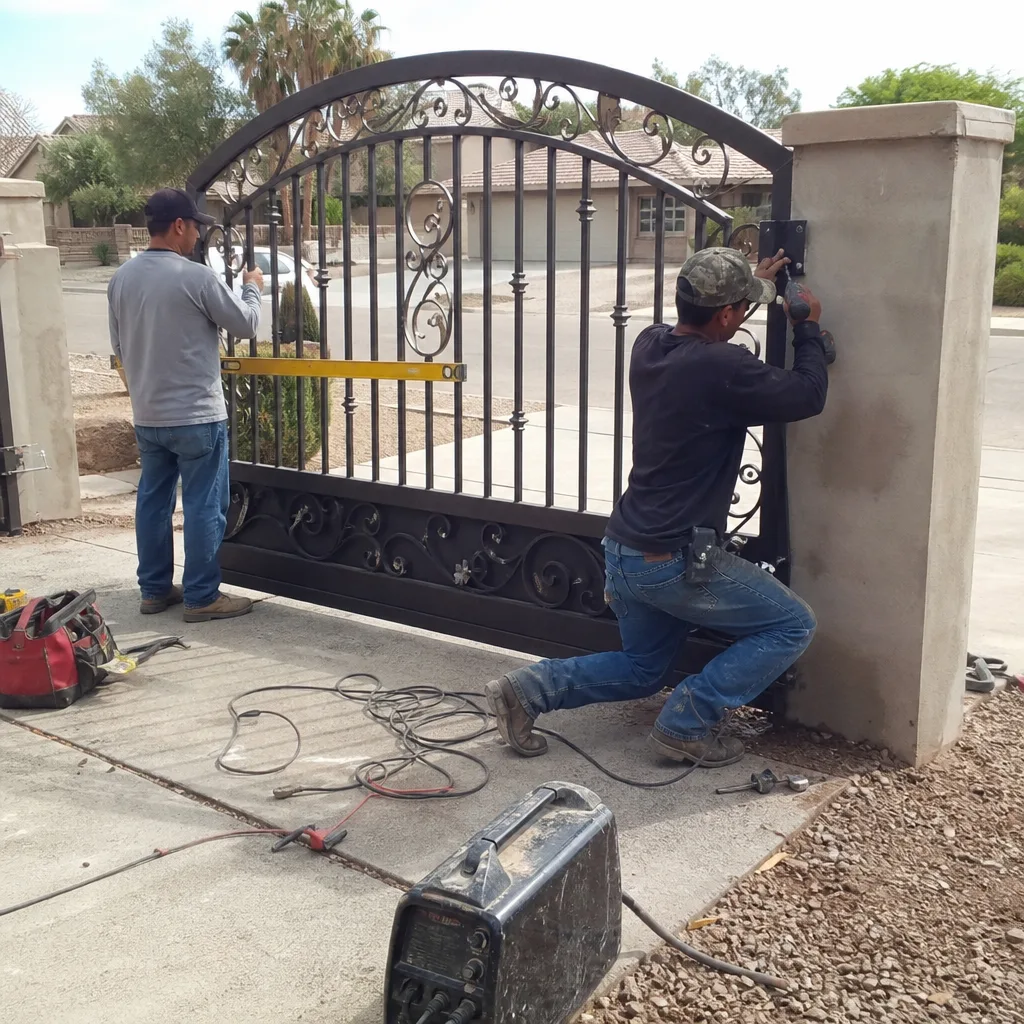
We publish price ranges because Clause 1 of The Haven Standard requires a written price before any work starts. See our Gate Repair Cost Breakdown: The Mesa Homeowner’s Reference for 2026 for detailed methodology. The ranges below reflect our actual Mesa pricing as of 2024, with variation based on brand, access, and whether the repair requires two technicians.
Mechanical Repairs
| Repair Type | Typical Range | Notes |
|---|---|---|
| Hinge replacement (per hinge) | $180-$280 | Includes post realignment if caliche shift is minor |
| Post stabilization / footing repair | $450-$850 | Required when caliche heave exceeds 1.5 degrees |
| Slide gate roller replacement (pair) | $220-$340 | Structural damage only; cosmetic scarring monitored |
| Track repair / section replacement | $280-$520 | Monsoon denting or wear-related displacement |
| Chain / belt replacement | $240-$380 | Includes tension adjustment and limit reset |
| Guide bracket realignment or replacement | $180-$320 | Impact damage or gradual loosening |
Operator and Electrical Repairs
| Repair Type | Typical Range | Notes |
|---|---|---|
| Capacitor replacement | $180-$260 | Most common summer heat failure, all brands |
| Control board replacement | $340-$650 | Includes programming and limit setup |
| Motor replacement (actuator) | $520-$920 | Brand-dependent; LiftMaster and FAAC at higher end |
| Full operator replacement | $780-$1,400 | When motor and board both failed, or upgrade required |
| Photo-eye replacement (pair) | $180-$280 | UV-degraded lenses or impact damage |
| Keypad / access control repair | $160-$340 | Moisture damage, wiring fault, or component failure |
Every price above is written and handed to you before we pick up a tool. If we discover additional issues during repair - a footing more damaged than surface inspection suggested, for example - we stop, photograph the finding, and present a revised scope and price. No work proceeds without your written approval.
We also offer free second opinions on any written estimate from another Mesa gate company. Bring the paperwork; we’ll review the scope, the parts specified, and the pricing against our documented records. No charge, no obligation.
Why Written Documentation Matters: The Haven Standard
Gate repair has a documentation problem. Most companies operate on verbal estimates, handwritten tickets, and memory. When the same gate fails again - or when a second technician arrives - there’s no record of what was found, what was adjusted, or what was installed.
Adrian Vance developed The Haven Standard from commercial access-control work starting in 2014. Commercial sites require as-built drawings, wiring diagrams, and maintenance logs because downtime costs money and liability. We’ve applied that same discipline to every residential gate repair since.
The Three Clauses
Clause 1: Written price before work starts. The scope and total price are printed and signed before any tool is picked up. This eliminates the invoice surprise and creates a reference if the problem recurs.
Clause 4: Evidence on every job. Every visit produces a photographed record: the condition found, the adjustments made, the part numbers installed, the limit switch settings, the final alignment. You receive a copy; we file the master. If a future technician needs to know what was done, the information exists.
365-Day Done Right Promise. If any repair fails due to workmanship or part defect within one year, we make it right at no charge. No argument, no fee, no expiration within that window. The promise is in writing on every invoice.
Why Documentation Protects Mesa Homeowners Specifically
Mesa’s environmental stressors make repeat failure more likely than in milder climates. A gate that failed from caliche shift in March may fail again in October if the footing wasn’t stabilized. Without documentation, the second technician can’t distinguish a new failure from an incomplete first repair. We’ve been called to jobs where three different companies had worked on the same gate in 18 months, each fixing a symptom without documenting the underlying cause. The homeowner had paid $2,100 total for what should have been a single $680 footing repair.
Our photo records include: hinge pin wear pattern and measurement, post plumb and footing condition, operator error log screenshot, motor current draw at open and close, track profile for slide gates, and photo-eye beam strength reading. This is standard on every Mesa visit, whether the repair is $180 or $1,800.
Part Sourcing Reality in Mesa: Stock vs. Special Order
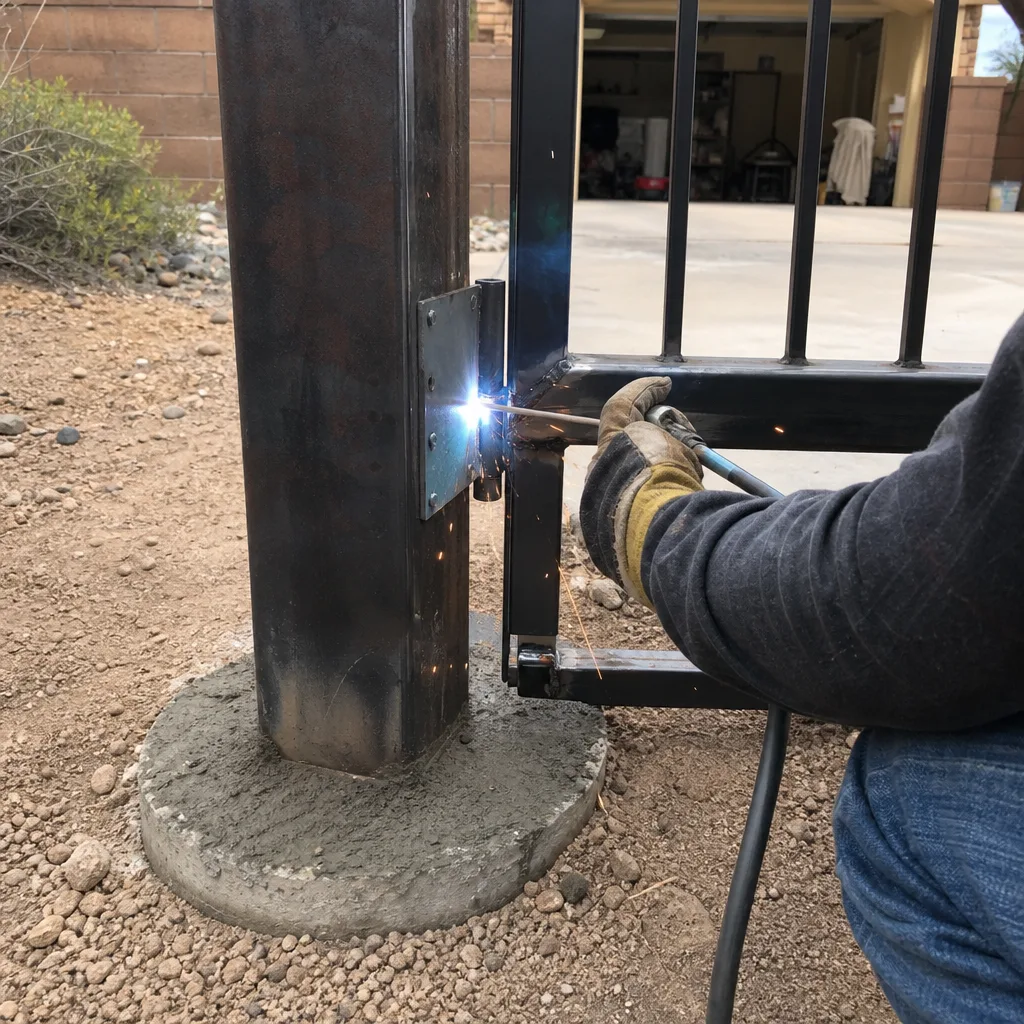
How long your gate stays out of service often depends on parts availability, not technician skill. Here’s the actual landscape for Mesa gate repairs.
Locally Stocked Components
We maintain Mesa inventory for the highest-failure items across our nine serviced brands:
- Capacitors for major operator lines - same-day on most LiftMaster, FAAC, Linear, and Elite models
- Photo-eye sets (universal and brand-specific) - same-day
- Standard hinge hardware (ball-bearing and barrel types) - same-day
- Slide gate rollers and guide brackets (common sizes) - same-day
- Chain and belt stock (cut to length) - same-day
- Keypad and transmitter batteries, enclosures, and basic circuit boards - same-day
Special-Order Components
These typically add 5-10 business days:
- Obsolete or legacy operator boards (pre-2015 models from any brand)
- Custom-fabricated track sections for non-standard gate widths
- Specialty actuators for high-cycle or high-weight applications
- Proprietary access-control components from discontinued product lines
- Welded or forged custom hinge assemblies for historic or architectural gates
When special-order parts are required, we provide the estimated lead time in writing, secure the gate safely if it’s inoperable, and schedule the return visit before we leave. We don’t leave you guessing about when the repair will finish.
One Mesa-specific consideration: summer heat increases failure rates just as demand peaks. Our inventory position is highest June through September to minimize wait times during the season when a non-functional gate is most critical for pool access, pet containment, and security.
Common Mistakes to Avoid
- Accepting a verbal estimate. Without a written scope and price, you have no reference if the same problem returns. Verbal estimates are unenforceable and unverifiable.
- Replacing the motor without checking for caliche-induced post shift. We’ve seen $900 motor replacements fail in six weeks because the gate was still binding on a tilted post. Always demand footing inspection as part of any operator replacement quote.
- Ignoring thermal cutout patterns. A motor that stops on hot afternoons and works at night doesn’t need replacement - it needs environmental mitigation. Replacing it wastes money and doesn’t solve the actual problem.
- Repairing monsoon damage without inspecting the full track length. A dented roller may be the visible failure, but the impact that caused it may have also displaced track. Replacing rollers without checking track profile guarantees premature re-failure.
- Using non-UV-rated photo-eyes in Mesa installations. Standard indoor-grade photo-eyes will craze and fail within two years. Demand outdoor-rated, UV-stabilized housings - we specify these on every Mesa replacement.
- Skipping the error log on smart operators. Modern LiftMaster, DoorKing, and Elite systems store diagnostic history. A technician who doesn’t read it is working blind. Ask specifically: “Did you check the error log?”
- Assuming all gate companies document their work. Most don’t. Ask what record you’ll receive, in what format, and whether it includes photographs. If the answer is vague, the documentation doesn’t exist.
When to Call a Professional
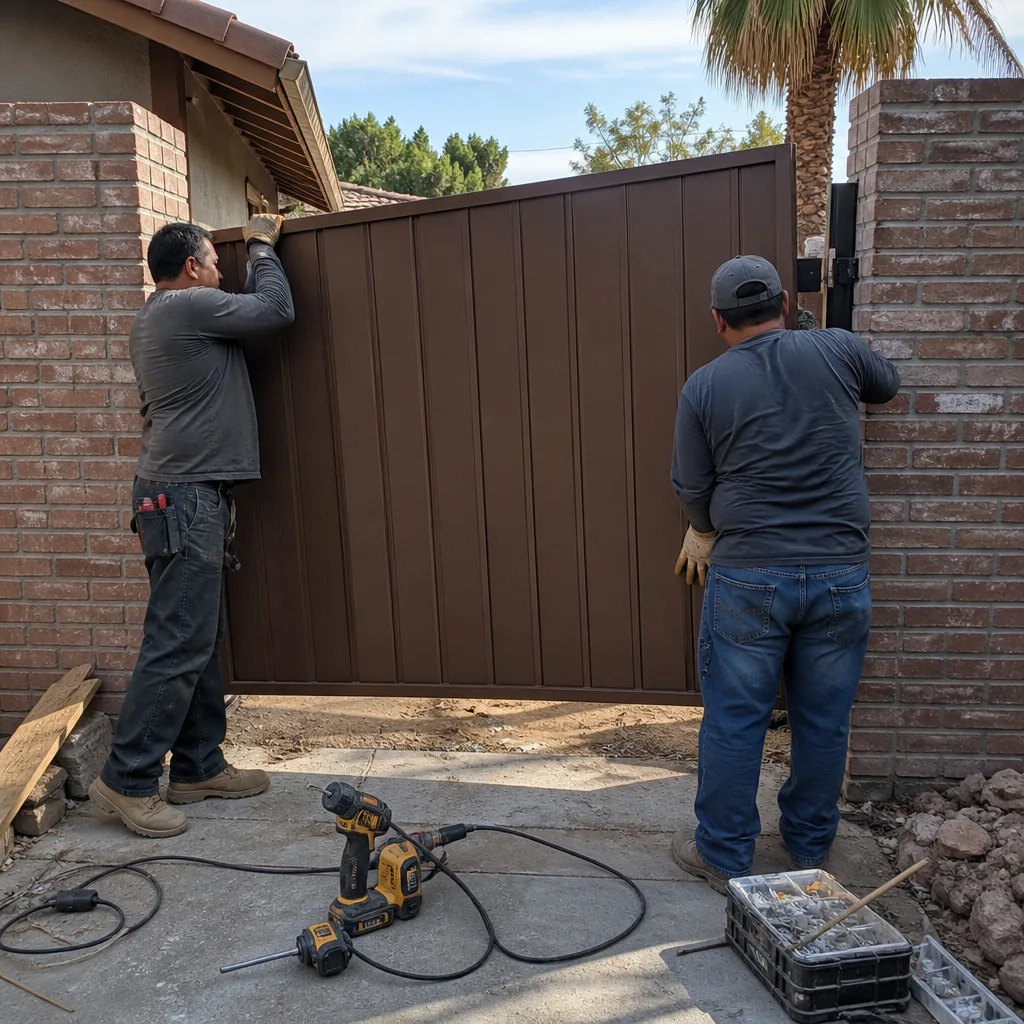
Some gate problems are straightforward enough for a competent homeowner: replacing remote batteries, clearing visible track debris, or resetting a tripped GFCI. But several scenarios in Mesa require professional diagnosis and repair, both for safety and because the environmental factors - caliche, heat, monsoon damage - create failure modes that don’t respond to standard troubleshooting.
Call a professional when: the gate binds or drags and you can see post tilt or footing movement; the motor stops on hot days but works evenings; monsoon winds have visibly struck the gate or track; any electrical component shows burn marks, melted housing, or acrid smell; or you’ve had the same repair done twice in 12 months. Repeat failure almost always indicates missed root cause.
Gate repair in Mesa from Vance Gate Repair Mesa includes the documented inspection, written price, and photographic record described in this guide. We offer free estimates - call (520) 666-6834, and a live person will answer, any hour.
Frequently Asked Questions
Most residential gate repairs in Mesa range from $180 for simple mechanical fixes to $650 for operator electrical work, with full motor replacements running $520-$920 depending on brand and installation conditions. We provide a written, itemized price before any work begins under Haven Standard Clause 1. Call (520) 666-6834 for a free estimate specific to your gate.
Summer heat in Mesa pushes gate motor internal temperatures past their thermal protection thresholds, causing automatic shutdown that looks like failure. A motor that resumes normal operation after 7 PM or on cooler mornings is almost certainly experiencing thermal cutout, not actual motor death. The fix is typically environmental - improved ventilation, shade, or duty-cycle adjustment - not motor replacement. We verify this by reading the operator’s error log before recommending any parts.
Most monsoon damage is repairable. Cosmetic roller scarring and minor track denting can be addressed without gate replacement. Structural damage - cracked rollers, bent axles, or track displacement that causes binding - requires component replacement but not full gate replacement. We photograph the damage pattern under Clause 4 to distinguish cosmetic from structural and quote only what’s actually needed.
Check three indicators: seasonal gap changes between gate and post, directional (one-sided) hinge wear rather than even wear, and visible footing cracks or tilt. If two or more are present, caliche shift is likely the root cause and footing stabilization should be part of the repair. We’ve documented this pattern across Mesa from Dobson Ranch to Las Sendas; replacing hardware without addressing the footing produces repeat failure.
We service nine major automation brands: LiftMaster, FAAC, BFT, Linear, Viking, Ghost Controls, DoorKing, Elite, and Mighty Mule. We don’t steer customers toward replacement with a different brand - we repair what’s installed, document the work, and stock parts for same-day resolution when possible. Gate motor and opener service in Mesa includes error log reading, thermal analysis, and written scope before any work.
You should receive a written scope of work, a written final price, and a photographic record of what was found, what was adjusted, and what was installed. Under The Haven Standard, we provide all three on every visit. If your previous repair produced only a handwritten ticket or verbal summary, you have no reference for future service and no verification that the root cause was addressed.
The Bottom Line
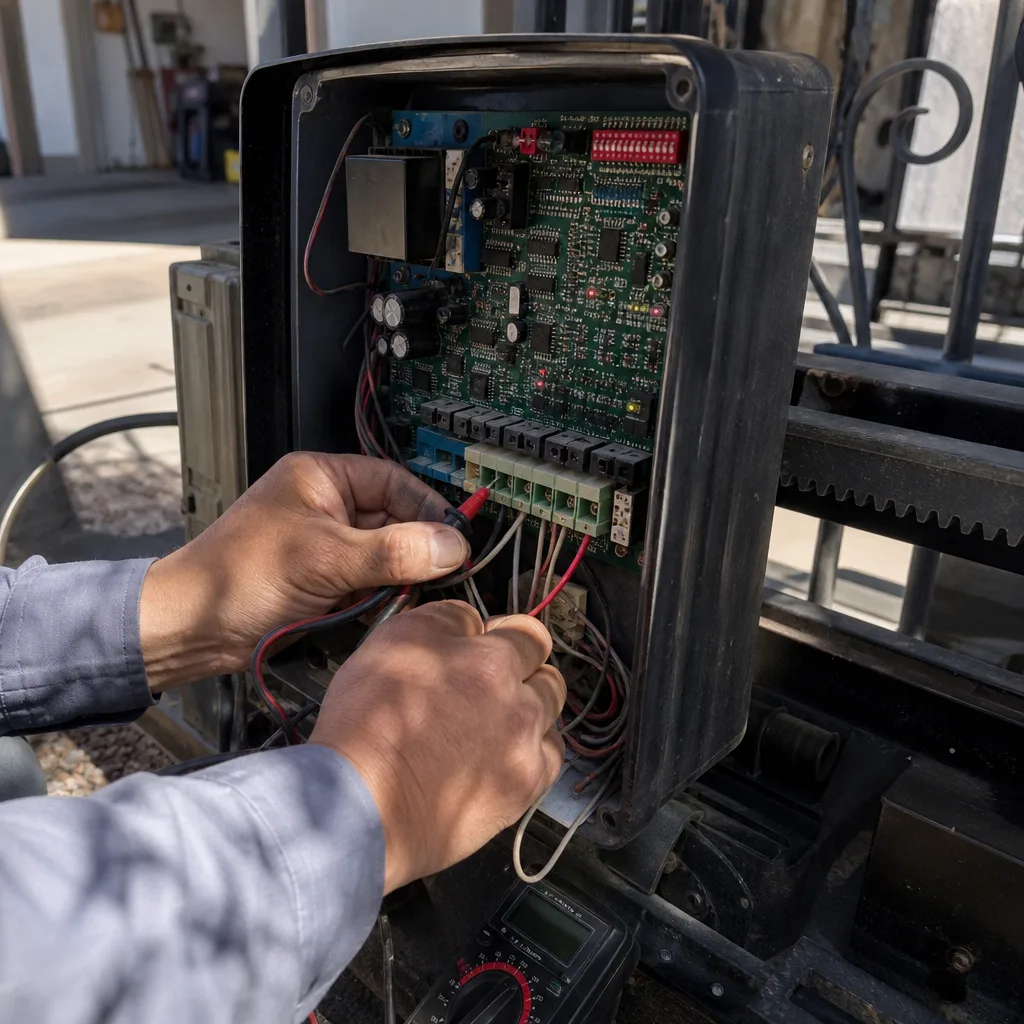
Gate repair in Mesa isn’t generic mechanical work - it’s matching the right fix to the right environmental cause. Caliche soil heave, summer motor heat stress, and monsoon debris impact create failure patterns that repeat when technicians treat symptoms instead of causes. Demand a written price before work starts, photographic documentation of what was found, and error log analysis for any smart operator. These three requirements separate a lasting repair from an expensive cycle of callbacks. We’ve applied this standard to over 22,000 gates since 2014, and it’s the difference between fixing your gate once and fixing it again next season.
Written by Adrian Vance, Owner at Vance Gate Repair Mesa, serving Mesa since 2014.