
Last updated September 22, 2026
Free on-site gate assessment - hinges, posts, and your LiftMaster or Nice gate operator checked before anything is quoted
The assessment is free and the quote is the invoice.

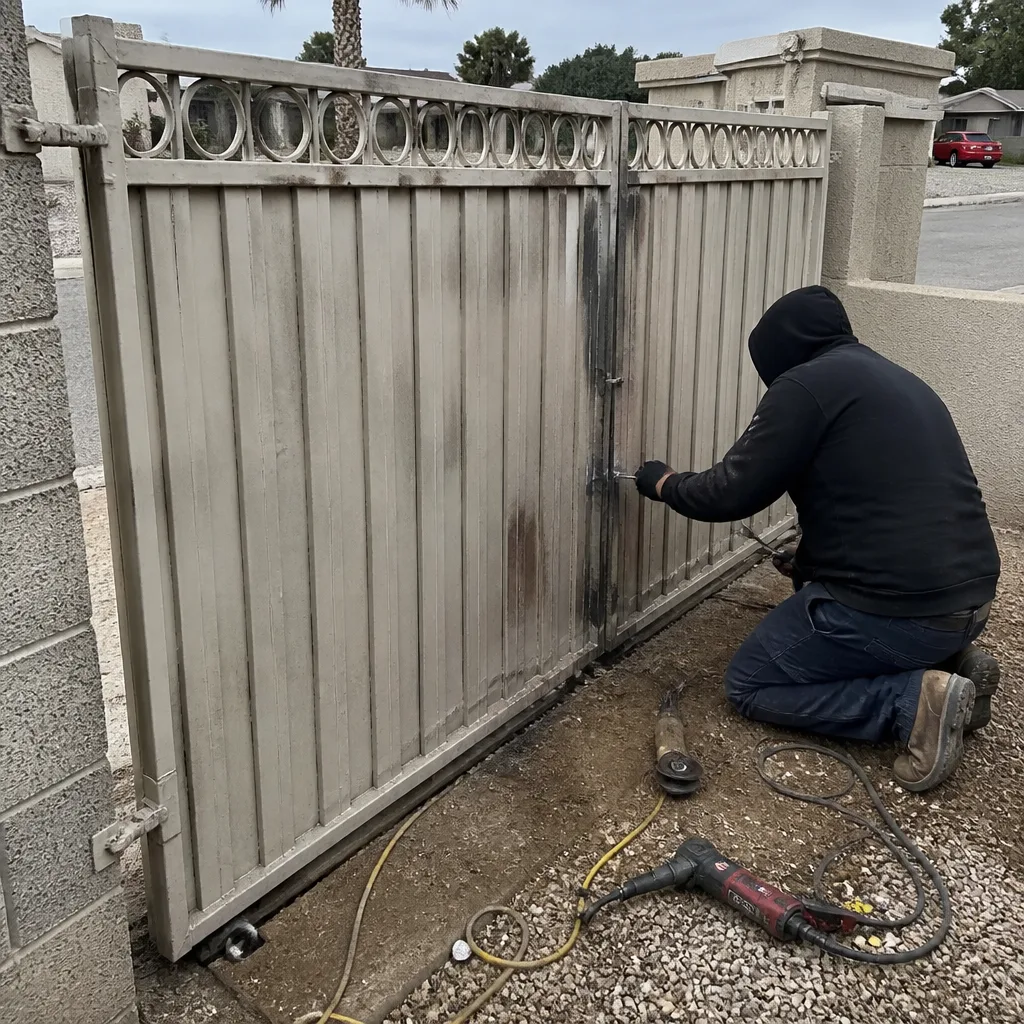 Before
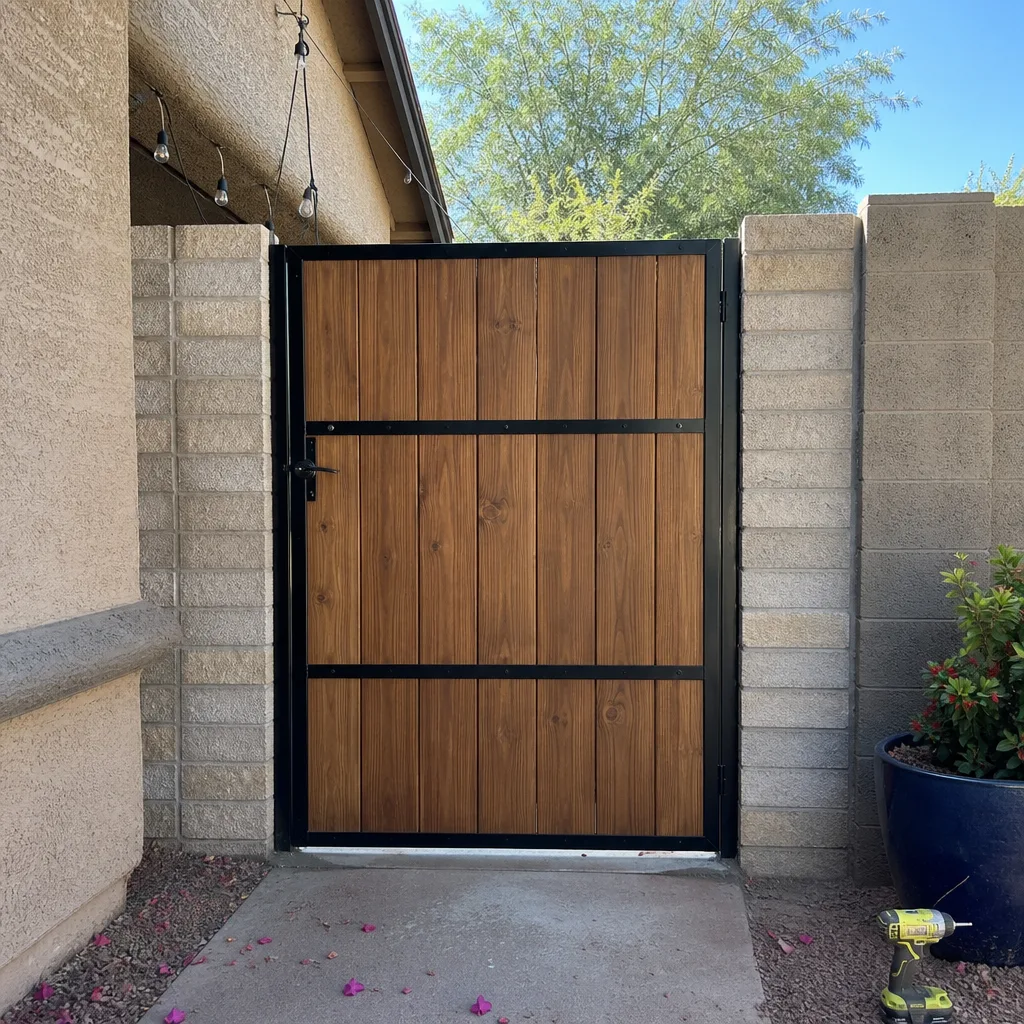 After
After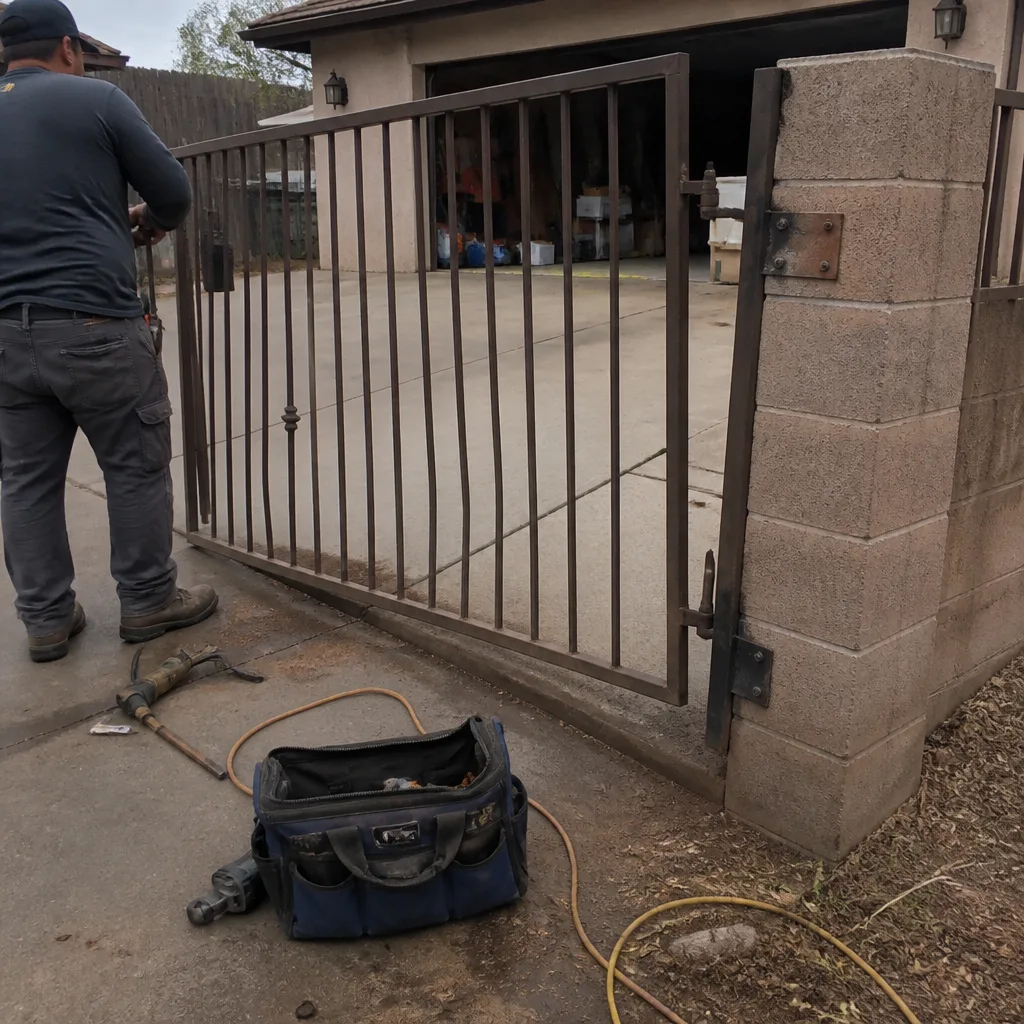 Before
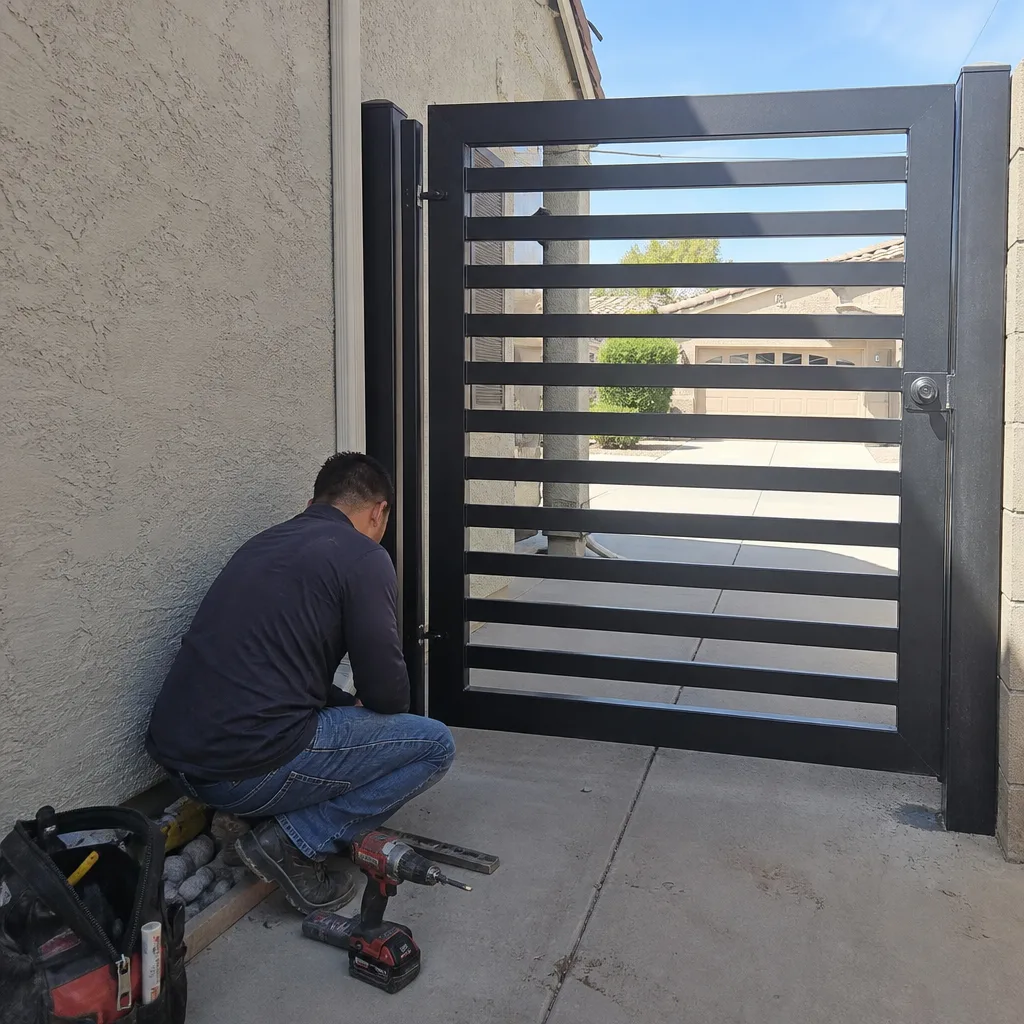 After
After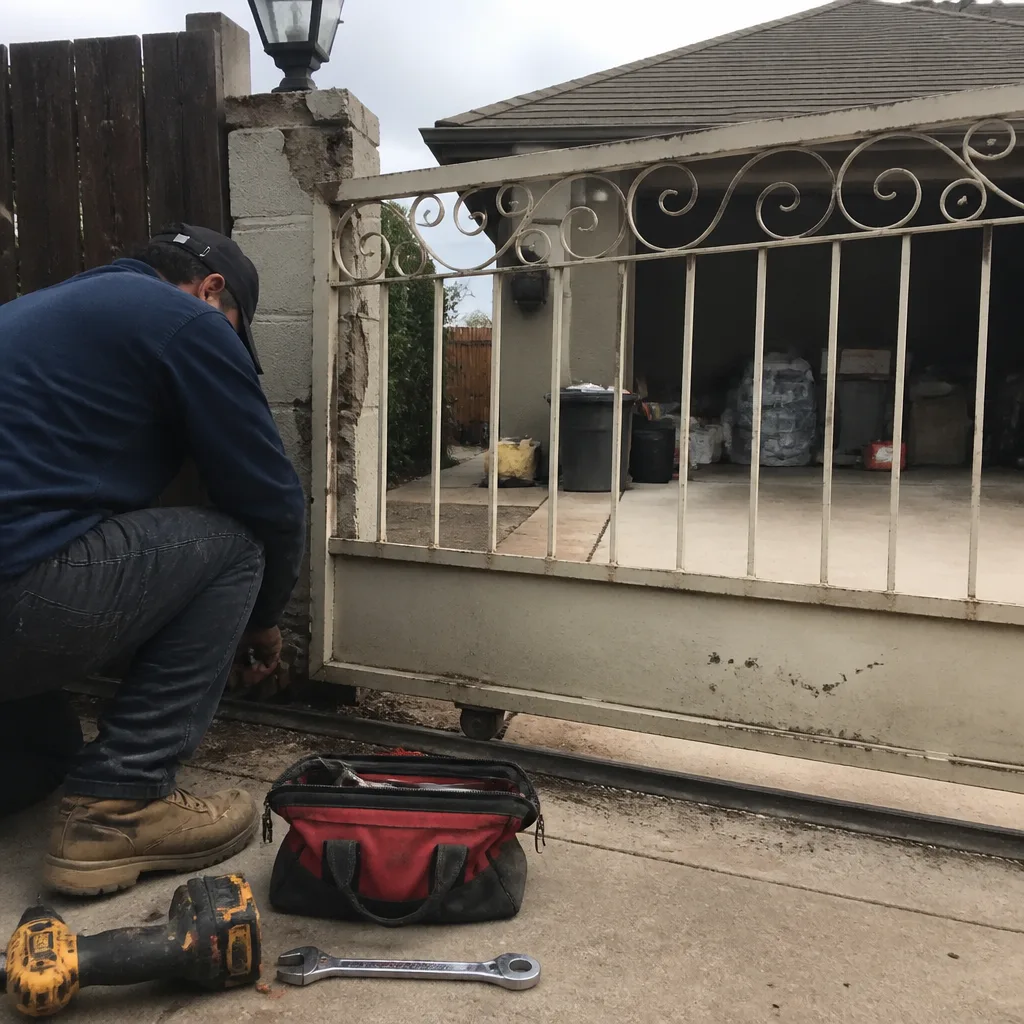 Before
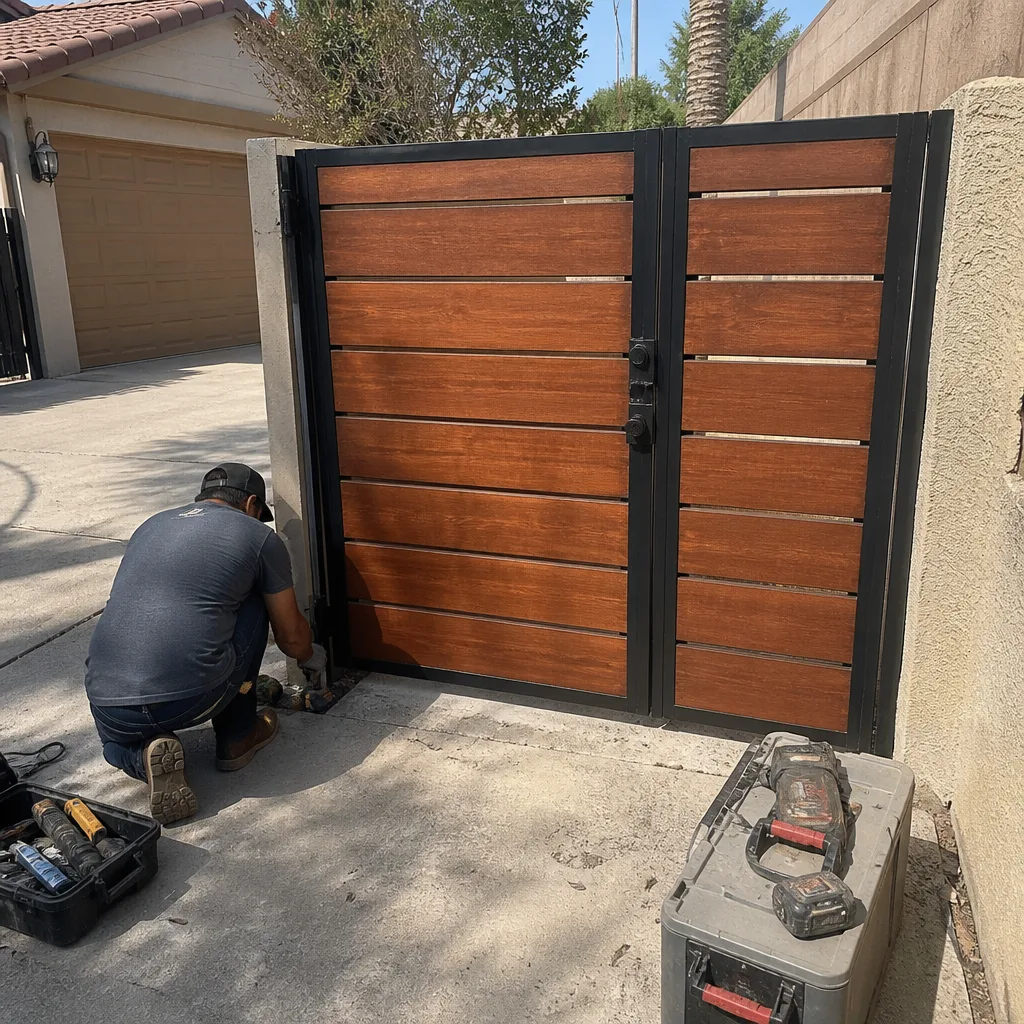 After
AfterGate Repair Warning Signs: A Mesa Homeowner’s Reference Guide
A gate that hesitates for two seconds before moving is not “warming up.” It’s showing you a failing start capacitor or a binding roller, and the distinction determines whether you have days or weeks before full failure. In Mesa, where summer temperatures push gate motors past their thermal limits and monsoon dust infiltrates control boards, we’ve found that most catastrophic gate failures send at least three measurable warning signs before they strand a homeowner at 11pm. This guide names each symptom, explains the mechanism behind it, and assigns a repair urgency tier so you can prioritize without guessing.
Quick Answer
Most gate failures in Mesa give three to five days of advance warning through specific symptoms: hesitation on start (capacitor or mechanical binding), grinding that changes direction with gate travel (hinge or roller wear), and intermittent response to remote or keypad (control board or power supply). A homeowner who documents these signs with photos and timestamps can reduce diagnostic time and repair cost by 30-50 percent.
Table of Contents
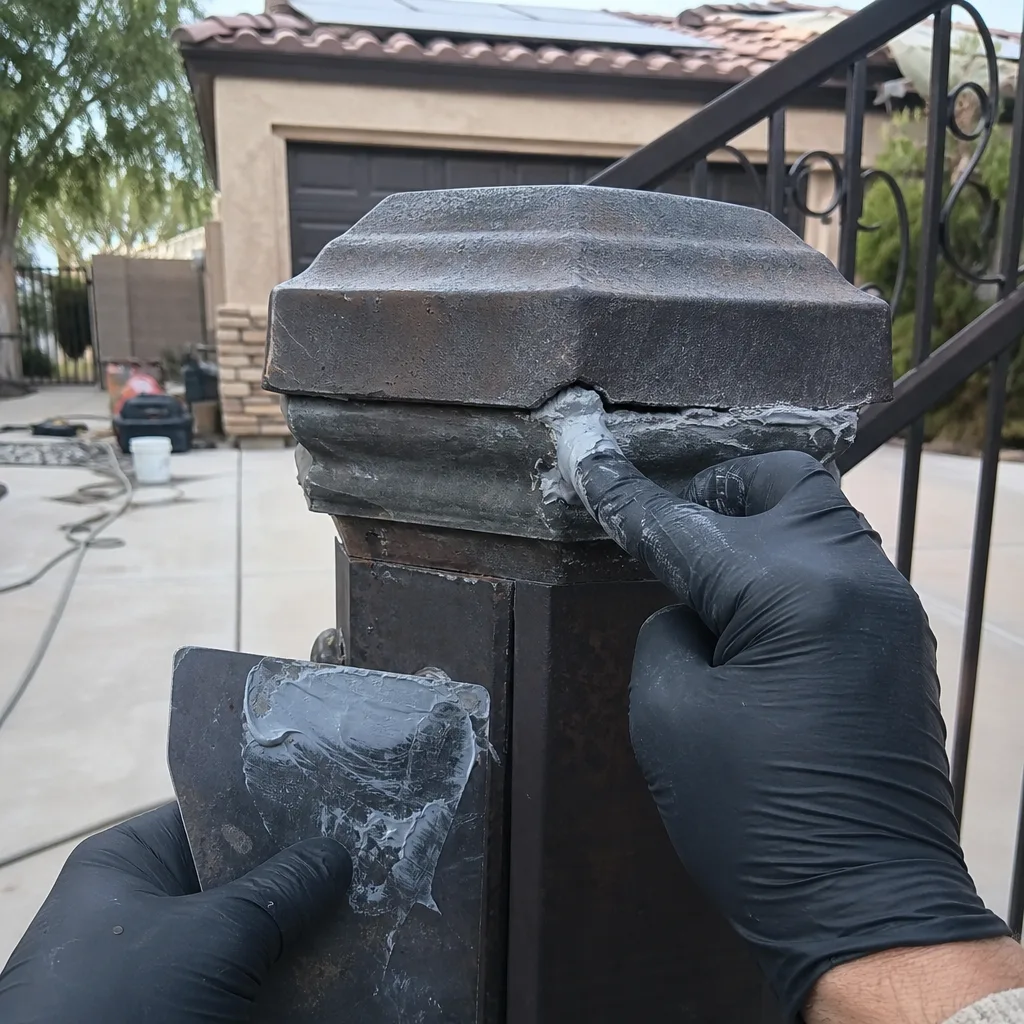
- Hesitation on Start: Capacitor vs. Mechanical Binding
- Grinding That Changes with Direction: What It Means
- Hinge Pin Side-Play: The Visual Check That Predicts Failure
- Control Board Warning Codes on Common Mesa Operators
- How to Document Warning Signs for Your Technician
- Monsoon and Heat: Mesa-Specific Accelerators
- Common Mistakes to Avoid
- When to Call a Professional
- Frequently Asked Questions
- The Bottom Line
 Before
 After
AfterHesitation on Start: Capacitor vs. Mechanical Binding
This is the most misread warning sign we encounter in Mesa. Homeowners consistently describe a two-to-four-second delay before the gate moves as “it just needs a moment to warm up.” In 22 years of combined field experience, we’ve never seen a gate motor that requires a warm-up period. What you’re witnessing is either electrical or mechanical failure in progress, and the 10-second test below tells them apart.
The capacitor failure pattern. A start capacitor stores the electrical jolt that overcomes the motor’s initial inertia. When it degrades, the motor hums or clicks without moving, then lurches into motion after several seconds. In Mesa’s heat, capacitor electrolyte dries faster than in cooler climates. We’ve replaced capacitors on gate motors in Mesa that showed hesitation in March and complete failure by May. The sound is diagnostic: a low hum followed by a sudden mechanical engagement, often with a slight jerk.
The mechanical binding pattern. A gate that rolls or slides against resistance from debris, bent track, or dry bearings will often start moving smoothly once inertia overcomes static friction. The sound here is different: a gradual build of metallic strain, then release. The gate may also slow at the same point in its travel every cycle.
The 10-second test. Stand at the gate center and attempt to move it by hand with the motor disengaged (every operator has a manual release, typically a key or lever near the motor housing). If the gate moves freely, the hesitation is electrical, capacitor or board. If it resists or catches at a specific point, the problem is mechanical. Document which. This single observation saves 15-20 minutes of diagnostic time and often determines whether we dispatch with a capacitor in the truck or track-alignment tools.
Repair urgency: Electrical hesitation, 3-7 days; mechanical binding, 1-3 days. Mechanical binding stresses the motor with every cycle, accelerating wear. Electrical hesitation tends to progress more predictably, though Mesa’s 115°F days can collapse that window without warning.
Grinding That Changes with Direction: What It Means
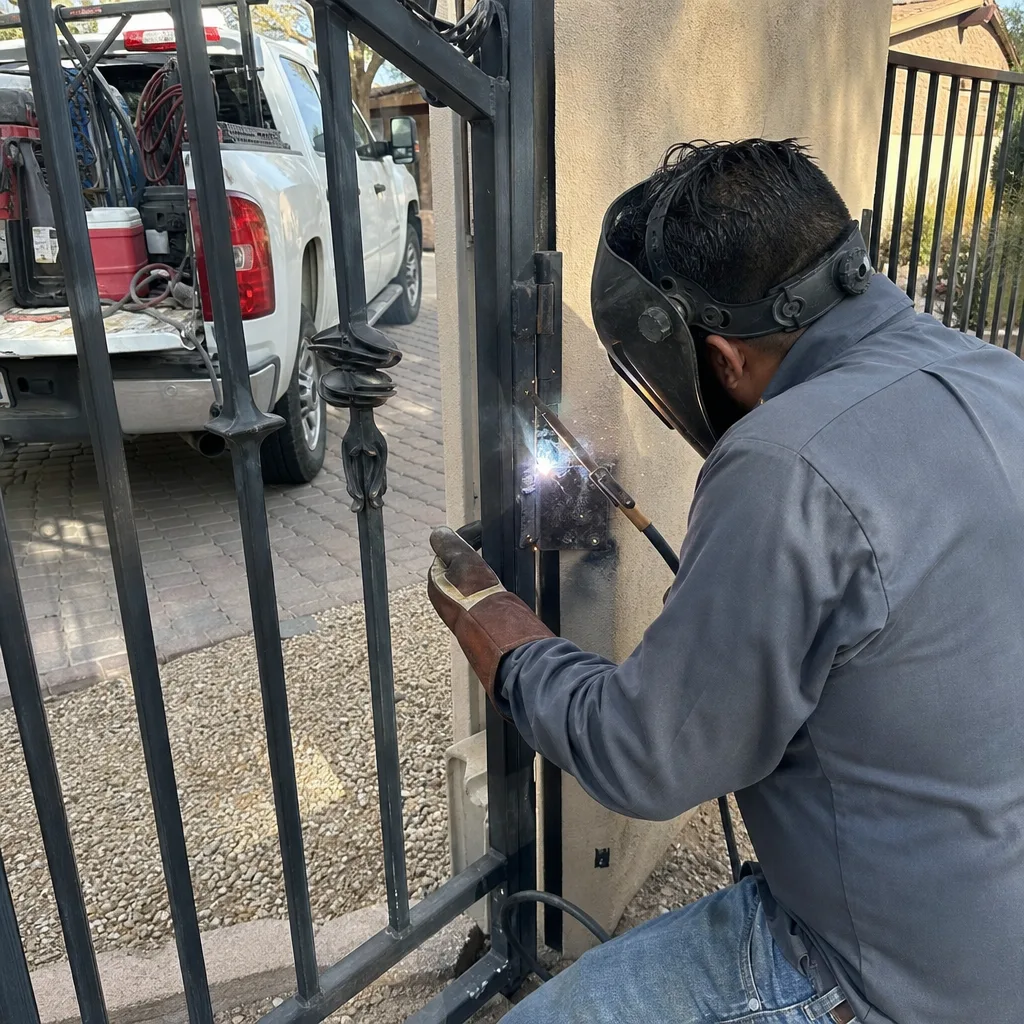
Grinding noise is not generic. The specific condition under which it occurs, and whether it reverses with gate direction, points to completely different components and cost ranges.
Grinding on close but not on open. This pattern almost always indicates hinge wear on the leading edge of a swing gate, or roller degradation on the closing-side track of a slide gate. As the gate approaches the closed position, weight distribution shifts onto the worn component. On a swing gate, the hinge pin carries maximum lateral load when the gate is perpendicular to the opening; on a slide gate, the closing-side roller bears the full cantilevered weight as the gate extends past its support post.
In Mesa’s dry climate, hinge pins lack the lubrication retention that humidity provides elsewhere. We’ve found hinge assemblies in Dobson Ranch and Las Sendas with 3/16-inch of vertical play that the homeowner had attributed to “normal gate noise” for eight months. The pin was two weeks from pulling through the bracket.
Grinding on open but not on close. This reversed pattern typically indicates motor-side wear: a failing gearbox, a bent operator arm, or a slide gate motor clutch slipping under load. On Viking and DoorKing operators common in Mesa, we’ve seen gearbox teeth chip at the open-limit position where the motor strains against a gate that has settled on its hinges and now requires extra torque to initiate movement.
Grinding in both directions, intermittent. This is often debris in the track or a foreign object in the gear housing. Less commonly, it indicates a failing bearing in the motor itself. The intermittency is key: a bearing with a flat spot will grind only when the gate stops with that spot loaded, then run quietly for several cycles until chance alignment repeats.
Repair urgency: Direction-specific grinding, 7-14 days; intermittent bidirectional grinding, 1-3 days. The latter can seize without warning and typically damages secondary components when it does.
Hinge Pin Side-Play: The Visual Check That Predicts Failure
This is the warning sign competitors rarely teach homeowners to check, yet it’s the most visually obvious and the most catastrophic when missed. A hinge pin with lateral play, visible as wobble when you push the gate leaf by hand, is not “a little loose.” It’s a measured mechanical failure with a predictable timeline.
How to check. With the gate in the closed position, stand at the free end (opposite the hinges) and push horizontally, perpendicular to the gate face. A stable hinge assembly will transmit this force through the post without visible movement. A failing hinge will show side-play at the pin: the gate leaf moves independently of the post by some measurable distance.
The measurement that matters. In our documentation across Mesa installations, hinge pins with 1/8-inch of visible side-play typically fail within 6-10 weeks under normal use. At 3/16-inch, that window compresses to 2-4 weeks. At 1/4-inch, the hinge is days from pulling through the bracket or splitting the post, and the gate is a safety hazard. We’ve responded to after-hours calls in Alta Mesa and Red Mountain Ranch where a 400-pound gate leaf detached from a failed hinge and blocked a driveway, or worse, contacted a vehicle.
Why Mesa accelerates this. Thermal expansion cycles in desert climates loosen hinge bolts faster than in stable-temperature regions. A gate that sees 40°F mornings and 105°F afternoons experiences daily expansion-contraction stress on hardware. Combined with dust infiltration that acts as grinding compound in the pin bore, hinge wear progresses faster here than in coastal California or the Pacific Northwest.
What to document. Photograph the hinge from two angles: straight-on to show the pin-to-bracket relationship, and from below to show any vertical sag. Include a ruler or coin for scale. Note the date and the measured or estimated side-play. This documentation lets a technician arrive with correctly sized replacement hinges rather than making a second trip after measurement.
Repair urgency: 1/8-inch play, schedule within 2 weeks; 3/16-inch, within 1 week; 1/4-inch or more, immediate.
Control Board Warning Codes on Common Mesa Operators
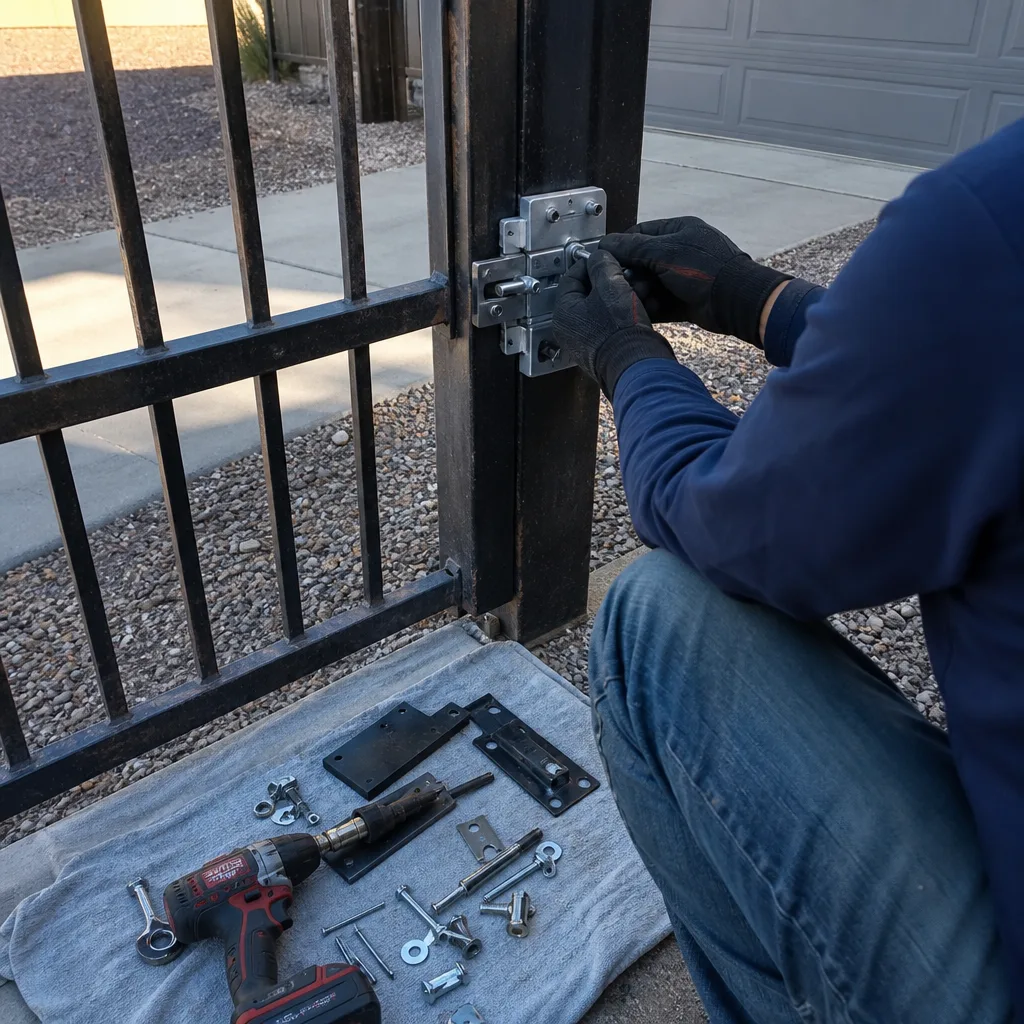
Modern gate operators flash diagnostic codes through LED patterns or numeric displays, but the manufacturer’s manual often lists 15-20 possible causes for each code. In our field experience across Mesa’s nine most common brands, each code has a dominant cause in this climate. Below are the codes we see most often and what they actually map to in local conditions.
LiftMaster (LA, LAE, CSW series).
- Flashing code 1-1 (one flash, pause, one flash): Primary cause in Mesa is photo-eye misalignment from thermal expansion shifting the bracket, or dust accumulation on the lens. Less commonly, a failing photo-eye receiver in direct afternoon sun. Check: clean both lenses with a dry cloth, verify the red receiver LED is steady (not flickering), and realign if the bracket has visibly shifted.
- Flashing code 1-2: Motor thermal overload. In Mesa, this is rarely a motor defect; it’s typically a binding condition (hinge, track, or roller) causing the motor to draw excessive current and trip its thermal protector. The board resets automatically when the motor cools, which creates the intermittent “works fine in morning, fails at 3pm” pattern we hear described.
- Flashing code 1-5: Limit switch error. On older LiftMaster units in Mesa, the mechanical limit switch contacts oxidize in low humidity and lose continuity. The board detects incomplete travel and flashes 1-5. Replacement of the limit switch assembly is usually required; cleaning rarely restores reliable contact.
Viking (G5, F1, R6 series).
- Code E1: Obstruction detected during close. In Mesa, this is photo-eye related 70 percent of the time, but we’ve also traced it to monsoon debris in the track triggering the current-sense obstruction circuit. The distinction: photo-eye obstruction stops the gate immediately; current-sense obstruction triggers after the motor strains for 1-2 seconds.
- Code E3: Excessive motor current. Viking’s diagnostic is more specific than LiftMaster’s thermal code. E3 nearly always indicates mechanical binding. On a Viking F1 swing gate operator we serviced near Falcon Field, E3 traced to a hinge pin that had seized; the motor was drawing 8.2 amps against a normal 3.5-amp close cycle.
DoorKing (9100, 9150, 9210 series).
- Code 01: Photo-eye fault. DoorKing’s loop detector integration complicates this: Code 01 can indicate either photo-eye or exit loop failure. In Mesa, exit loops fail from heat-related insulation breakdown more often than in cooler markets. The quick check: if the gate opens fine from inside (loop) but not from the remote (photo-eye), the fault is likely the photo-eye circuit. If neither works, suspect the loop or its detector board.
- Code 04: Motor overload. Similar to Viking E3, but DoorKing’s overload threshold is more sensitive. We’ve seen Code 04 triggered by a gate that had settled 1/2-inch on its hinges, increasing motor load just enough to trip at the temperature extremes of Mesa afternoons.
Documentation value. When you call with a code, include the brand, model (from the operator housing label), the exact flash pattern or displayed number, and whether it occurs consistently or only at certain times of day. A “Code E3 at 4pm, clear by 8am” description tells us to bring thermal and mechanical diagnostic tools, not electrical.
Repair urgency: Photo-eye codes, 3-7 days; motor current/overload codes, 1-3 days; limit switch codes, 7-14 days unless the gate fails to reach its limit and reverses into traffic.
How to Document Warning Signs for Your Technician
Under The Haven Standard, every Vance Gate Repair Mesa visit leaves a documented photo record. But the documentation that most reduces your cost and diagnostic time is the documentation you create before we arrive. A technician who sees a failure pattern in photos and timestamps arrives with informed assumptions, tests them quickly, and spends less of your money on discovery.
Step 1: Establish baseline operation. Record a 30-second video of the complete open-close cycle on a day when the gate is functioning normally. Store this on your phone. When symptoms develop, you have a direct comparison.
Step 2: Capture the symptom in context. When the gate hesitates, grinds, or throws a code, record:
- A video of the failure, including the sound.
- A still photo of the operator display or LED at the moment of the code.
- A photo of the ambient conditions: sun position, visible debris, recent weather.
- The exact time and outdoor temperature (from your phone’s weather app).
Step 3: Perform and document the simple checks. If safe to do so (gate fully supported, motor disengaged), photograph hinge pins from below, track alignment with a level or straightedge, and any visible wear on rollers or wheels. Include a scale reference: a quarter, a ruler, your hand.
Step 4: Organize chronologically. Create a simple log: date, time, symptom, temperature, any recent weather. “June 14, 4:30pm, 108°F, grinding on close only, no morning symptoms.” This pattern strongly suggests thermal expansion of a closing-side component, and it tells us where to look first.
What this saves. A typical diagnostic call without documentation runs 45-75 minutes at standard rates. With a symptom log and video, we’ve completed diagnosis in 20 minutes on gate repairs in Mesa because the pattern was visible before we opened a toolbox. Under Haven Standard Clause 1, the written price reflects scope, and reduced scope means reduced price.
Monsoon and Heat: Mesa-Specific Accelerators
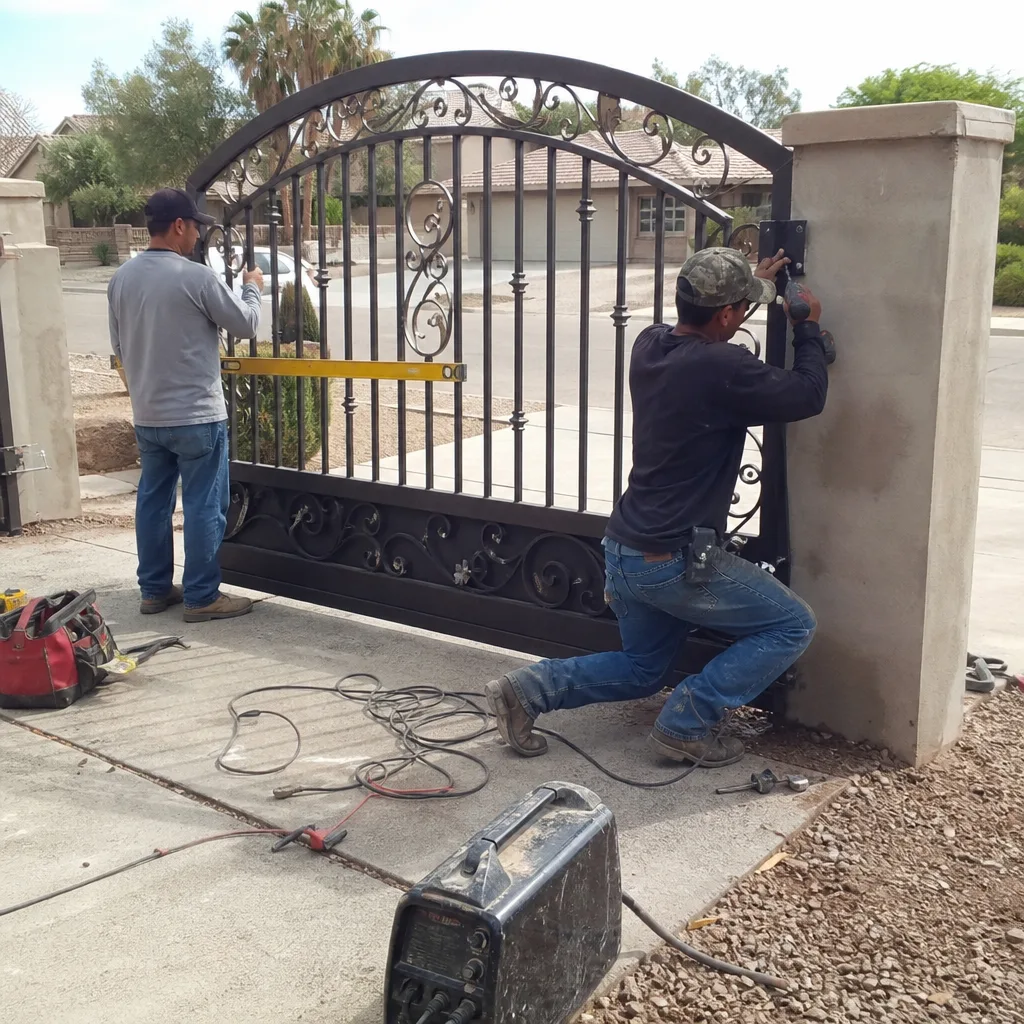
Mesa’s climate doesn’t just wear gates faster. It wears them differently, and the warning signs that matter here differ from those in Phoenix’s urban heat island or Tucson’s higher elevation.
Thermal stress on control boards. Gate operator electronics are rated for operational temperatures typically topping at 140°F internal. In Mesa, an operator housing in direct afternoon sun can exceed this. The warning sign is not immediate failure but intermittent operation: the gate works at 8am, hesitates at 2pm, fails at 4pm, works again at 7pm. This thermal cycling pattern, documented over several days, almost always indicates board-level component degradation that will progress to permanent failure.
Dust and monsoon debris. July through September storms deposit fine dust that infiltrates gear housings and acts as abrasive. The warning sign is gradual increase in mechanical noise, often described as “it got louder over two weeks.” By the time a homeowner notices, the gear teeth have typically lost 10-20 percent of their profile. On new gate installations in Mesa, we specify sealed gearboxes and additional housing gaskets; on existing gates, we recommend annual inspection before monsoon season.
Lightning and power fluctuation. Mesa’s summer storms bring localized lightning that doesn’t need a direct strike to damage electronics. A nearby ground strike induces voltage on buried loop wires and power feeds. The warning sign is a gate that operates erratically for hours or days after a storm, then fails completely. Surge damage to control boards often doesn’t show on visual inspection; only functional testing reveals it.
Neighborhood-specific patterns. In older Mesa neighborhoods with original 1980s-1990s installations (parts of Dobson Ranch, Leisure World), we’ve found underground low-voltage wiring that has degraded from decades of thermal cycling. The warning sign is a keypad or intercom that works intermittently, often temperature-dependent, while the gate motor operates normally. This is a wiring fault, not an operator fault, and the repair scope differs substantially.
Common Mistakes to Avoid
- Applying WD-40 to gate hinges and calling it maintenance. WD-40 is a water displacer, not a lubricant. In Mesa’s dust, it attracts abrasive particles and accelerates wear. Use a lithium-based grease or dry Teflon lubricant specified for outdoor hardware.
- Ignoring a code that “cleared itself.” An operator that throws a thermal or overload code and then resumes normal operation has not fixed itself. It has demonstrated that it’s operating at its failure threshold, and the next cycle may be the one that exceeds it.
- Adjusting force settings to overcome binding. Increasing close-force to compensate for a dragging hinge or bent track is a safety violation and a liability. The force adjustment exists for fine-tuning, not for masking mechanical failure. In Mesa, we’ve seen this lead to gate crush injuries and property damage.
- Waiting for “both gates” to fail on a dual-leaf system. On paired swing gates, homeowners often delay repair when one leaf still functions. The operating leaf then carries 100 percent of cycle load, and its paired failure typically follows within days. The repair cost doubles when both hinges have failed rather than one.
- Assuming a new remote will fix intermittent response. If the gate responds to the keypad but not the remote, or vice versa, the issue is rarely the remote itself. It’s antenna range, control board receiver degradation, or interference. Buying remotes without diagnosis wastes money and delays the actual repair.
- DIY welding on aluminum gate frames. Mesa has a significant population of ornamental aluminum gates that crack at weld points. Homeowners with welding equipment often attempt repair with steel rod, causing galvanic corrosion that destroys the joint within months. Aluminum gate welding requires compatible filler and technique; improper repair typically costs 40-60 percent more than original professional welding.
When to Call a Professional
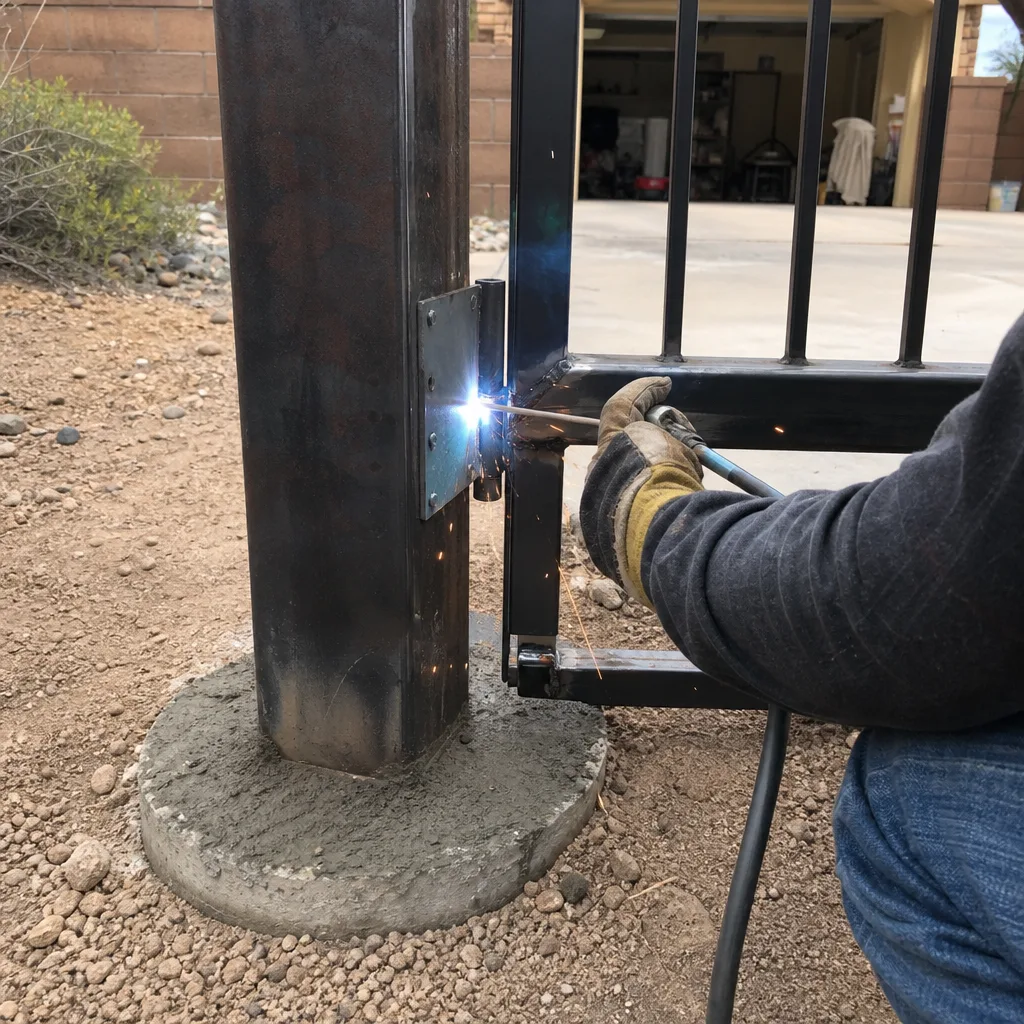
Call when any warning sign in this guide reaches its urgency threshold, or when you cannot safely perform the diagnostic checks described. Gate systems combine high-torque electric motors, heavy moving masses, and in some cases high-voltage electrical supply. The checks in this guide are observational, not invasive; if they require tools beyond a flashlight and camera, or if they involve electrical panels or motor housings, a trained technician should perform them.
Specific scenarios that warrant immediate professional evaluation: hinge pin side-play of 1/4-inch or more; any grinding accompanied by visible sparking or electrical odor; a gate that reverses direction unexpectedly or fails to stop at its limit; photo-eye bypass or force-setting adjustment by any person not trained to the current ASTM F2200 safety standard.
Vance Gate Repair Mesa offers free estimates in Mesa. A live person answers at (520) 666-6834, 24 hours a day. Under Haven Standard Clause 1, you’ll receive a written scope and price before any work begins. Under Clause 4, every visit includes a documented photo record of findings, adjustments, and installed components.
Frequently Asked Questions
Most residential gate repairs in Mesa range from $180 for hinge pin and bushing replacement to $650 for control board replacement with programming. Swing gate motor replacement typically runs $1,200-$2,400 depending on brand and whether the arm bracket and post hardware are reusable. Every repair from Vance Gate Repair Mesa includes a written price before work starts under Haven Standard Clause 1. Call (520) 666-6834 for an exact quote on your specific symptoms - estimates are free.
Same-day repair is available for most gate failure scenarios in Mesa when the call comes in by early afternoon and the required parts are in stock. We carry capacitors, photo-eyes, limit switches, and hinge hardware for all nine brands we service, including Linear and Ghost Controls operators common in newer Mesa developments. Complex failures requiring specialty parts are scheduled for next-day completion with the part expedited. Call (520) 666-6834 to check same-day availability for your symptoms.
A complete motor replacement includes removal and disposal of the failed operator, installation of the new unit with matched capacity for your gate weight and cycle count, programming of travel limits and safety settings, integration with existing photo-eyes and access control, and a full cycle test under load. We also inspect and document hinge condition, track alignment, and safety edge function, because a new motor installed on a binding gate will fail prematurely. The written scope specifies every component and labor line before work begins.
Yes. Our scope includes 110V power supply to the operator location within 25 feet of the nearest panel, low-voltage wiring for photo-eyes, keypads, and loop detectors, and installation of safety edges on leading and trailing gate surfaces where required by current code. For installations requiring new conduit runs or panel upgrades, we coordinate with licensed electrical partners and include their scope in the single written price. No surprise subcontractor invoices.
This pattern in Mesa almost always indicates thermal failure: either a control board component that loses function at high temperature, or a motor drawing excessive current due to mechanical binding that worsens as expansion increases clearances. Document the exact failure time and outdoor temperature for three consecutive days. This log typically allows us to reproduce the failure in controlled conditions and identify the component without the extended diagnostic process that intermittent faults usually require.
We evaluate three factors: parts availability for the specific model, the cost of repair versus replacement, and the remaining service life of ancillary components. A 15-year-old operator with a failed control board, obsolete gear assembly, and rusted mounting hardware is typically a replacement candidate. A 6-year-old operator with a failed capacitor and intact mechanical components is a clear repair. We provide both options in writing when the decision is borderline, with projected 5-year cost of ownership for each path. No replacement is recommended when repair is the more economical choice.
The Bottom Line
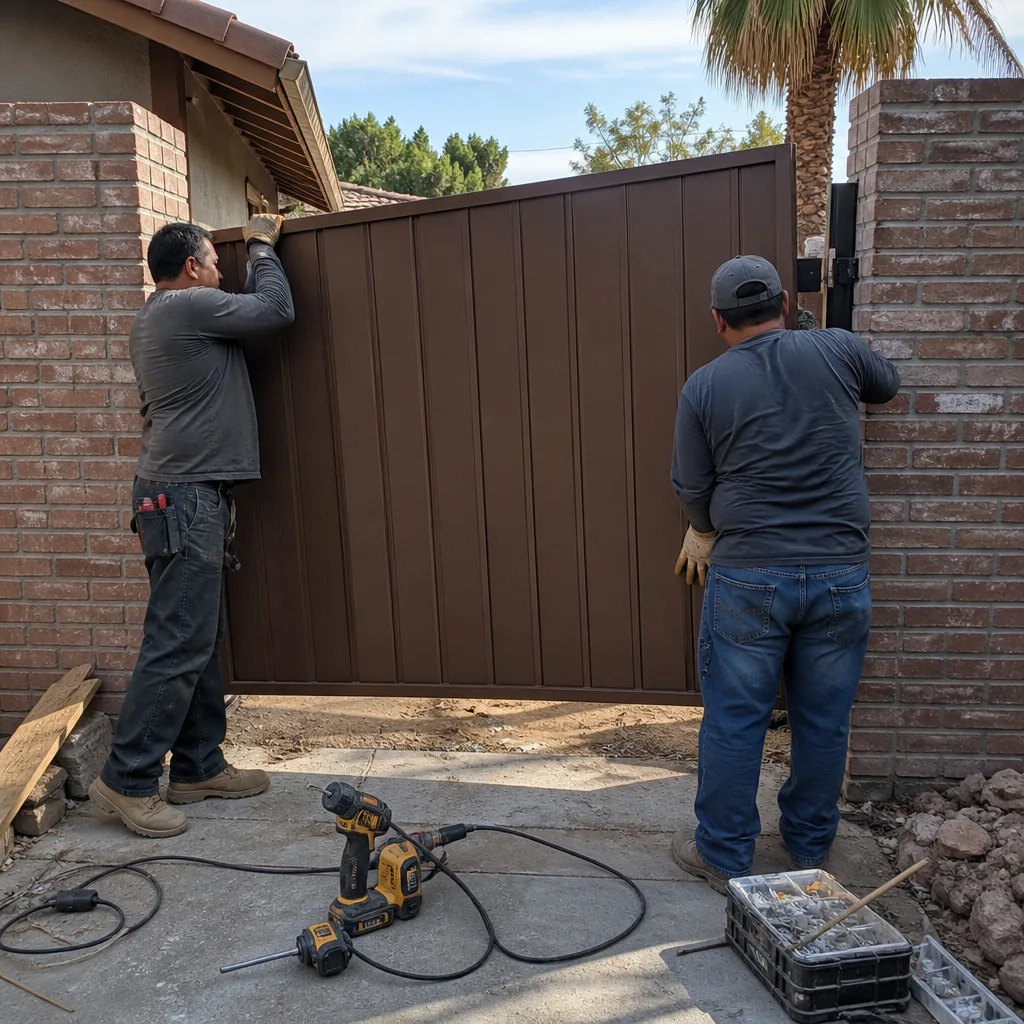
Gate failure in Mesa is rarely sudden. It accumulates in hesitation, direction-specific grinding, hinge pin play, and temperature-dependent codes that most homeowners misread as minor quirks until the gate stops mid-cycle. This guide gives you the vocabulary to name what you’re seeing, the tests to distinguish electrical from mechanical causes, and the urgency tiers to prioritize without anxiety. The documentation habits described here - video baseline, symptom logging, photographic scale reference - are the same practices we apply on every service call under The Haven Standard. Applied early, they turn a potential emergency into a scheduled repair with a known price.
Written by Adrian Vance, Owner at Vance Gate Repair Mesa, serving Mesa since 2014.