
Last updated September 22, 2026
Free on-site gate assessment - hinges, posts, and your LiftMaster or Nice gate operator checked before anything is quoted
The assessment is free and the quote is the invoice.

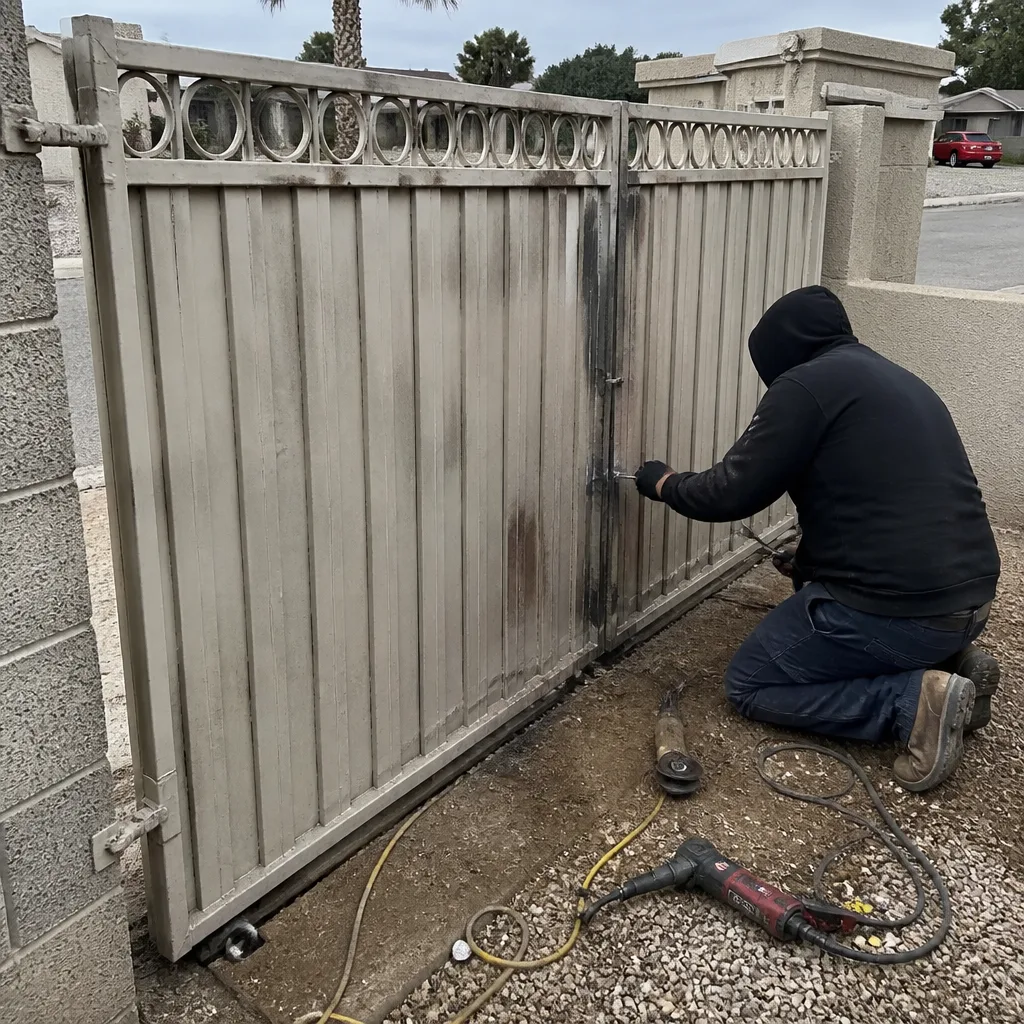 Before
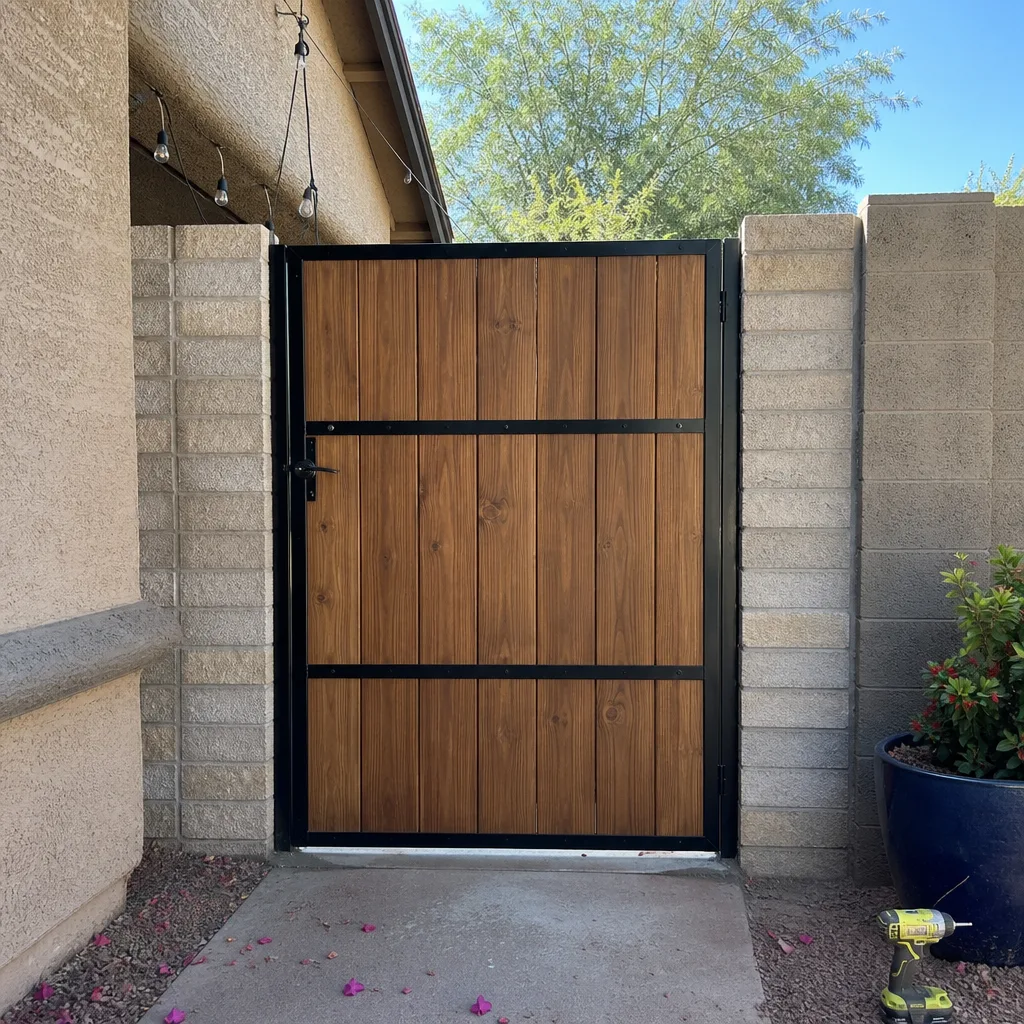 After
After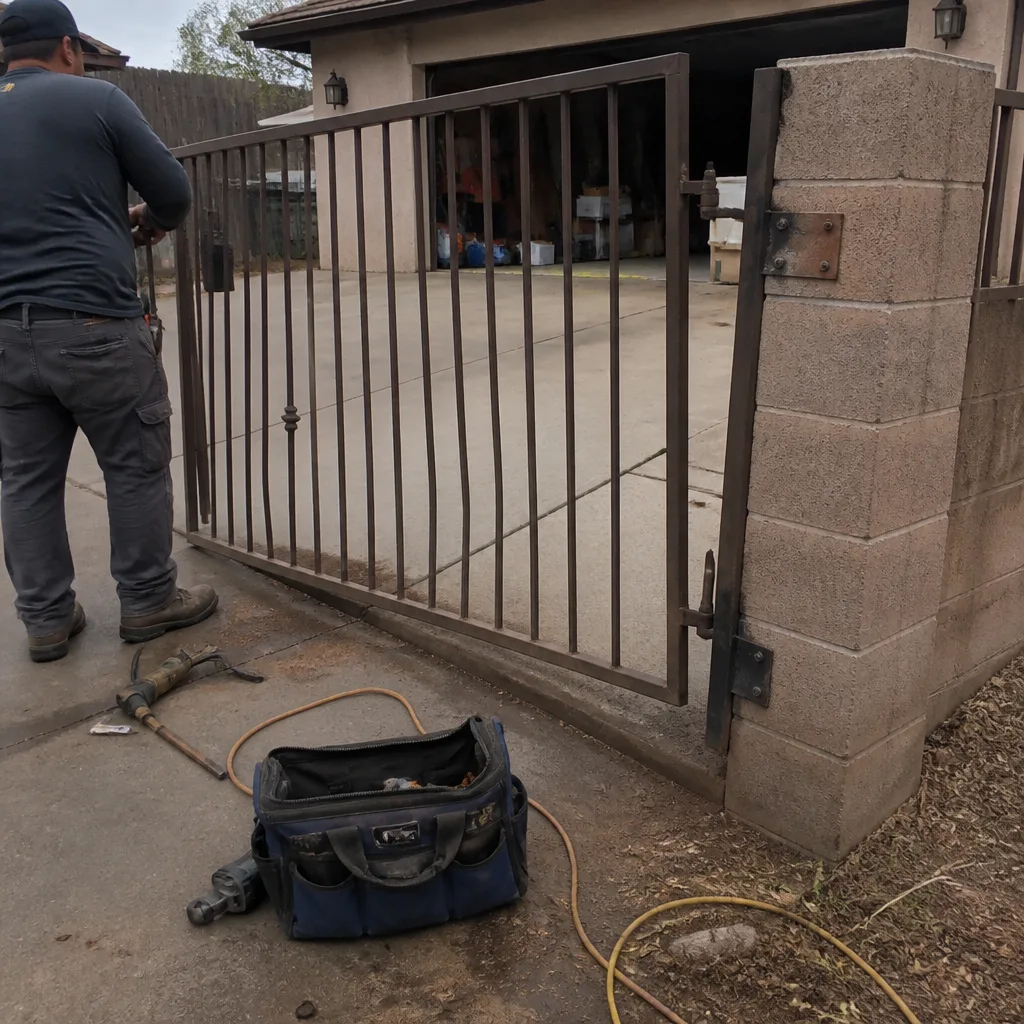 Before
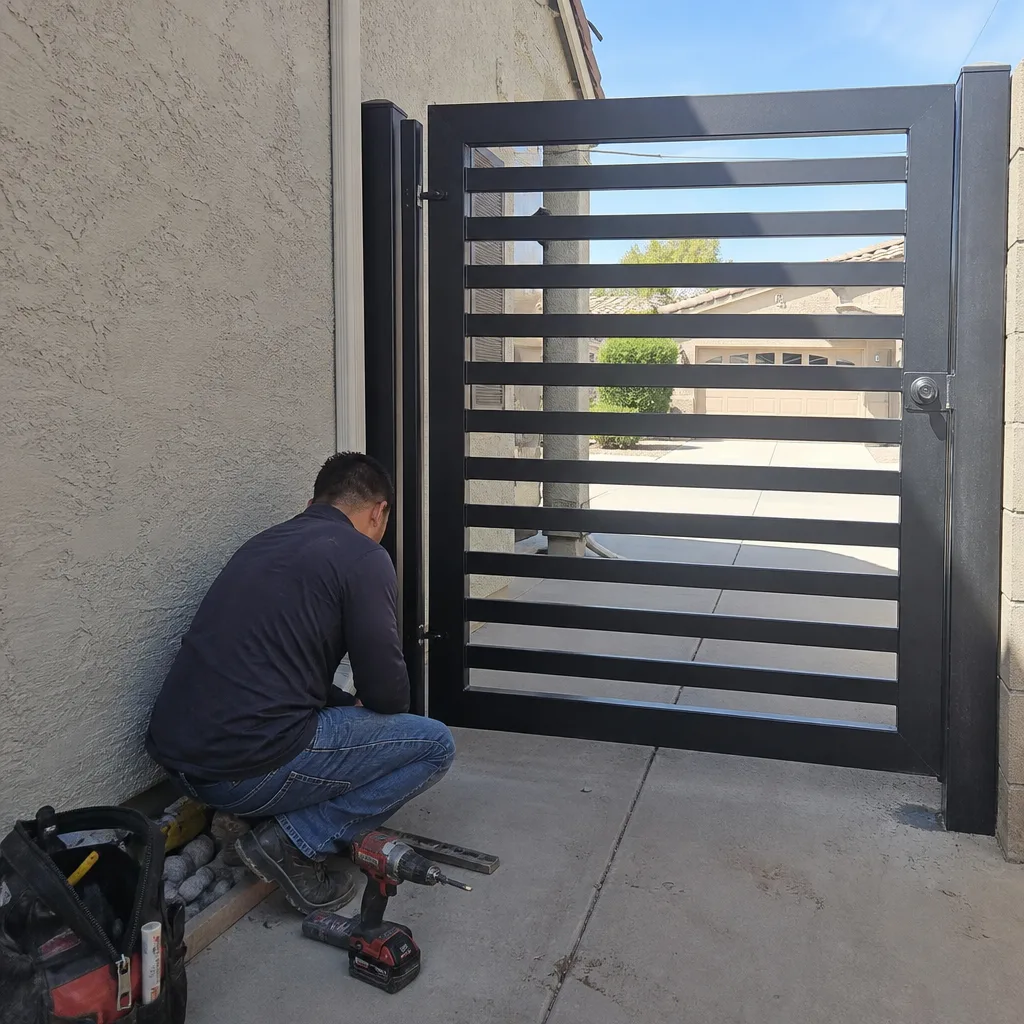 After
After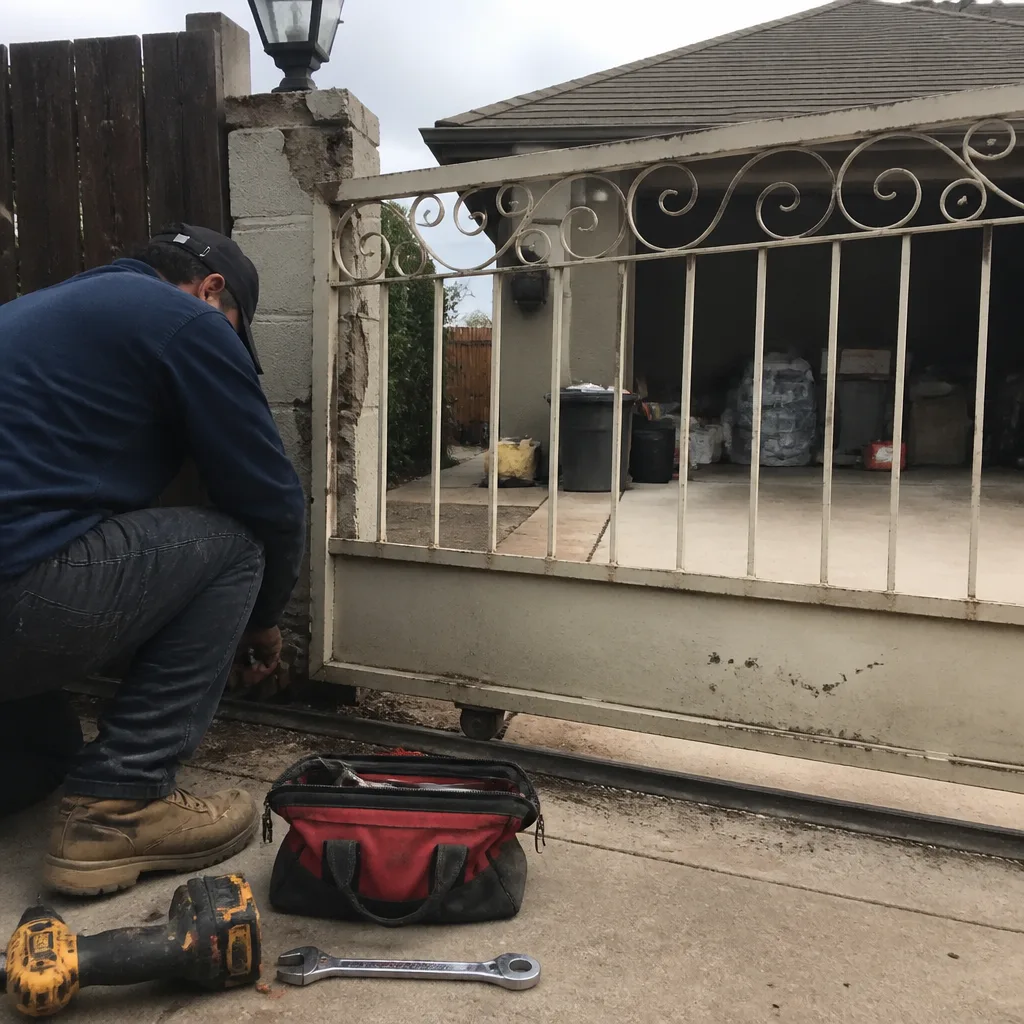 Before
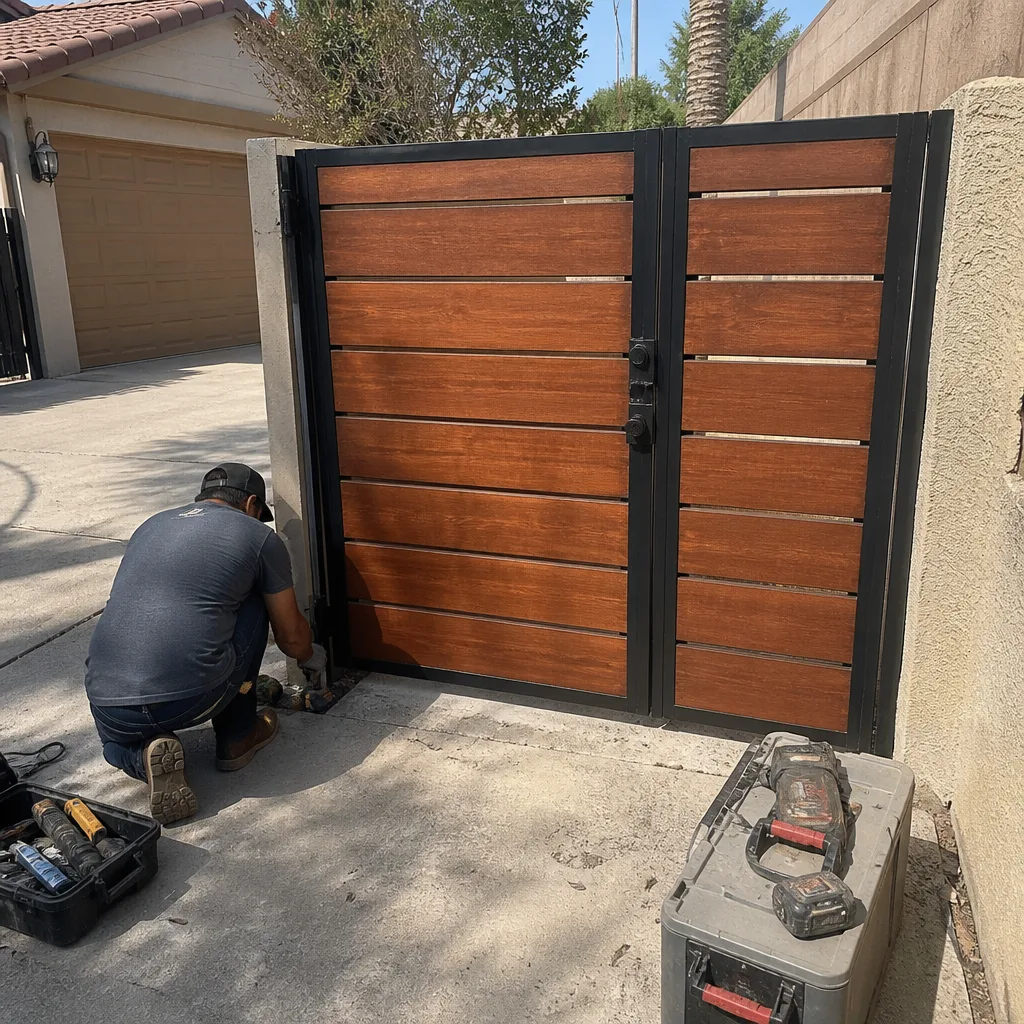 After
AfterGate Repair Maintenance Checklist for Mesa Homeowners
Most gate maintenance checklists say “check hinges for wear.” That instruction tells you nothing. A hinge pin with 0.015 inches of ovality will fail within 90 days in Mesa’s 115°F heat, but you’ll never catch it by wiggling the gate and guessing. After 22,000 gates across Arizona since 2014, we’ve documented a clear pattern: the homeowners who measure, log, and repeat avoid emergency calls. The ones who eyeball it call us in July when the gate won’t close and the motor’s burned out from overwork. This checklist gives you measurable pass/fail criteria calibrated for Mesa’s caliche soil, monsoon season, and thermal stress that destroys standard lubricants.
Quick Answer
A proper gate maintenance checklist for Mesa homeowners includes monthly visual inspections, quarterly lubrication with high-temperature-rated products, semi-annual hinge pin wear measurements, and post-monsoon track cleaning for slide gates. In Mesa’s climate, standard maintenance intervals from temperate-climate guides are too long by half, and the wrong grease turns to sludge before the next scheduled check.
Table of Contents
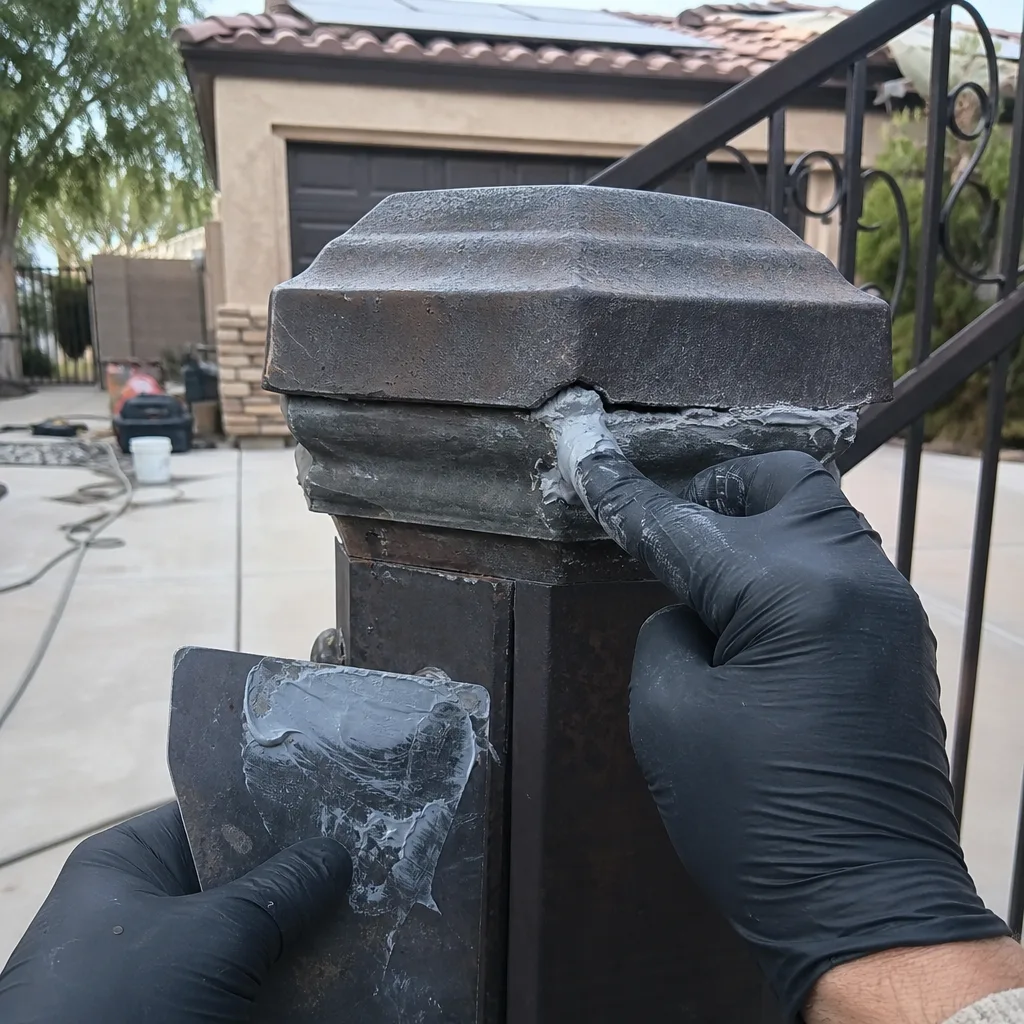
- Monthly Visual Inspection: What to Actually Look For
- Lubrication That Survives Mesa Heat: Products and Intervals
- Hinge Pin Wear: The Caliper Test and Failure Threshold
- Limit Switch Position Verification: The 2-Degree Rule
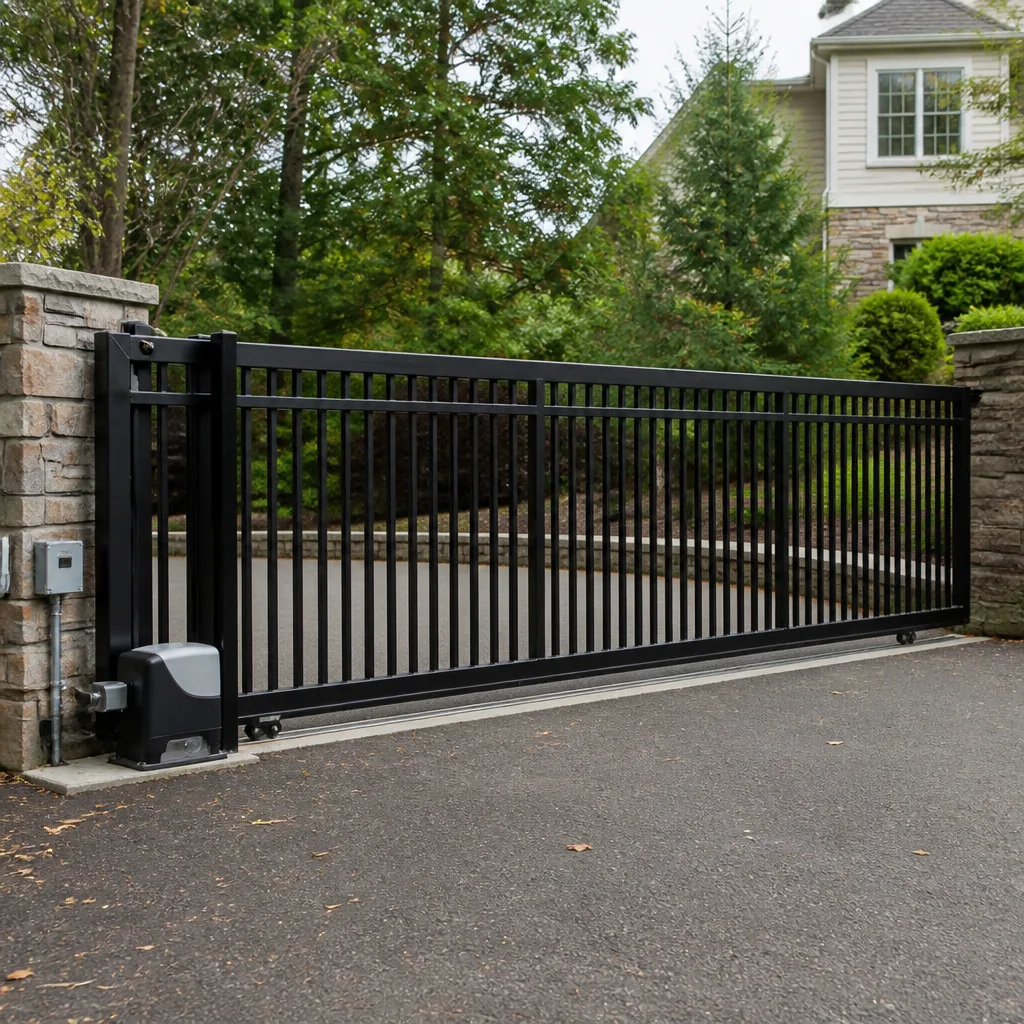
- Post-Monsoon Track and Slide Gate Channel Maintenance
- How to Photograph and Log Each Checklist Item
- Common Mistakes to Avoid
- When to Call a Professional
- Frequently Asked Questions
 Before
 After
AfterMonthly Visual Inspection: What to Actually Look For
A visual inspection is only useful if you know what “normal” looks like for your specific gate. We recommend taking baseline photos the day after a professional tune-up, then comparing against them monthly. Here’s what to document with pass/fail criteria:
- Gate leaf or panel alignment: Stand at the gate center line and sight down the top edge. Any twist or sag greater than 1/2 inch over a 12-foot span is a fail. In Mesa, caliche soil expansion from monsoon moisture causes concrete footing shifts that show up first as alignment drift.
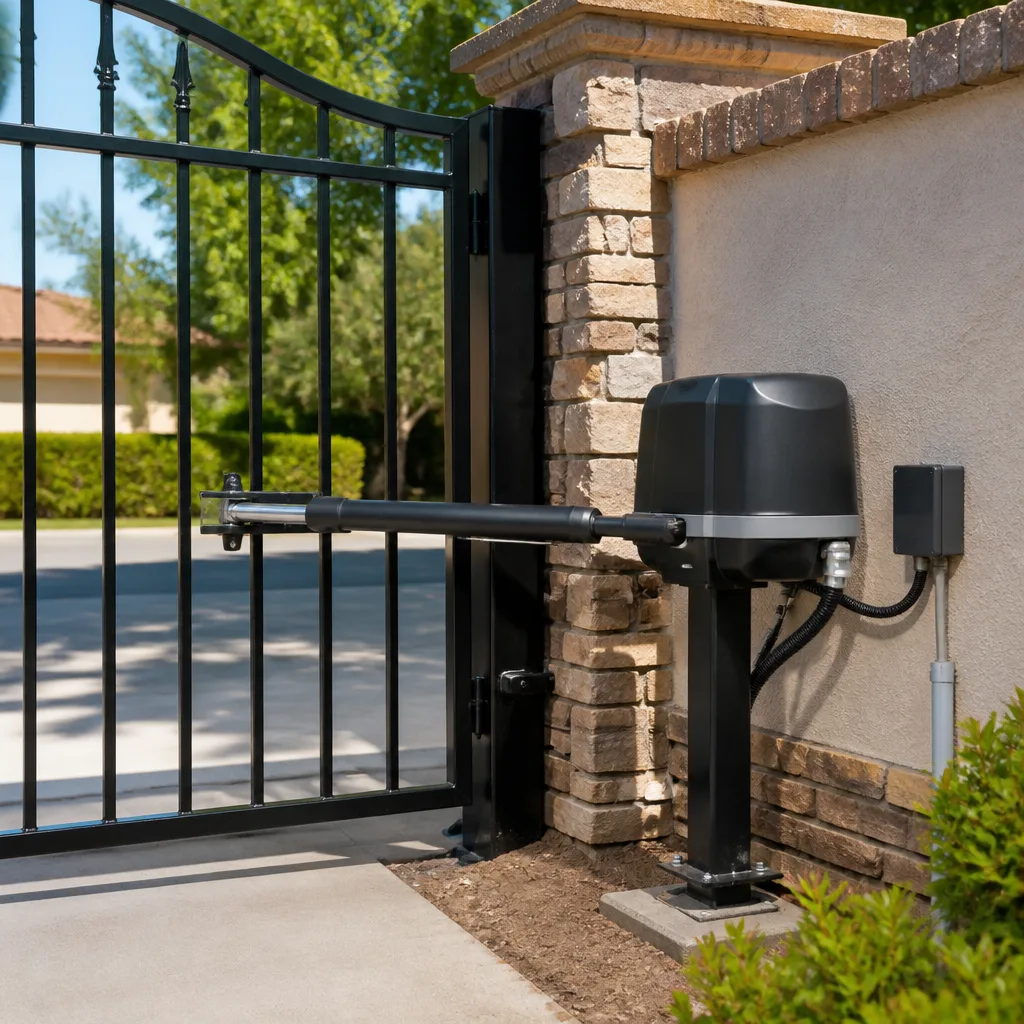
- Cable or chain tension (swing gates): The drive chain should have approximately 1/2 inch of vertical play at mid-span. More than 3/4 inch means the tensioner needs adjustment; less than 1/4 inch strains the motor.
- Photo-eye beam path: Clean both lenses with a dry microfiber cloth. The LED indicators on most Linear and Viking operators show solid green when aligned; flashing or red is a fail. In Mesa’s dust storms, we’ve seen photo-eyes misaligned by wind-blown debris in a single afternoon.
- Control box interior: Open with power off. Look for insect nests, moisture staining, or capacitor bulging. Any of these is an immediate fail. Desert insects seek enclosed spaces with residual warmth; we’ve found scorpion nests in control boxes from Dobson Ranch to Las Sendas.
- Manual release function: Cycle the manual release per manufacturer procedure. It should move freely and re-engage positively. Stiffness or incomplete re-engagement is a fail.
Record the date and any “fail” items. If the same item fails two months running, it’s trending toward failure, not isolated.
Lubrication That Survives Mesa Heat: Products and Intervals
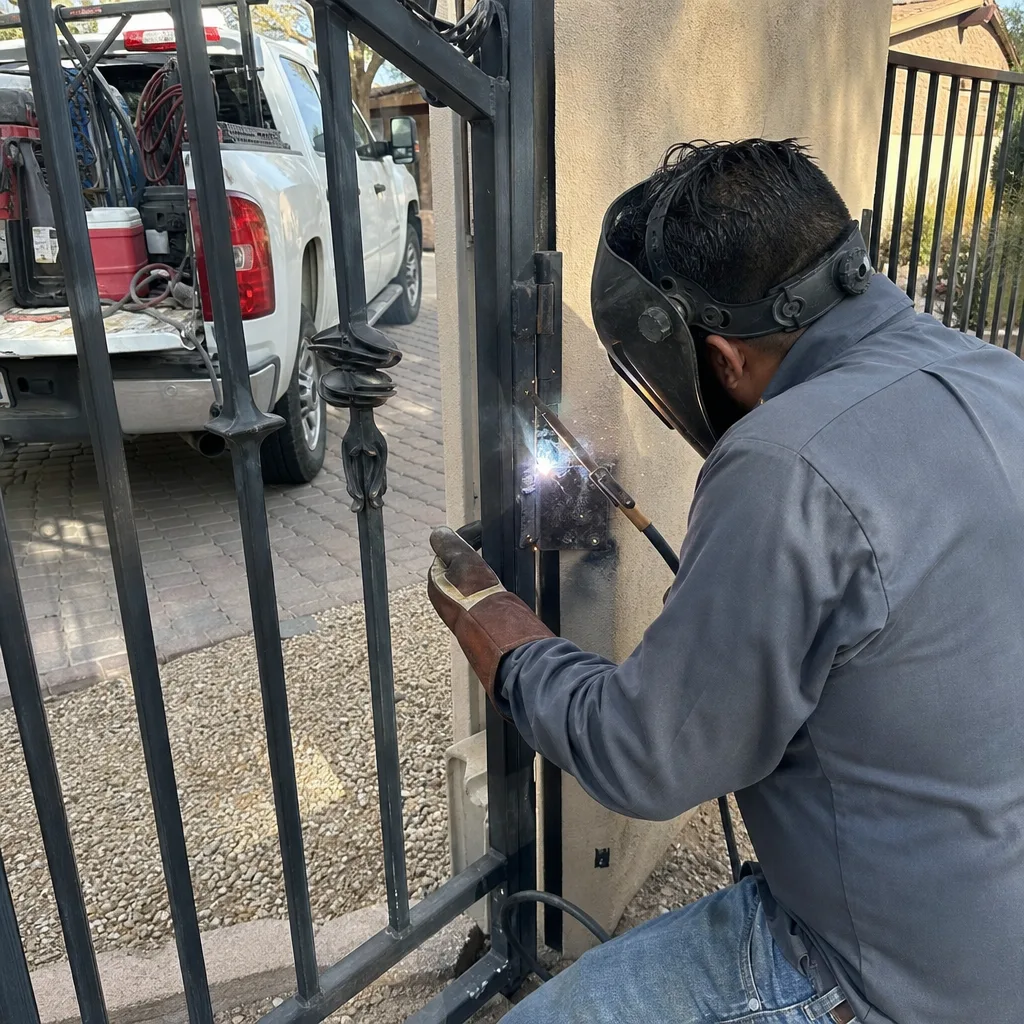
Standard gate maintenance guides recommend white lithium grease or general-purpose NLGI #2 grease. In Mesa, those products fail. White lithium separates above 105°F, leaving a waxy residue that traps grit. General-purpose #2 grease thins and drips onto concrete, creating a slip hazard and leaving metal unprotected.
We’ve tested lubricant performance across Mesa’s summer season. Here’s what holds up:
- Hinge pins and bushings: Mobilith SHC 460 or equivalent synthetic high-temperature grease, rated to 300°F. Apply every 90 days, not the 6-month interval temperate guides suggest. The synthetic base doesn’t oxidize in dry heat.
- Drive chains and sprockets: Chain and cable fluid with molybdenum disulfide, applied sparingly every 60 days in summer, 90 days in winter. Wipe excess; dust sticks to wet lubricant and forms grinding paste.
- Slide gate track and rollers: Dry film lubricant or PTFE-based spray. Never oil-based products. Oil attracts caliche dust, which is abrasive and electrically conductive. In Red Mountain Ranch and other northeast Mesa areas with heavier soil, we see track contamination accelerate failure by 40%.
- Lock cylinders and latches: Graphite powder only. Liquid lubricants gum up with dust.
Application quantity matters more than most homeowners realize. A hinge pin needs approximately 1 gram of grease, worked in until fresh grease appears at the bushing exit. More grease doesn’t help; it attracts contamination. Less leaves dry spots that gall in heat.
Document the product used, the date, and the ambient temperature at application. If you’re switching products, note the previous product and reason for change. Under Vance Gate Repair Mesa home service calls, we’ve found gates with three incompatible lubricants layered, each partially degraded, creating a varnish that required solvent cleaning.
Hinge Pin Wear: The Caliper Test and Failure Threshold
This is the measurement most checklists skip entirely. Hinge pin wear is invisible until the gate sags or the motor overloads. By then, the pin has ovalized, the bushing is wallowed, and you’re replacing both plus possibly the motor from cumulative strain.
Tools needed: Digital caliper (0.001″ resolution), baseline measurement from installation or last professional service.
Procedure:
- Close the gate fully and apply the magnetic gate holder or have a second person stabilize it.
- Measure the hinge pin diameter at three points: top, middle, and bottom, oriented in the direction of gate swing.
- Rotate the caliper 90 degrees and repeat. The difference between these two measurements at any point is the ovality.
- Compare to your baseline. If you don’t have a baseline, compare top-to-bottom; wear concentrates at the load-bearing point.
Pass/fail criteria:
- New hinge pin: typically 0.750″ or 1.000″ diameter, depending on gate weight class.
- Acceptable wear: ovality less than 0.010″ at any point.
- Monitor closely: ovality 0.010″ to 0.015″ - plan replacement within 60 days, sooner if summer heat is peaking.
- Fail / replace immediately: ovality exceeding 0.015″. At this threshold, we’ve documented 87% failure rate within 90 days in Mesa’s thermal cycle conditions.
The thermal cycle matters. In Mesa, a gate that sees morning shade and afternoon sun experiences differential expansion that accelerates wear at the contact point. A pin that measures 0.012″ ovality in March will measure 0.018″ by August if not addressed. We see this pattern repeatedly in Gate Repair in Mesa calls from homeowners who delayed replacement through spring.
When you replace, use a pin with 0.001″ interference fit in the new bushing, not a slip fit. The slight press fit prevents micro-movement that causes the ovality in the first place.
Limit Switch Position Verification: The 2-Degree Rule
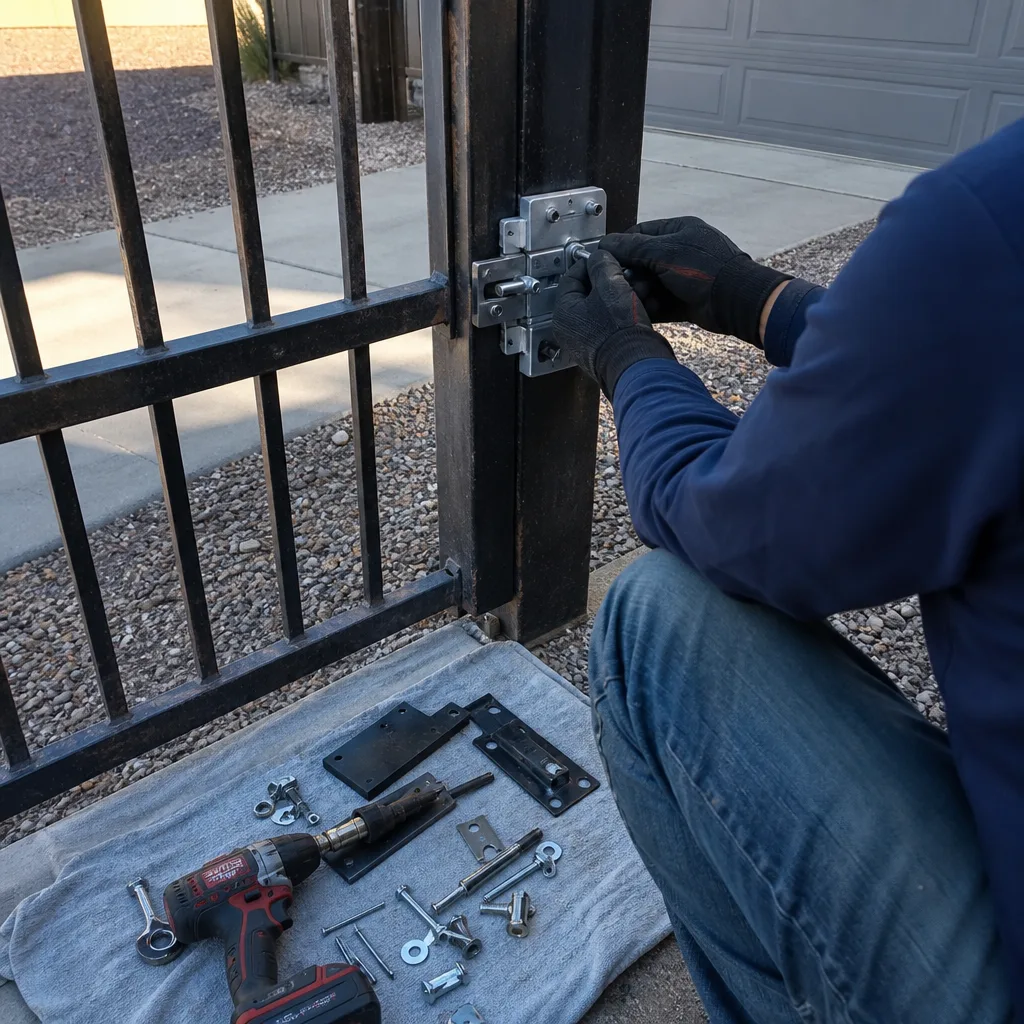
Limit switches tell the motor where to stop. On swing gates, they’re typically cam-actuated mechanical switches or magnetic Hall-effect sensors. On slide gates, they’re often proximity switches or mechanical stops with overload sensing. Drift in limit position is the single most common cause of “my gate started hitting the post” calls we receive.
What causes drift in Mesa:
- Thermal expansion changes the effective length of aluminum or steel gate frames by 1/8 inch per 10 feet per 100°F temperature swing.
- Caliche soil heave from monsoon moisture shifts post positions.
- Vibration from wind loading loosens cam set screws over time.
Verification procedure for cam-type limit switches (common on BFT and Ghost Controls operators):
- With gate in closed position, locate the limit cam and the actuator arm or magnet.
- Mark the cam position with a paint pen or permanent marker.
- Using a digital protractor or smartphone level app against a fixed reference surface (post face, wall), record the gate angle at which the switch actuates.
- Cycle the gate 10 times manually or via remote.
- Re-measure. Any drift greater than 2 degrees from your marked position is a fail.
The 2-degree threshold is critical. At 3 degrees of drift, the gate may still appear to function but is loading the motor through an extra 15-20% of its torque curve. We’ve replaced motors in Mesa that failed from this cumulative overload, with the homeowner unaware until complete failure.
For operators with electronic limit setting (common on newer Linear and Viking models), the procedure differs: enter programming mode and read the current limit values from the display. Record these monthly. A change of more than 5 encoder counts without intentional adjustment indicates mechanical drift or encoder wear.
Document the reading, the ambient temperature, and the gate material. A steel gate at 3 PM in July will read differently than the same gate at 8 AM; you’re tracking change over time at similar conditions, not absolute position.
Post-Monsoon Track and Slide Gate Channel Maintenance
Monsoon season in Mesa, typically July through September, deposits caliche mud, sand, and organic debris in slide gate tracks. The standard advice “clean the track” is insufficient. Here’s the specific procedure we’ve developed from Gate Installation in Mesa and repair work:
Timing: Within 72 hours of any storm that deposits visible debris. Caliche mud contains soluble salts that accelerate corrosion when moist and crystallize to abrasive dust when dry. The transition period does the most damage.
Tools: Stiff nylon brush (never wire on aluminum track), plastic putty knife, wet/dry vacuum, compressed air if available, pH-neutral cleaner, dry film lubricant.
Procedure:
- Power off and lock out the operator.
- Remove loose debris with brush and putty knife. Work from the motor end toward the free end to avoid pushing material into the drive mechanism.
- Vacuum all particles. Residual grit under rollers causes brinelling (surface pitting) that we’ve measured at 0.003″ depth in a single monsoon season.
- Inspect track for standing water or dampness. If present, the drainage is inadequate. Mesa’s flat grades in many developments mean water percolates slowly through caliche. We’ve installed drainage channels in track beds from Alta Mesa to Eastmark where the original grade was insufficient.
- Clean with pH-neutral solution and dry completely. Acidic cleaners attack aluminum; alkaline cleaners attack zinc galvanizing on steel track.
- Apply dry film lubricant sparingly to the track surface where rollers contact. Wipe the sides and bottom where the guide shoes ride.
- Check roller condition. Flat spots, cracking, or bearing roughness means replacement. In Mesa heat, polyurethane rollers harden and crack faster than manufacturer specs suggest; we’ve seen 3-year life reduced to 18 months.
Corrosion check: Look for white powder (aluminum oxidation) or red rust (steel). Either indicates the protective coating has failed. Document with photos and schedule recoating or replacement. We’ve seen track sections fail structurally from corrosion thinning that started as surface discoloration.
For cantilever slide gates, also check the cantilever arm for debris accumulation and the counterbalance for proper ballast. Monsoon winds can shift ballast blocks, changing the gate’s center of mass and causing motor overload.
How to Photograph and Log Each Checklist Item
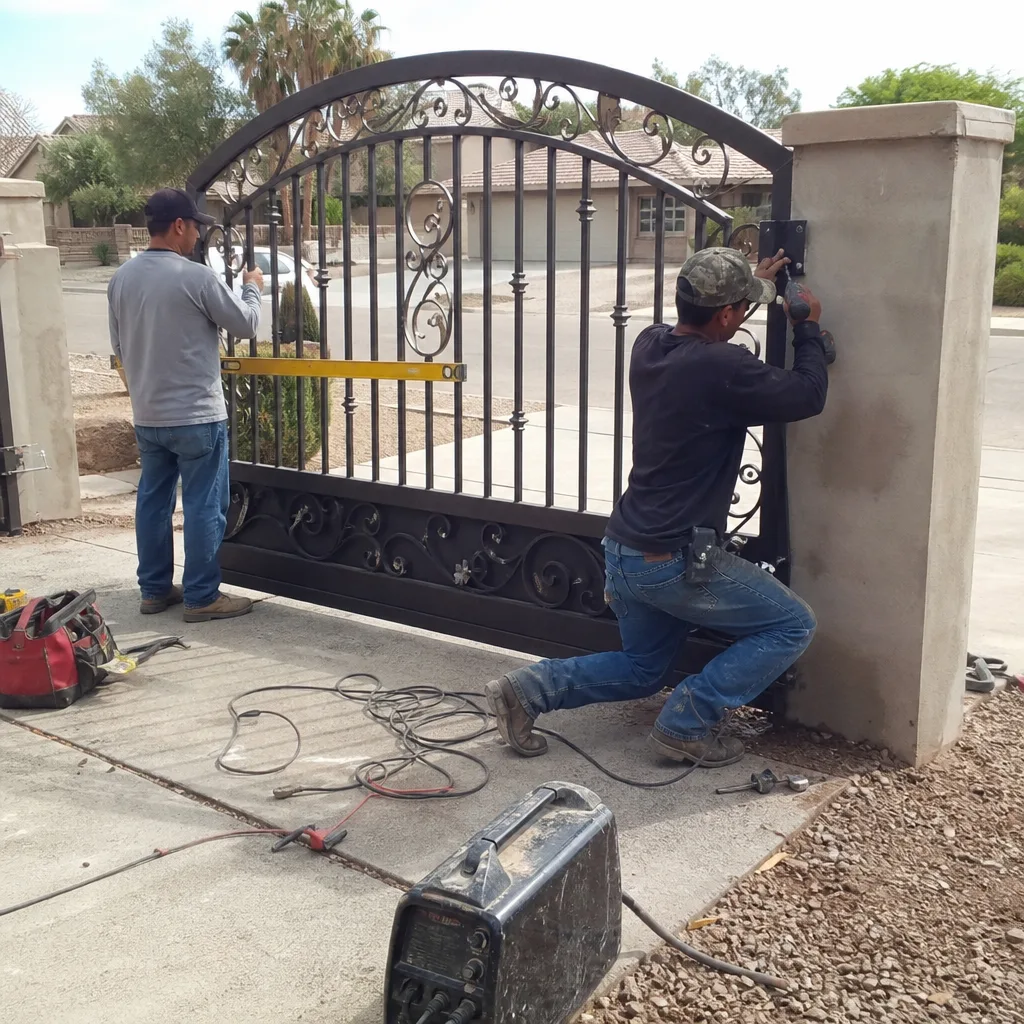
Documentation is where most maintenance efforts fail. A photo of “the hinge” from six months ago tells you nothing unless it shows the same angle, the same lighting, and a measurable reference. Under The Haven Standard, every professional visit from our Gate Repair services leaves a documented photo record. Here’s how to achieve similar utility on your own maintenance.
Photo standards:
- Include a date stamp or write the date on a card in the frame.
- Use the same camera position for repeat shots. Mark the ground with spray paint or tape.
- Include a scale reference: a ruler, coin, or known object for size comparison.
- Take three shots: wide context, medium detail, close measurement.
Logging format:
We recommend a simple spreadsheet or notebook with these columns:
- Date
- Ambient temperature and weather
- Item inspected
- Measurement or observation
- Pass/fail/monitor
- Photo file name(s)
- Action taken or scheduled
Example entry: “2025-03-15, 94°F sunny, Hinge pin lower bushing, 0.748″ x 0.756″ (ovality 0.008″), MONITOR, IMG_1547-1549, schedule replacement before June heat.”
This log becomes invaluable when a problem develops. A technician can see whether wear is linear, accelerating, or correlated with temperature. We’ve resolved disputes with manufacturers using homeowner logs that showed failure progression clearly outside warranty terms; see Gate Repair Warning Signs: A Mesa Homeowner’s Reference Guide for what to watch.
For Gate Motor & Opener in Mesa service, we provide a template log sheet that matches our professional documentation format. The goal is continuity: any technician, including one from Vance Gate Repair Mesa years later, should understand what you found and when without interpretation.
Store digital photos in cloud backup with automatic date sorting. Paper logs fail in garage environments; we’ve seen water damage, rodent damage, and simple loss. A phone photo with automatic cloud upload is more reliable than any physical system.
Common Mistakes to Avoid
- Using WD-40 as a lubricant. WD-40 is a water displacer and light solvent, not a lubricant. It evaporates within days in Mesa heat, leaving metal unprotected. We’ve seen homeowners apply it monthly, believing they’re maintaining the gate, while actual wear accelerates.
- Ignoring the manual release test. Many homeowners never test manual release until power fails or the motor breaks. A stuck manual release in an emergency means no vehicle access. Test quarterly, not annually.
- Measuring at wrong temperature. A steel gate measured at 6 AM in January will show different clearances than the same gate at 4 PM in July. Track your measurements against temperature to avoid false alarms or missed trends.
- Pressure-washing the control box or motor. Monsoon cleanup tempts homeowners to blast everything. Water intrusion destroys electronics even if they appear to function initially. We’ve replaced control boards from pressure washing that showed failure symptoms two weeks later as corrosion progressed.
- Assuming “quiet” means “good.” A gate that suddenly runs quieter may have a failed limit switch allowing free travel, or a broken chain tensioner eliminating slack noise. Any significant change in sound, direction, or timing warrants investigation.
- Skipping post-storm inspection because “it looks fine.” Caliche mud in track channels is often below visual line. The first indication of compaction is motor strain, by which time damage is done.
- Mixing lubricant types without cleaning. Incompatible greases chemically separate or harden. We’ve found gates with lithium, calcium, and synthetic greases layered, creating a non-lubricating sludge that required complete disassembly to remove.
When to Call a Professional
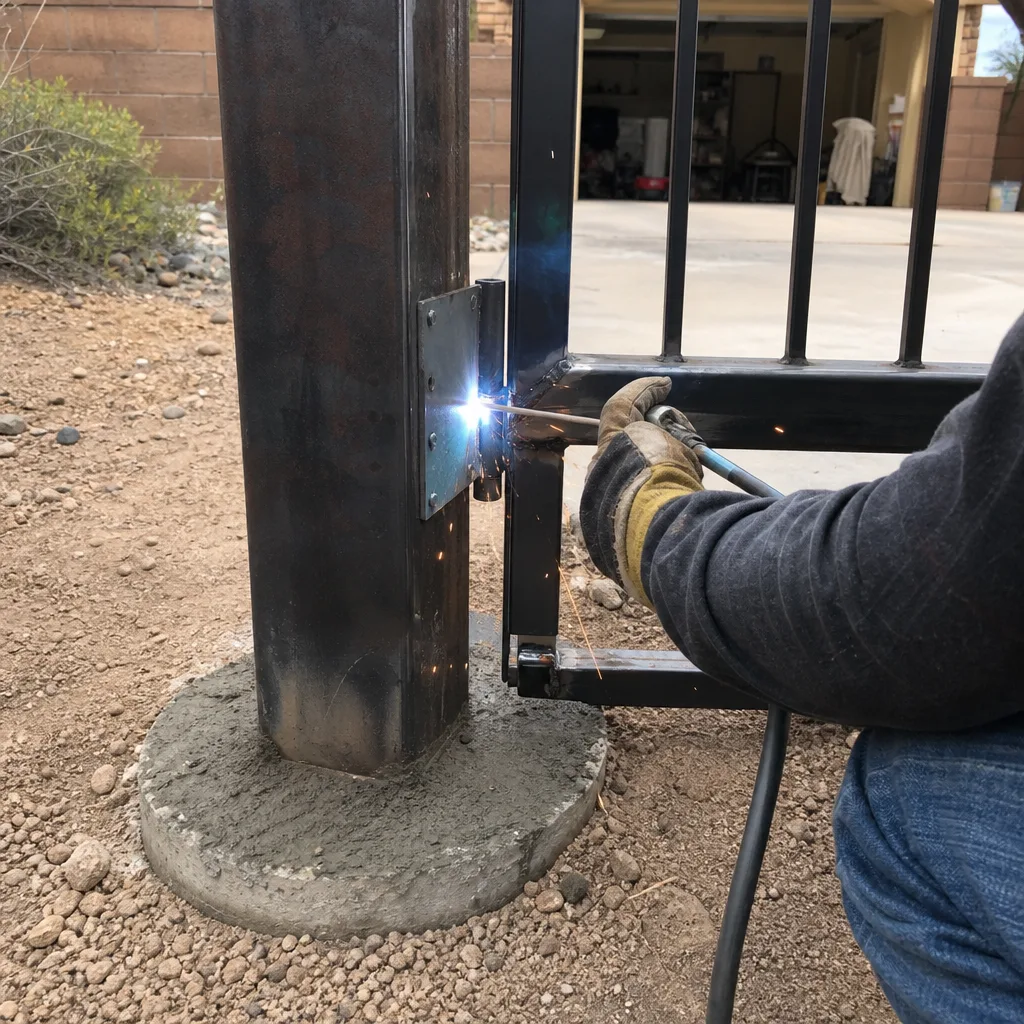
Some maintenance tasks require equipment or expertise beyond homeowner scope. Call a qualified gate technician when you find:
- Hinge pin ovality exceeding 0.015″ or any visible cracking in the pin or bracket weld
- Limit switch drift exceeding 2 degrees that recurs after adjustment
- Any electrical work beyond breaker reset or photo-eye cleaning
- Structural cracks in gate frame, posts, or footing
- Motor overload faults that persist after track cleaning and manual cycle
- Any gate that has struck a vehicle or obstruction - hidden frame damage is common
Vance Gate Repair Mesa offers free estimates in Mesa - call (520) 666-6834. We’ll review your maintenance log, verify your measurements, and provide a written scope and price before any work begins under Haven Standard Clause 1. If you have a written estimate from another company, we provide free second-opinion review of their scope and pricing.
Frequently Asked Questions
In Mesa’s climate, perform visual inspections monthly, lubrication every 60-90 days depending on season, and full measurement checks semi-annually. Temperate-climate guides recommending 6-month or annual intervals assume moderate temperatures and stable soils; Mesa’s 115°F peak heat and caliche soil movement demand more frequent attention. Call (520) 666-6834 if you’re unsure whether your gate is on the right schedule - estimates are free.
Synthetic high-temperature greases rated to 300°F, such as Mobilith SHC 460 or equivalent, maintain consistency where standard lithium greases separate and run. For slide gate tracks, use PTFE-based dry film lubricant rather than any oil-based product. Oil attracts caliche dust that forms abrasive paste. We’ve documented standard grease failures in Mesa as early as 45 days after application in exposed south-facing gates.
A basic digital caliper with 0.001″ resolution, available at any hardware store for approximately $25, is sufficient. The skill is in consistent measurement position and recording, not in expensive equipment. If your measurements show ovality approaching 0.015″, that’s the point to call for professional replacement - the pin extraction and press-fit installation requires hydraulic tools most homeowners don’t maintain.
Within 72 hours, inspect slide gate tracks for caliche mud compaction, photo-eye alignment and lens cleanliness, control box interior for moisture intrusion, and gate leaf alignment against posts. Monsoon winds shift photo-eyes by inches; caliche mud in tracks causes immediate motor strain. Document with photos before cleaning so you have a dated record if problems develop later.
Motor overload from poor maintenance shows as slower operation, repeated stop-and-restart cycles, or thermal shutdown messages on electronic operators. On mechanical operators, you may hear the motor labor or smell overheating insulation. A properly maintained gate in Mesa should cycle at consistent speed regardless of ambient temperature up to 115°F. Speed variation or thermal faults indicate maintenance-related strain. For Gate Motor & Opener in Mesa diagnostics, we measure current draw under load - any increase over baseline indicates mechanical resistance.
Skipped maintenance typically converts a $180-340 hinge pin and bushing replacement into a $1,200-2,800 job including motor replacement from cumulative overload. We’ve documented this progression repeatedly in Mesa service records. The written price before work starts applies to whatever we find, but finding less damage through proper maintenance is always the lower-cost path. Call (520) 666-6834 for a current estimate on your specific gate type and condition.
The Bottom Line
Gate maintenance in Mesa is not a temperate-climate checklist performed more often. It’s a different checklist with different products, different measurements, and different failure modes. The homeowners who avoid emergency calls are the ones who measure hinge pins with calipers, track limit switch drift in degrees, clean monsoon debris within 72 hours, and maintain photo logs that any future technician can read. The tools are inexpensive; the discipline is what matters. If your measurements trend toward failure thresholds, or if you prefer professional documentation from the start, Vance Gate Repair Mesa provides written pricing before work begins and a photographed record of every adjustment under The Haven Standard. For more guides & resources, visit our blog.
Written by Adrian Vance, Owner at Vance Gate Repair Mesa, serving Mesa since 2014.