
Last updated September 22, 2026
Free on-site gate assessment - hinges, posts, and your LiftMaster or Nice gate operator checked before anything is quoted
The assessment is free and the quote is the invoice.

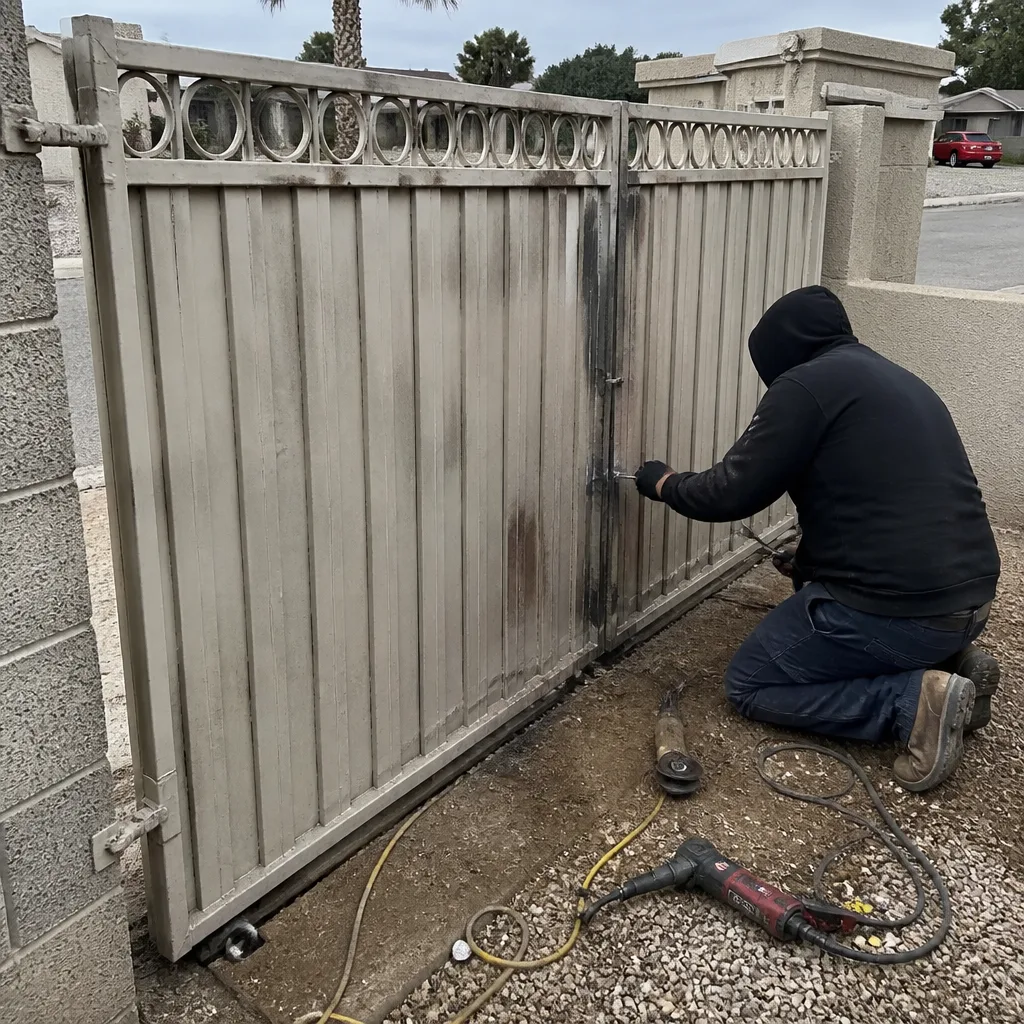 Before
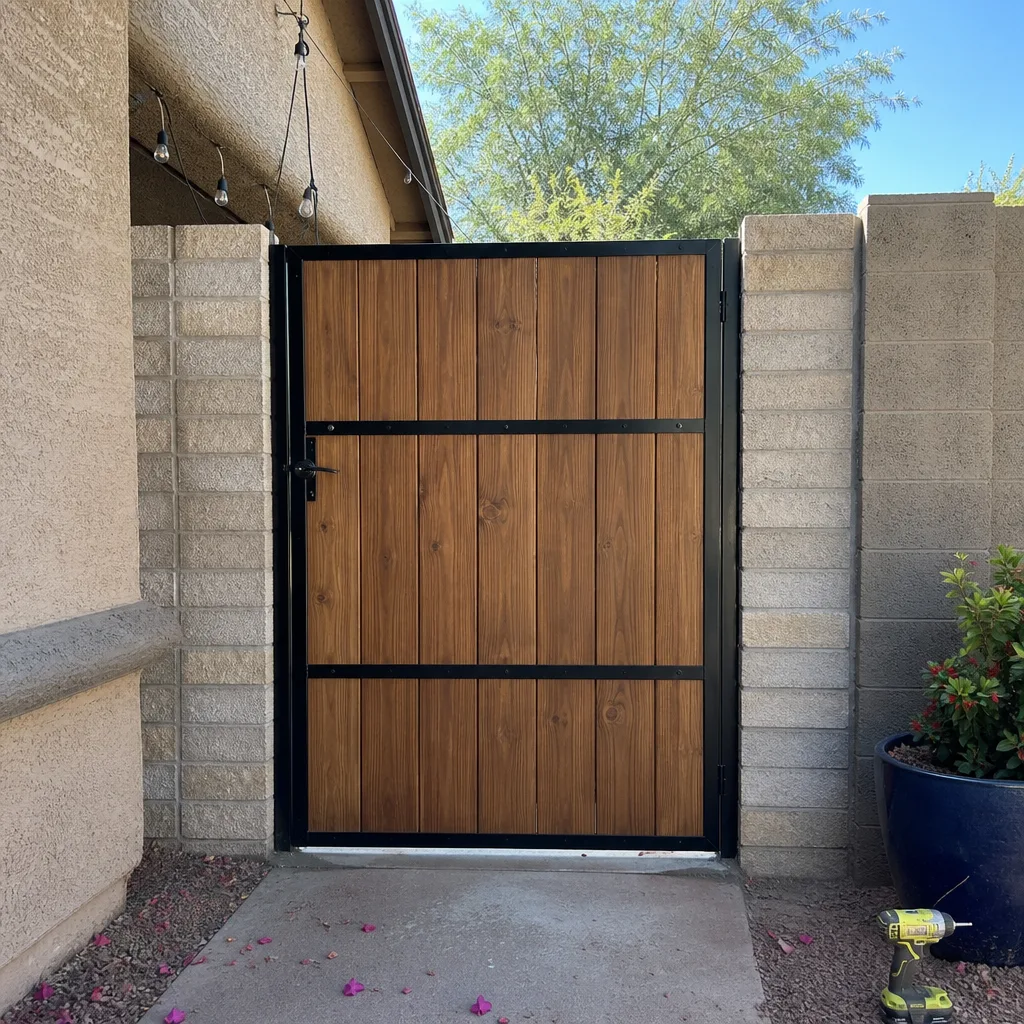 After
After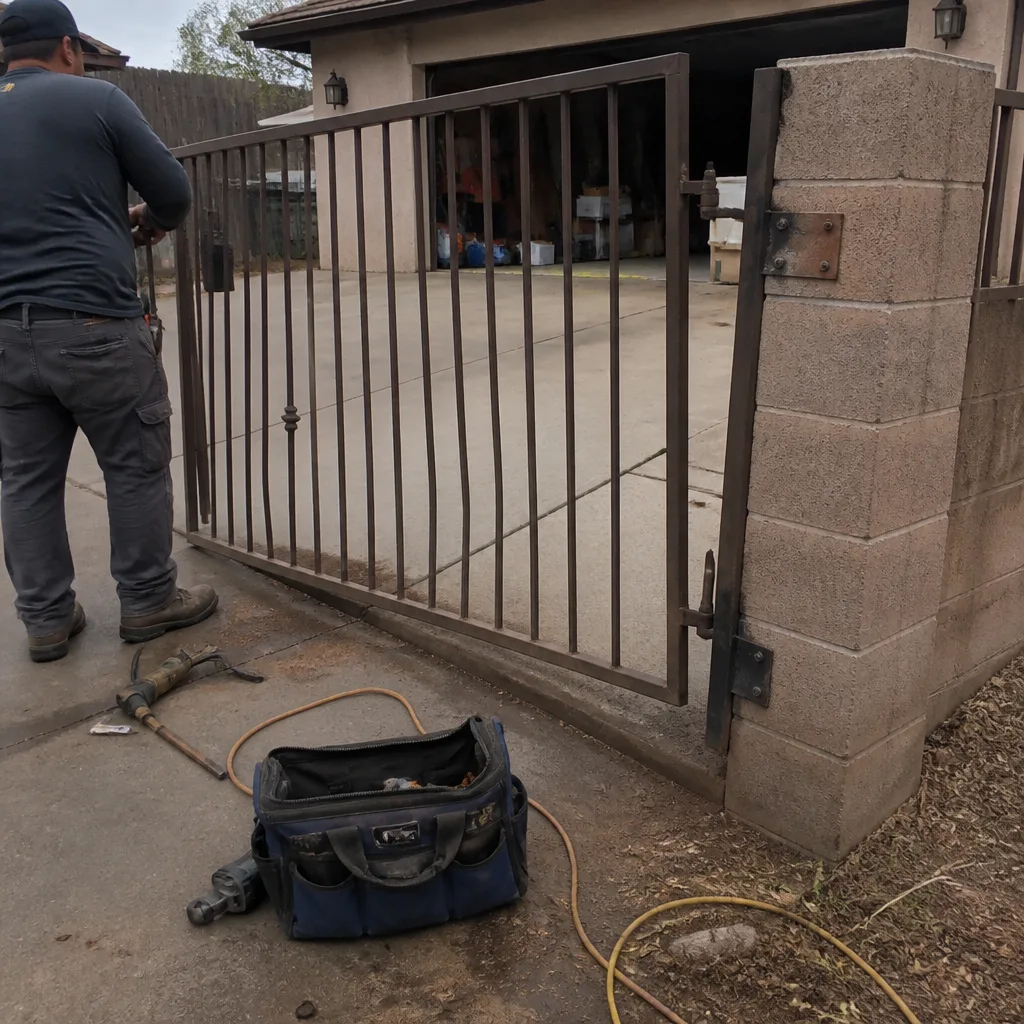 Before
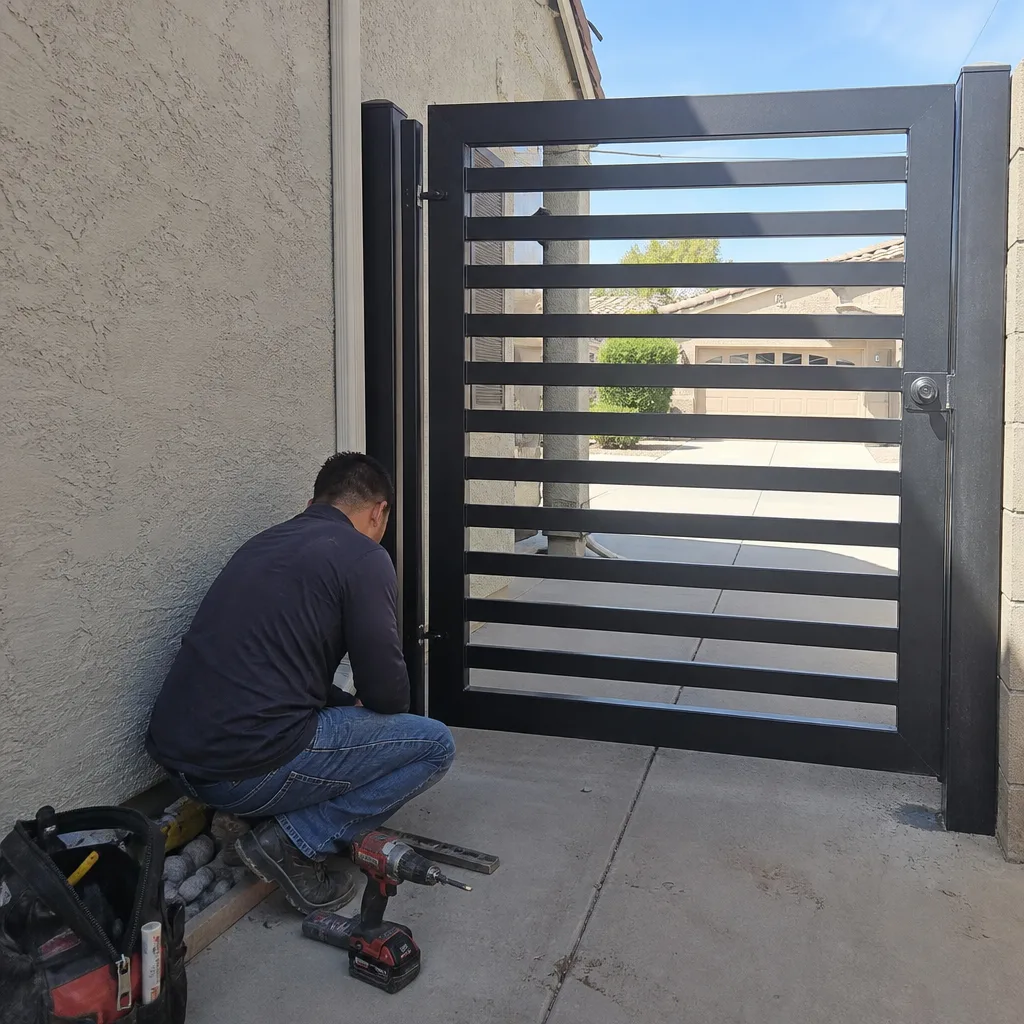 After
After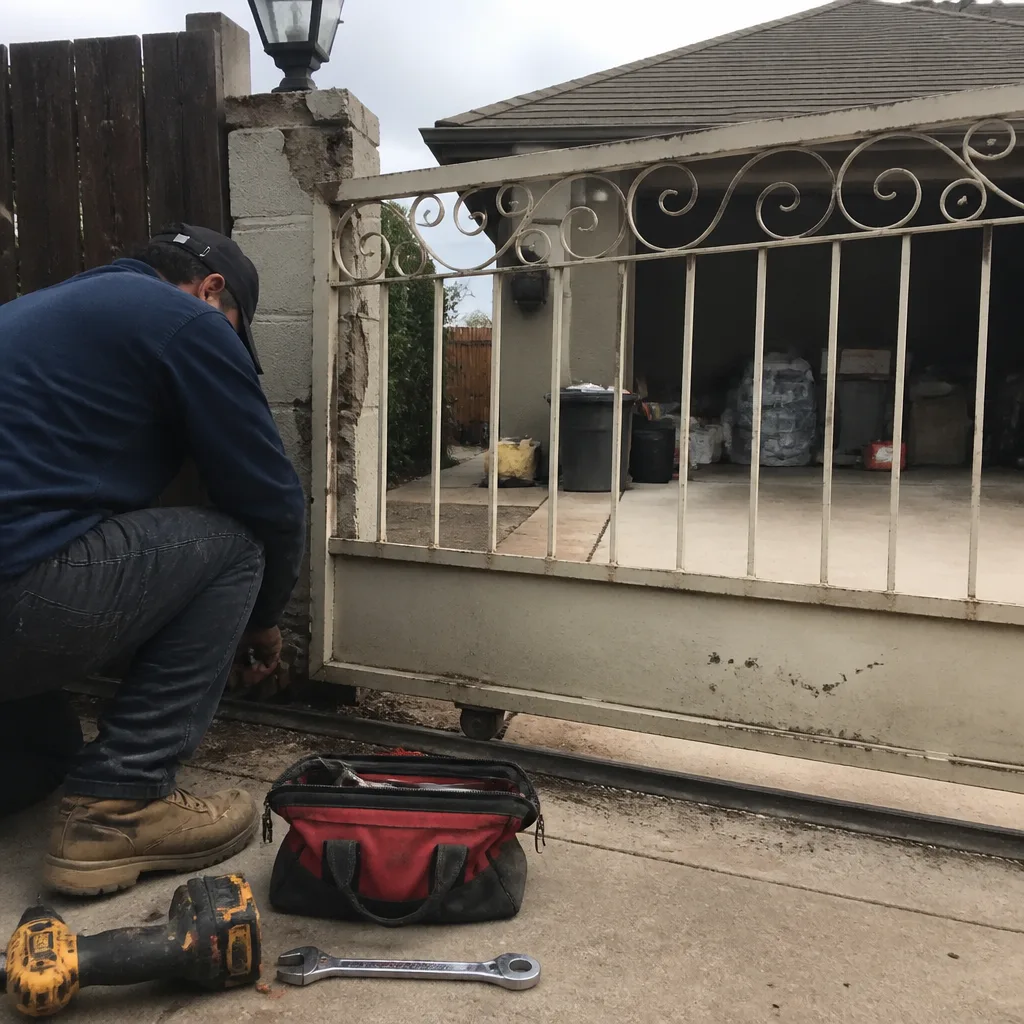 Before
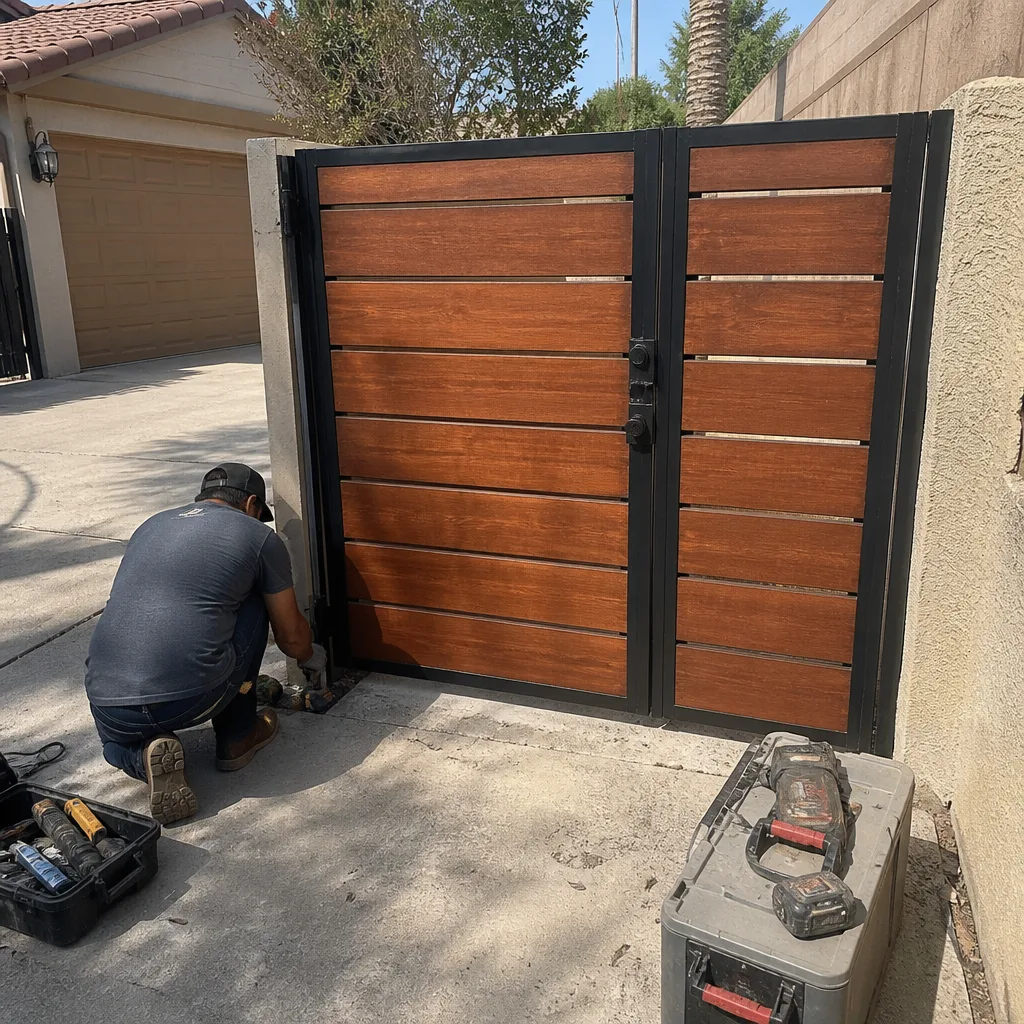 After
AfterDIY vs Professional Gate Repair: The Mesa Homeowner’s Decision Guide
Here’s something most gate companies won’t tell you: adjusting a limit switch yourself is not risky. Replacing a control board yourself and leaving no wiring diagram is - because the next technician charges you to reverse-engineer what you did, and in Mesa, that rediscovery fee often exceeds the original repair. After 22,000 gates across Arizona since 2014, we’ve learned that the DIY vs. professional line isn’t about difficulty. It’s about documentation. This guide shows Mesa homeowners exactly which tasks belong on which side of that line, what to record if you cross it, and when calling a pro for Gate Repair saves money instead of spending it.
Quick Answer
Most Mesa homeowners can safely handle lubrication, track cleaning, photo-eye alignment, and limit switch fine-tuning without voiding warranties or creating liability. Control board replacements, wiring modifications, ground fault repairs, and any work affecting UL 325 entrapment protection require professional documentation. The dividing factor isn’t skill - it’s whether an undocumented repair forces the next technician to charge for diagnostic rediscovery.
Table of Contents
- Safe DIY Tasks That Won’t Void Your Warranty
- Physically Accessible Tasks That Create Hidden Costs
- Safety-Category Tasks: Non-Negotiable for Pros
- What Documentation Means in a DIY Context
- How to Evaluate National Repair Guides for Mesa Conditions
- Real Cost Comparison: DIY vs. Professional in Mesa
- Operator Warranty Traps Most Homeowners Miss
- Common Mistakes to Avoid
- When to Call a Professional
- Frequently Asked Questions
- The Bottom Line
 Before
 After
AfterSafe DIY Tasks That Won’t Void Your Warranty
Every major automation brand - LiftMaster, FAAC, BFT, Linear, Viking, Ghost Controls, DoorKing, Elite, Mighty Mule - publishes a homeowner maintenance schedule. The tasks on that schedule exist specifically because they don’t require specialized tools, don’t alter electrical pathways, and don’t change safety-system calibration. In Mesa, where dust storms and monsoon cycles accelerate wear, performing these tasks on schedule often prevents the failures that lead to service calls.
Here are the four categories we encourage homeowners to handle themselves:
1. Lubrication of Hinges, Rollers, and Chain/Belt Drives
Use a silicone-based lubricant, not WD-40. WD-40 attracts dust, and in Mesa’s desert environment, that dust becomes abrasive paste inside six months. Apply sparingly to hinge pins, roller bearings, and the chain or belt drive path. Wipe excess. Cycle the gate twice. This takes ten minutes and prevents the binding that burns out motors.
2. Track and Guide Cleaning
Debris in the track causes the gate to skew, which strains the motor and warps the gate frame. Remove leaves, gravel, and the caliche dust that blows in during spring storms. A stiff brush and compressed air handle most buildup. Check for track bolt looseness - tighten with a socket set, but don’t adjust track alignment itself; that’s where DIY becomes professional territory.
3. Photo-Eye (Obstruction Sensor) Alignment
The photo-eye is the infrared beam that stops the gate if something crosses the path. When both housings show steady LEDs, they’re aligned. If one blinks, loosen the mounting bracket, adjust until both LEDs hold steady, then tighten. In Mesa, thermal expansion from 115°F summer days to 40°F winter nights shifts brackets over time. This is normal homeowner maintenance.
4. Limit Switch Fine-Tuning
The limit switch tells the motor when to stop opening and closing. If your gate stops six inches short or bangs the stop post, the limit switch needs adjustment. Most operators have mechanical dials or digital position settings in the control housing. Adjust in small increments - quarter-turns on mechanical units, five-degree steps on digital - and test after each change. Document the original position first (photo the dial or screen). This is the task from our opening: simple, safe, and reversible if you record where you started.
These four tasks share a critical trait: they’re adjustments within existing systems, not replacements or rewiring. They don’t create undocumented states. If you misalign a photo-eye, the LEDs show you. If you overshoot a limit switch, the gate hits the stop or stops short - obvious, correctable, visible.
One Mesa-specific note: monsoon season (June through September) deposits fine dust that insulates electrical contacts. A homeowner who cleans photo-eye lenses monthly during monsoon season prevents the false-obstruction errors that trigger constant “gate won’t close” calls. This is maintenance, not repair, and it belongs in your hands.
Physically Accessible Tasks That Create Hidden Costs
This is where most homeowners get surprised. The task looks doable. The parts are available online. The video makes it look straightforward. But the hidden cost isn’t in the doing - it’s in the undoing when something goes wrong, or when the next technician can’t determine what was changed.
We see this regularly in Mesa neighborhoods like Dobson Ranch and Las Sendas: a homeowner replaces a control board after watching a manufacturer video, connects wires by color matching rather than by function, and six months later the gate behaves erratically. The new technician spends 90 minutes tracing wires, discovering that the “blue to blue” connection actually routes a safety circuit through a 24V auxiliary port. The diagnostic time costs $180. The original board swap cost $220. The homeowner saved nothing and lost a Saturday.
Here are the tasks that fall into this category:
- Control board replacement: Even “plug-and-play” boards often require dip-switch configuration, motor-type selection, and safety-device programming that varies by installation date and local code amendments.
- Wiring reroutes or extensions: Underground conduit in Mesa often contains moisture from irrigation runoff or monsoon pooling. A homeowner who splices without heat-shrink and dielectric grease creates corrosion points that fail in 8-14 months.
- Ground fault repairs: GFCI trips on gate circuits usually indicate a real ground fault, not a faulty GFCI. Resetting without finding the source masks a safety issue. The fault often traces to conduit flooding in low-lying Mesa yards or UV-degraded insulation on south-facing conduit runs.
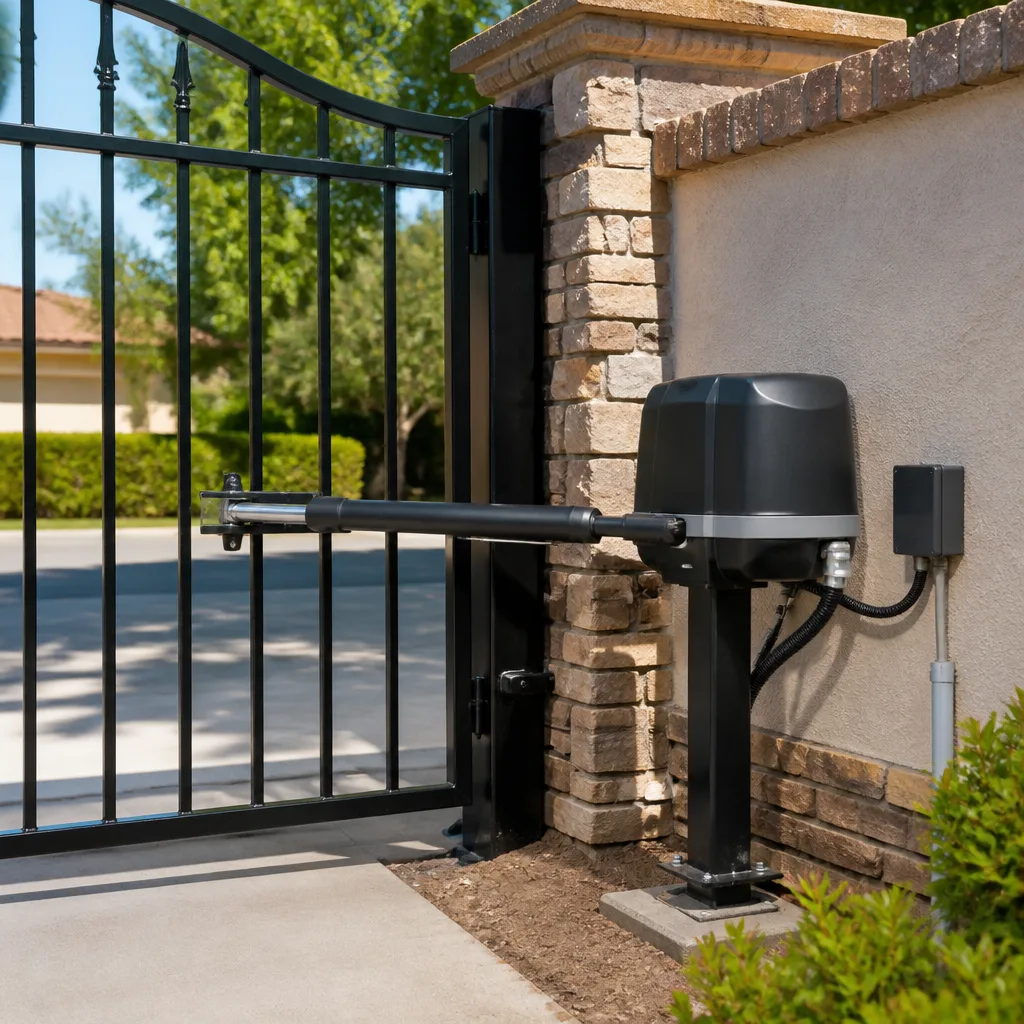
- Arm or chain replacement on swing gates: Physically straightforward, but torque settings and limit-switch relearning are brand-specific. A Viking operator requires different post-install calibration than a Ghost Controls system. Skip the calibration and the gate stalls on the next cold morning.
- Adding or relocating keypads, remotes, or telephone entry systems: These devices integrate with the control board’s accessory ports. Incorrect wiring can back-feed voltage into communication lines, damaging the board and voiding the accessory warranty.
The common thread: these tasks alter the system’s documented state. When Vance Gate Repair Mesa arrives at a gate with no wiring diagram, no part number record, and no calibration notes, we start from zero - which is why our Gate Repair Maintenance Checklist for Mesa Homeowners emphasizes documentation before any work begins. Under The Haven Standard, we document everything we find - but we charge for the finding. The homeowner who DIY’d the board swap paid for the part, paid with their time, and pays again for diagnostic reconstruction.
If you’re determined to handle one of these tasks, the next section is critical.
What Documentation Means in a DIY Context
Professional documentation isn’t proprietary. It’s a habit. Adrian Vance developed it on commercial access-control sites starting in 2014, where undocumented work on a DoorKing or Elite system could strand a delivery fleet for hours. The same principle applies to your driveway gate, even if the only “fleet” is your family car.
Here’s what to capture if you perform any repair beyond basic maintenance:
- Photograph the entire control housing before touching anything. Wire positions, terminal numbers, dip-switch orientations, jumper placements. Use your phone’s timestamp.
- Record part numbers from the old component before discarding it. Board model, firmware revision, date code. New boards often require different firmware; knowing the old version helps troubleshoot compatibility.
- Label every wire you disconnect. Not just “blue” - “blue, terminal 3, COM port.” Masking tape and a Sharpie work. Photograph your labels.
- Note the gate’s physical position when limits were set. “Open limit: gate vertical, 2 inches from stop bumper.” “Close limit: latch engaged, no post contact.”
- Test and record every safety function after your repair. Photo-eye interruption, edge sensor contact, manual release operation. If a safety device doesn’t respond, your repair isn’t complete.
- Store everything in a dated folder. Physical or digital. Include your photos, part numbers, and any manufacturer bulletins you referenced.
This documentation serves two purposes. First, it gives any future technician (including you, six months later) a baseline instead of a mystery. Second, it protects your warranty. Most operator warranties - LiftMaster, FAAC, BFT, Linear, Viking, Ghost Controls, DoorKing, Elite, Mighty Mule - require that “repairs be performed in accordance with manufacturer specifications.” A photo log showing terminal-for-terminal replacement is your evidence.
In Mesa, we recommend storing this folder with your home’s other mechanical records: HVAC service logs, pool equipment manuals, irrigation controller guides. Gate operators are mechanical infrastructure. Treat them that way.
Safety-Category Tasks: Non-Negotiable for Pros
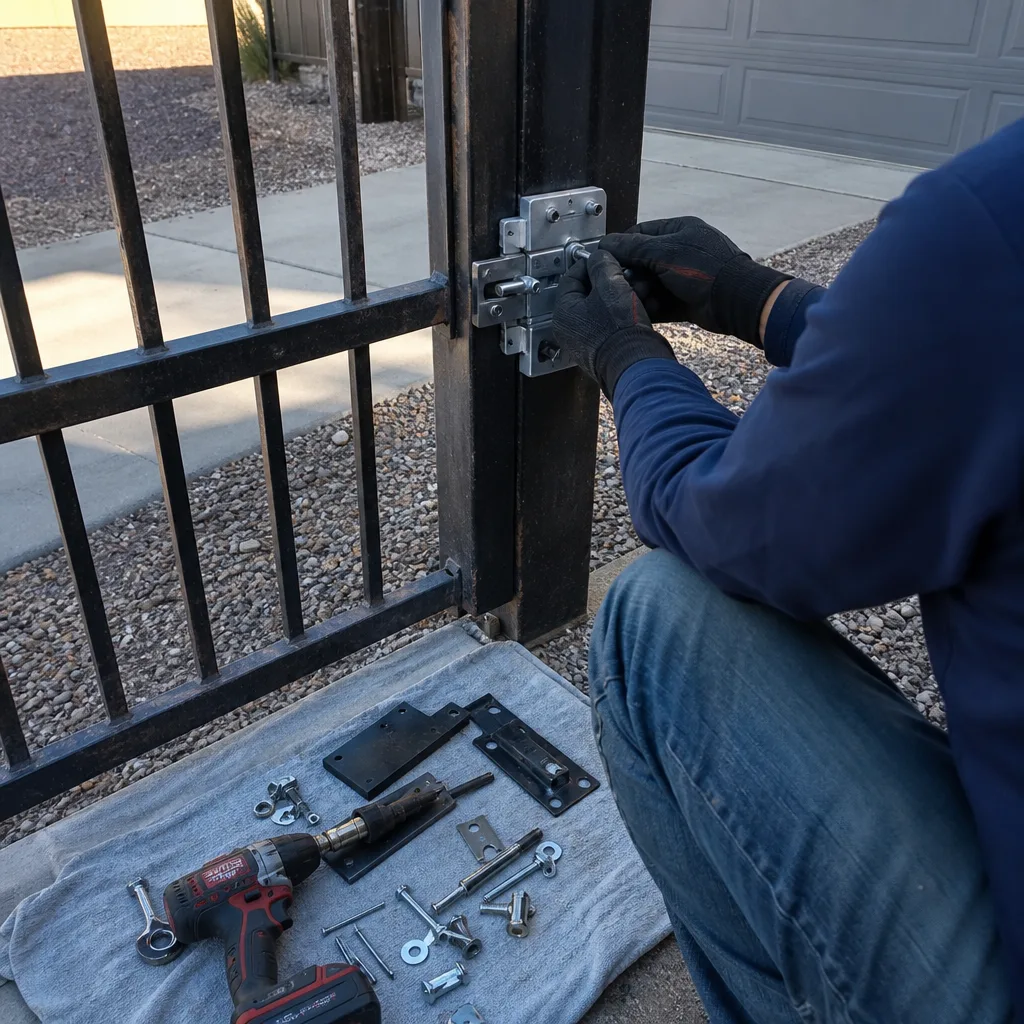
UL 325 is the safety standard governing automated gate systems. It defines entrapment protection requirements, force limitations, and testing protocols. In Arizona, compliance isn’t optional - it’s referenced by the Mesa Building Safety Department and enforced through permit inspections on new installations. But more importantly, UL 325 exists because gate operators can exert lethal force. A 400-pound swing gate moving at 16 inches per second generates impact energy that fractures bones.
These tasks require professional equipment, professional training, and professional liability coverage:
Entrapment Protection Device Testing and Calibration
Every automated gate must have at least one entrapment protection device: photo eyes, safety edges, or inherent force-sensing systems. Testing requires a force gauge (a calibrated instrument, not a household scale) and knowledge of the brand-specific force threshold - typically 40N for residential swing gates, but varying by operator model and installation date. A homeowner who “tests” by waving a hand through the beam hasn’t tested. A homeowner who adjusts force settings without a gauge has made the gate dangerous.
In Mesa, we’ve found that thermal cycling affects safety-edge sensitivity. An edge that passes a winter test may fail in summer heat when the rubber compresses. Professional testing includes seasonal calibration checks that homeowner testing cannot replicate.
Electrical Panel Connections and 120V/240V Wiring
Gate operators draw from dedicated circuits. The disconnect must be lockable, within sight of the operator, and properly grounded. Mesa’s 2018 adoption of NEC 2017 requirements added specific ground-fault protection for outdoor circuits. A homeowner working on panel connections without knowing local amendment cycles creates both shock hazard and code violation.
Structural Welding or Gate Frame Repair
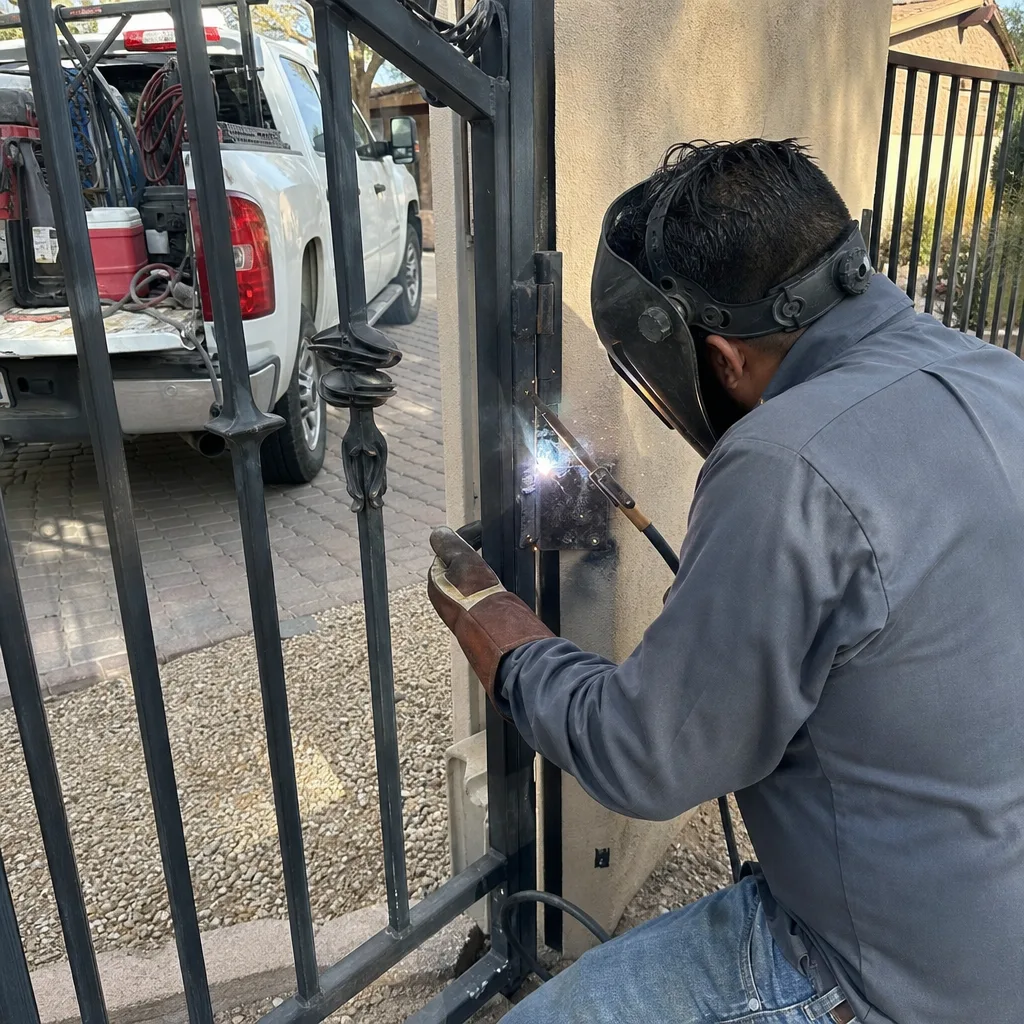
Cracked welds on iron gates, sagging frames on aluminum models, and hinge-post deterioration all affect gate geometry. A gate that doesn’t track squarely strains the motor, but more critically, a failed weld can drop a gate section without warning. Welding requires structural certification for load-bearing joints; the “good enough” backyard repair often fails at the stress point.
Monolithic Slab or Footer Work for Gate Posts
Mesa’s expansive clay soils (particularly in areas east of Signal Butte) shift seasonally. A post that leans 2 degrees changes gate swing geometry, motor load, and safety-device alignment. Correcting post position requires understanding soil bearing, footer depth (typically 36 inches minimum in Mesa’s frost-line calculations), and gate-leverage physics. Shimming a post without addressing the footer creates recurring failure.
Under The Haven Standard, every Vance Gate Repair Mesa safety inspection includes UL 325 force testing with a calibrated gauge, documented in writing and photographed. If we find a non-compliant condition, we flag it before any repair proceeds. This isn’t upselling. It’s the condition under which we’ll put our license and insurance behind the work.
How to Evaluate National Repair Guides for Mesa Conditions
YouTube and manufacturer websites offer repair guidance written for national applicability. But “national” means averaged conditions, and Mesa’s environment is not average. Here’s how to read those guides with local skepticism:
Heat Ratings and Thermal Derating
Most gate operators list an operating temperature range of -4°F to 140°F. Mesa exceeds 140°F in direct sun on dark-colored operator housings. A national guide that says “mount the operator in standard position” doesn’t account for south-facing exposure on a Mesa driveway. We regularly relocate operators to shaded positions or specify white housings (available from Viking and Ghost Controls among others) to reduce thermal load. A homeowner following national guidance without heat derating burns out capacitors in 18-24 months.
Dust Sealing and IP Ratings
Ingress Protection (IP) ratings measure dust and moisture resistance. Mesa’s dust storms (haboobs) carry fine particulate that penetrates IP54 housings over time. National guides rarely mention that IP54 is marginal for Arizona desert installation; we specify IP65 or better for exposed locations, and we inspect seal integrity annually. A guide that says “check seals periodically” without defining “periodically” for dust-storm exposure leaves homeowners unprotected.
Ground Movement Tolerances
Gate operators specify maximum gate weight and length. They don’t specify maximum post movement. Mesa’s clay soils expand and contract with moisture changes - monsoon saturation followed by months of drought. A gate within weight spec becomes overweight for the motor when post lean changes leverage geometry by 5 degrees. National guides don’t address this because most of the country doesn’t have Mesa’s soil behavior.
Monsoon and Lightning Protection
Mesa’s summer electrical storms induce surge damage in improperly grounded operators. National guides mention surge protectors generically. They don’t specify that Mesa’s lightning density (flashes per square mile per year) warrants whole-panel surge protection plus operator-specific protection, or that irrigation conduit often provides a ground-path for induced current.
When evaluating any guide, ask: was this written by someone who knows that caliche dust insulates electrical contacts, that July humidity hits 50% during monsoons, that east Mesa soils shift differently than west Mesa? If not, treat it as a starting point, not a procedure.
Real Cost Comparison: DIY vs. Professional in Mesa
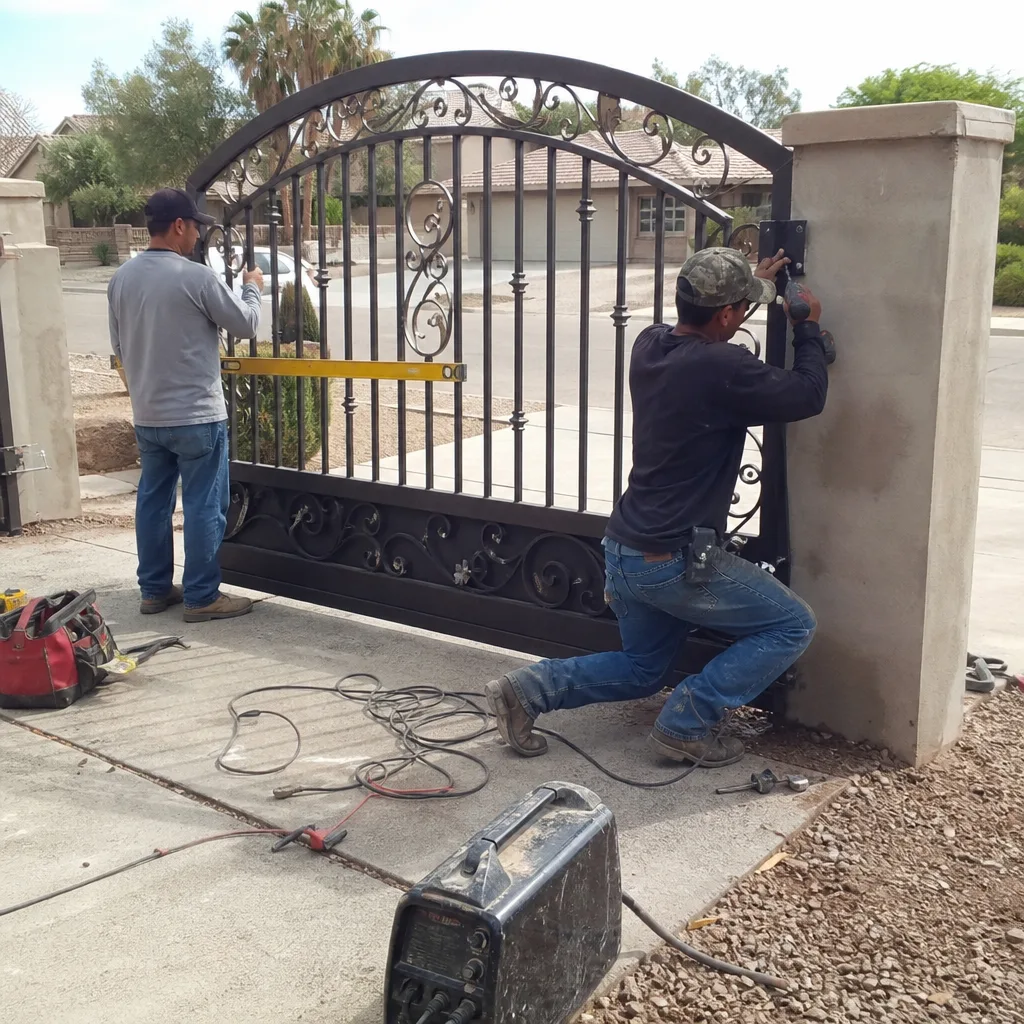
Cost transparency is Haven Standard Clause 1. For a detailed look at current pricing, see our Gate Repair Cost Breakdown: The Mesa Homeowner’s Reference for 2026. Here’s what Mesa homeowners actually spend, based on our 22,000-gate record since 2014:
| Task | DIY Cost Range | Professional Cost Range (Vance Gate Repair Mesa) | Hidden DIY Cost Risk |
|---|---|---|---|
| Annual lubrication & cleaning | $15-$30 (supplies) | $120-$180 (service call + maintenance) | None - recommended DIY |
| Photo-eye realignment | $0 (time only) | $140-$200 (diagnostic + adjustment) | None if documented - recommended DIY |
| Limit switch adjustment | $0 (time only) | $140-$200 | Low if original position documented - recommended DIY |
| Control board replacement | $180-$450 (part only) | $380-$720 (part + labor + documentation) | $150-$280 diagnostic rediscovery if undocumented |
| Single swing-arm motor replacement | $400-$900 (part only, varies by brand) | $680-$1,400 (Viking, Ghost Controls, DoorKing, Elite typical range) | $200-$400 for incorrect spec or failed self-install; potential gate damage |
| Safety system testing & calibration | Not feasible without equipment | $160-$240 | Liability exposure, injury risk, insurance denial if incident occurs |
| Post/footer repair (sagging gate) | $80-$200 (concrete, hardware) | $600-$1,800 (depending on access and soil) | Recurring failure, progressive gate damage, motor overload |
The pattern: maintenance tasks favor DIY. Replacement and safety tasks favor professional execution when documentation, warranty preservation, and liability are factored. The “savings” on a $400 board that costs $280 to diagnose and reinstall after a failed DIY attempt is negative $60 - plus your time, plus the frustration of a gate that worked poorly for months before failing completely.
We offer free second opinions on any written estimate from another company. Bring your paperwork and we’ll review it at no cost. This isn’t charity; it’s how we demonstrate that our pricing holds up to scrutiny.
Operator Warranty Traps Most Homeowners Miss
Every major brand’s warranty contains language about “authorized service” or “installation by qualified personnel.” The enforcement varies, but the risk is real. Here are the specific traps:
- Labor warranty vs. parts warranty: LiftMaster, for example, may cover a replacement board for 24 months but only if installed by an authorized dealer. A homeowner-installed board gets parts-only coverage, and the labor to reinstall a defective replacement comes out of pocket.
- Registration requirements: Some brands require online registration within 30 days of installation, with the installing technician’s dealer number. Miss this and the warranty period shortens or voids.
- “Damage caused by improper installation” exclusion: This is the catch-all. A gate motor that fails because the control board was misconfigured - wrong motor type selected in software, for example - is excluded. The manufacturer doesn’t prove misconfiguration; they infer it from absence of dealer service records.
- Regional warranty variations: Heat-related failures in Arizona may be classified as “environmental damage” rather than defect, particularly for operators installed without adequate shading or ventilation. A professional installation record that notes heat-mitigation measures (shroud, white housing, vented enclosure) supports your claim.
Vance Gate Repair Mesa is authorized to service and document repairs on all nine brands we carry. Our documentation - part numbers, serial numbers, calibration readings, photos - becomes your warranty-support evidence. Under Clause 4 (Evidence on every job), every visit includes this documentation at no additional charge.
Common Mistakes to Avoid
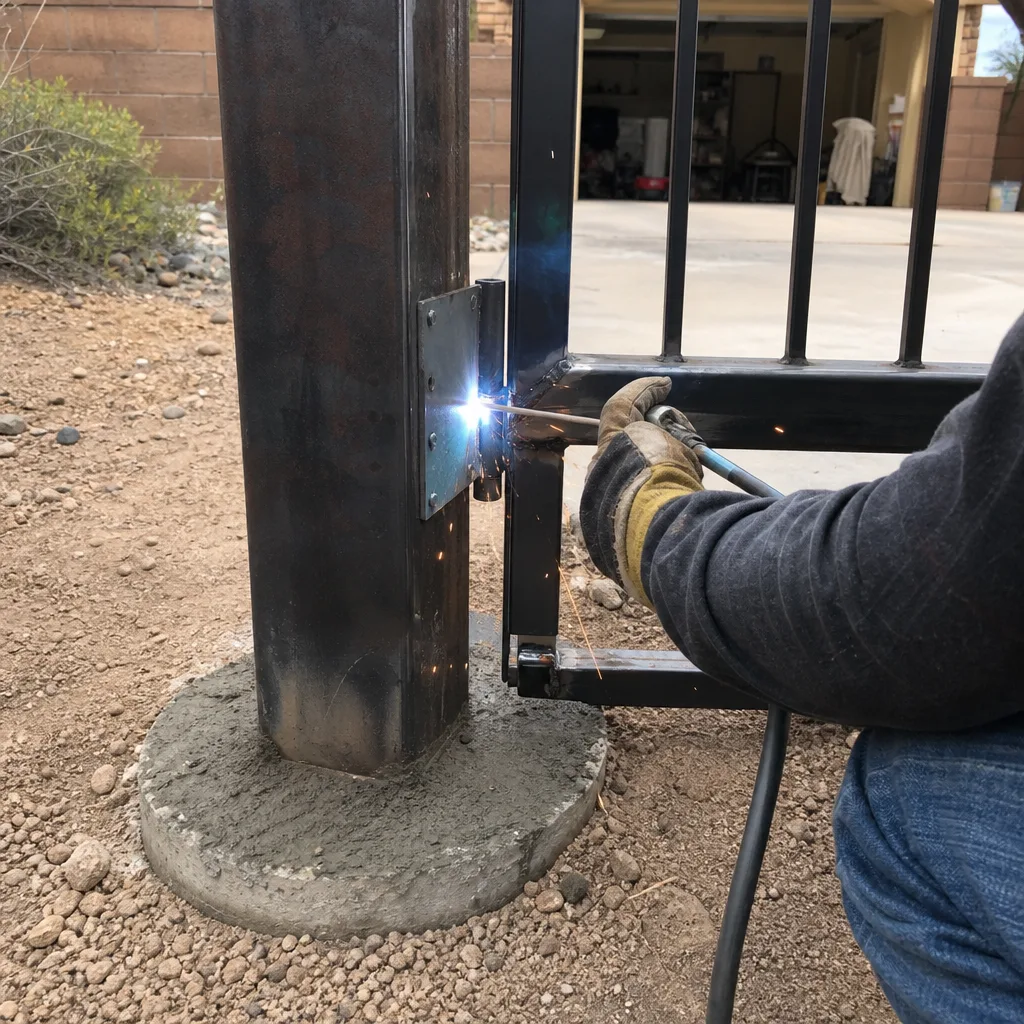
- Using WD-40 on gate components. In Mesa’s dust environment, it becomes grinding paste. Use silicone-based lubricant specified for outdoor mechanical equipment.
- Adjusting force settings without a calibrated gauge. A gate that “seems fine” during your test may exceed UL 325 force limits in cold weather when grease thickens and resistance increases.
- Ignoring monsoon-season photo-eye maintenance. Dust film on lenses causes false obstructions that burn out the motor from excessive cycling. Clean lenses weekly during storm season.
- Buying “universal” replacement boards online. Many are refurbished units with erased serial numbers, making warranty claims impossible and compatibility uncertain. The $40 savings becomes a $400 problem.
- Failing to document the original wire positions. We’ve spent hours in Mesa’s Alta Mesa and Red Mountain Ranch neighborhoods tracing homeowner-modified wiring. The homeowner’s “simple” board swap cost them an extra service call that exceeded professional installation.
- Testing safety devices with body parts. Never put your hand or foot in a gate’s path to test reversal. Use a solid object of known dimension - a 2×4 for entrapment edges, a cardboard box for photo eyes. If the device fails, you risk injury with body-part testing.
- Assuming a tripped GFCI is the problem. In Mesa, GFCI trips often indicate moisture in underground conduit from irrigation or monsoon pooling. Replacing the GFCI without finding the ground fault masks a shock hazard.
When to Call a Professional
Call when the repair alters electrical pathways, changes safety-system calibration, or affects structural integrity. For more guides & resources on when to DIY versus when to call a professional, see our blog. Call when you don’t have the documentation tools - calibrated force gauge, wiring diagram, part-number cross-reference - to verify correct completion. Call when the gate’s behavior is intermittent; intermittent faults are diagnostic problems, not mechanical problems, and they require systematic testing that homeowners rarely have time to perform.
Specific scenarios: the gate reverses randomly mid-travel (likely board or limit-switch issue); the motor hums but doesn’t move (capacitor, gear reduction, or mechanical binding); the remote works intermittently but the keypad works fine (signal interference or failing receiver); the gate has dragged or hit something (structural check required before motor stress assessment).
Vance Gate Repair Mesa offers free estimates in Mesa. A technician arrives with a named, background-checked, uniformed profile sent before arrival. The written price is delivered before any work starts - Haven Standard Clause 1. Every visit leaves a photographed record: what was found, what was adjusted, what was replaced. Call (520) 666-6834.
Frequently Asked Questions
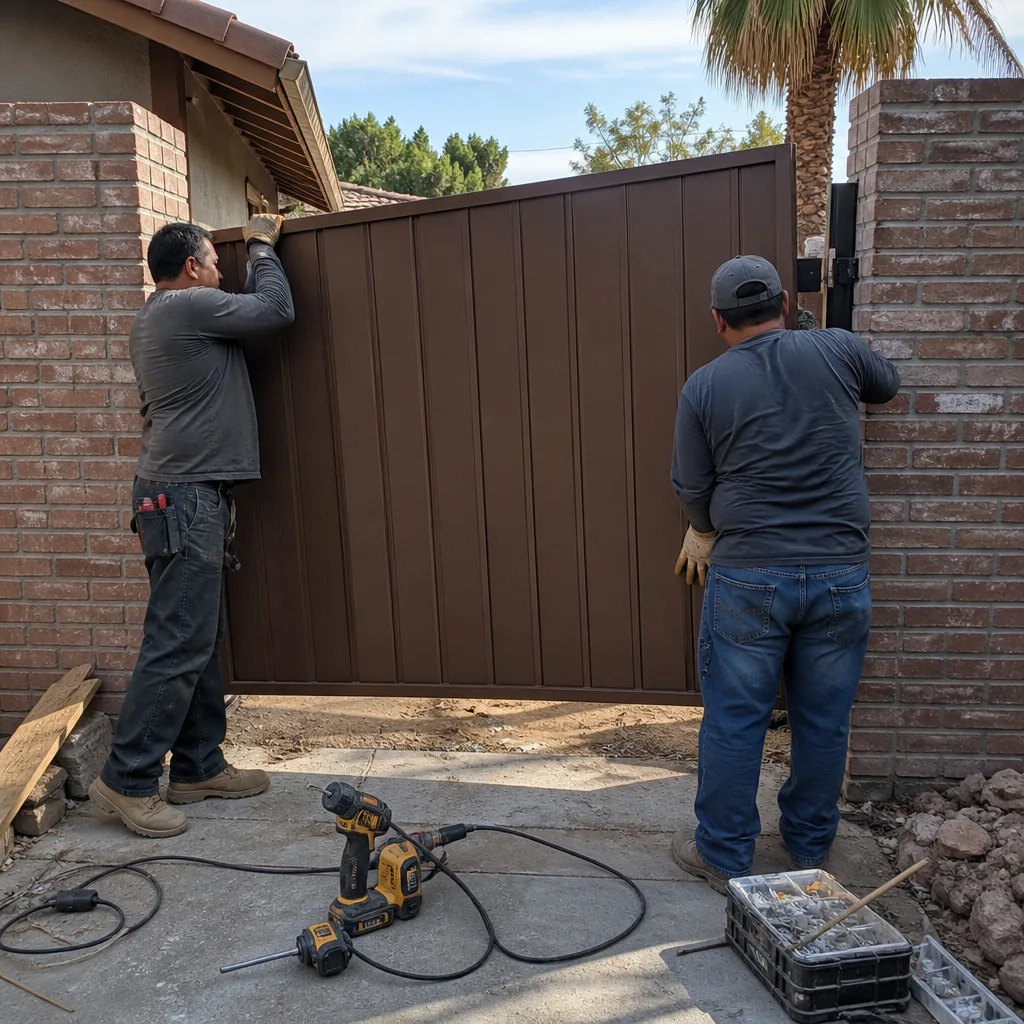
Most residential gate repairs in Mesa range from $140 for diagnostic and minor adjustment to $720 for control board replacement with full documentation and calibration. Swing-arm motor replacement typically runs $680-$1,400 depending on brand and whether the arm bracket and mounting post are intact. We provide a written, itemized price before any work begins - no invoice surprises. Call (520) 666-6834 for an exact quote; estimates are free.
Most manufacturer warranties require installation by an authorized dealer or qualified technician to maintain full coverage. Some brands allow homeowner installation but reduce the warranty term or exclude labor. Check your specific operator’s warranty document for “authorized service” language. If you’ve already self-installed, document everything - part numbers, serial numbers, wire positions, photos - to support any future claim. For warranty-preserving installation, professional service is the safer path.
Clean and lubricate hinges, rollers, and chain or belt drives every six months using silicone-based lubricant. Clean photo-eye lenses monthly during monsoon season (June-September). Remove debris from tracks and guides after dust storms. Check and tighten visible hardware quarterly. These tasks prevent most common failures and are explicitly encouraged by all major manufacturers. They don’t void warranties and don’t create documentation gaps.
Thermal expansion affects multiple systems: safety-edge rubber compresses and changes sensitivity, grease thins and allows increased slop in mechanical joints, and electronic components approach thermal limits. In Mesa’s 115°F peak temperatures, operators in direct sun can exceed internal temperature ratings. We often find that summer failures trace to inadequate heat mitigation - dark housings, no ventilation, south-facing exposure. A professional assessment includes thermal-load evaluation that homeowner troubleshooting typically misses.
UL 325 compliance requires functional entrapment protection (photo eyes, safety edges, or inherent force sensing), force limitation within specified thresholds, and a manual release that works without tools. Gates installed before 2000 often lack modern protection and may not meet current standards regardless of original compliance. A professional inspection includes calibrated force testing and documentation of protection-device function. Vance Gate Repair Mesa provides this inspection with written results.
Keep the original installation invoice with operator model, serial number, and installation date. Maintain a service log with dates, technician names, and work performed. Store any wiring diagrams or modification records. If you perform DIY maintenance, photograph the system before and after. This documentation supports warranty claims, speeds future diagnostics, and protects resale value. Under The Haven Standard, we provide this documentation automatically on every visit; homeowners performing their own work should replicate the practice.
The Bottom Line
The DIY vs. professional question for Mesa gate repair isn’t about capability. It’s about documentation and liability. Lubrication, cleaning, photo-eye alignment, and limit switch fine-tuning are homeowner-appropriate tasks that prevent failures and don’t create hidden costs. Control board replacement, wiring modification, safety-system calibration, and structural repair alter the system’s documented state and carry warranty, safety, and financial risks that professional service mitigates.
The Haven Standard exists because we’ve seen the cost of undocumented work - paid twice by homeowners who meant well, diagnosed longer by technicians who couldn’t see what changed, and occasionally dangerous when safety systems were bypassed rather than repaired. Written price before work starts. Photographic evidence when the technician leaves. One full year to make it right. That’s the standard we apply to every gate in Mesa, whether the repair started in your hands or ours.
Written by Adrian Vance, Owner at Vance Gate Repair Mesa, serving Mesa since 2014.