
Last updated September 22, 2026
Free on-site gate assessment - hinges, posts, and your LiftMaster or Nice gate operator checked before anything is quoted
The assessment is free and the quote is the invoice.

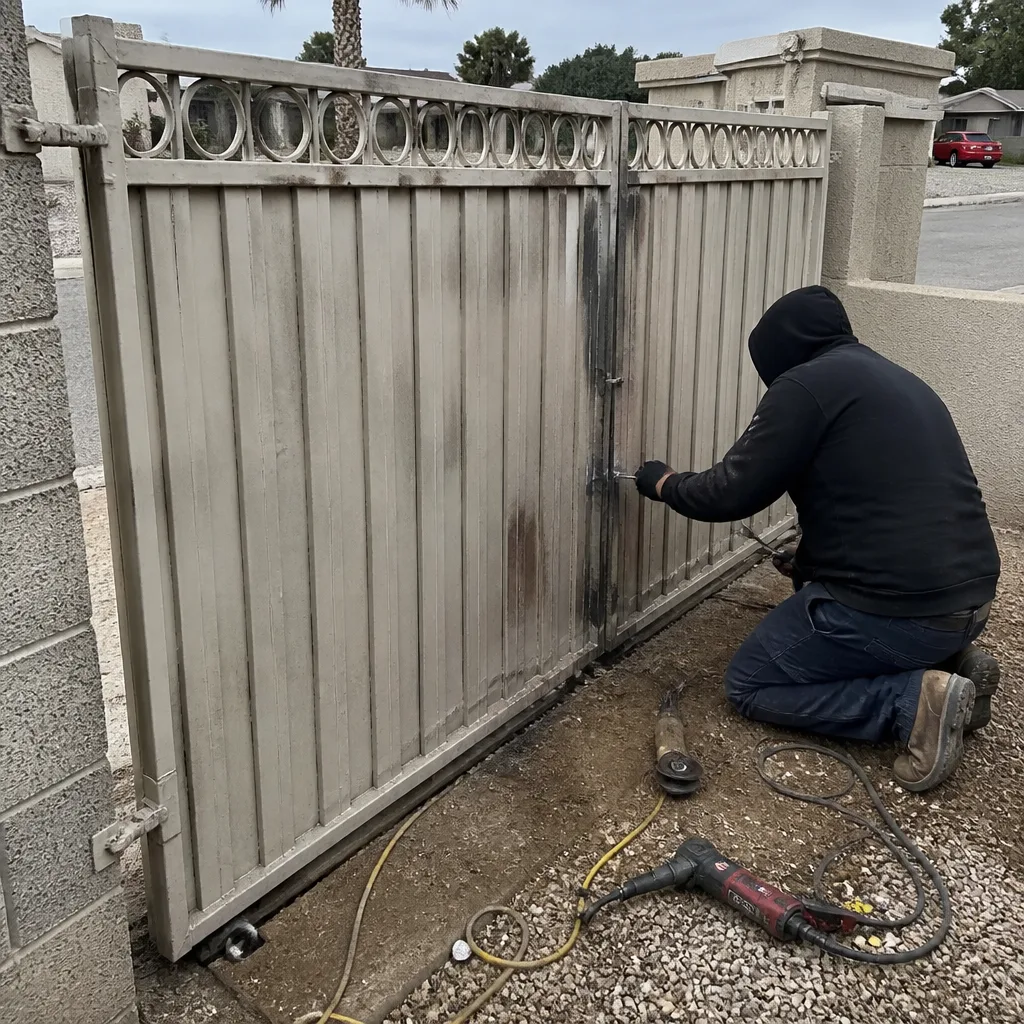 Before
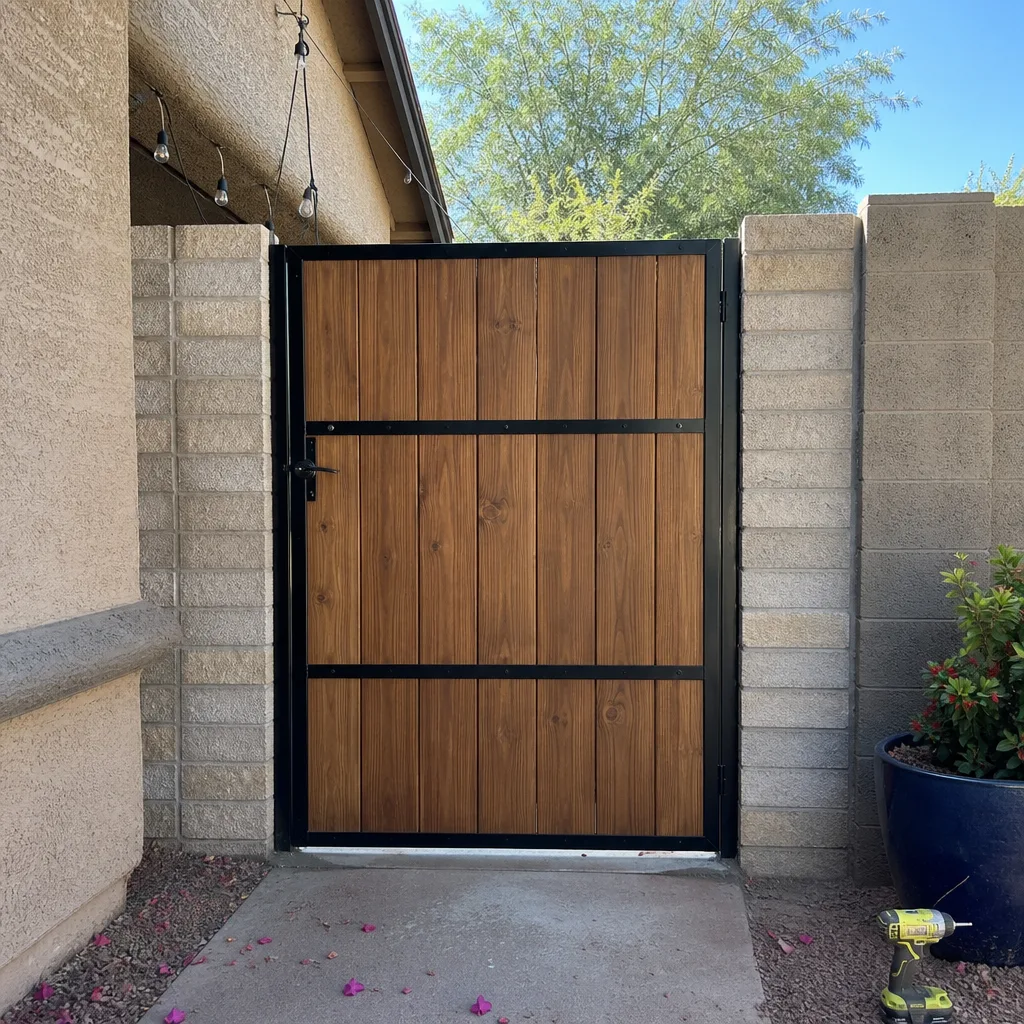 After
After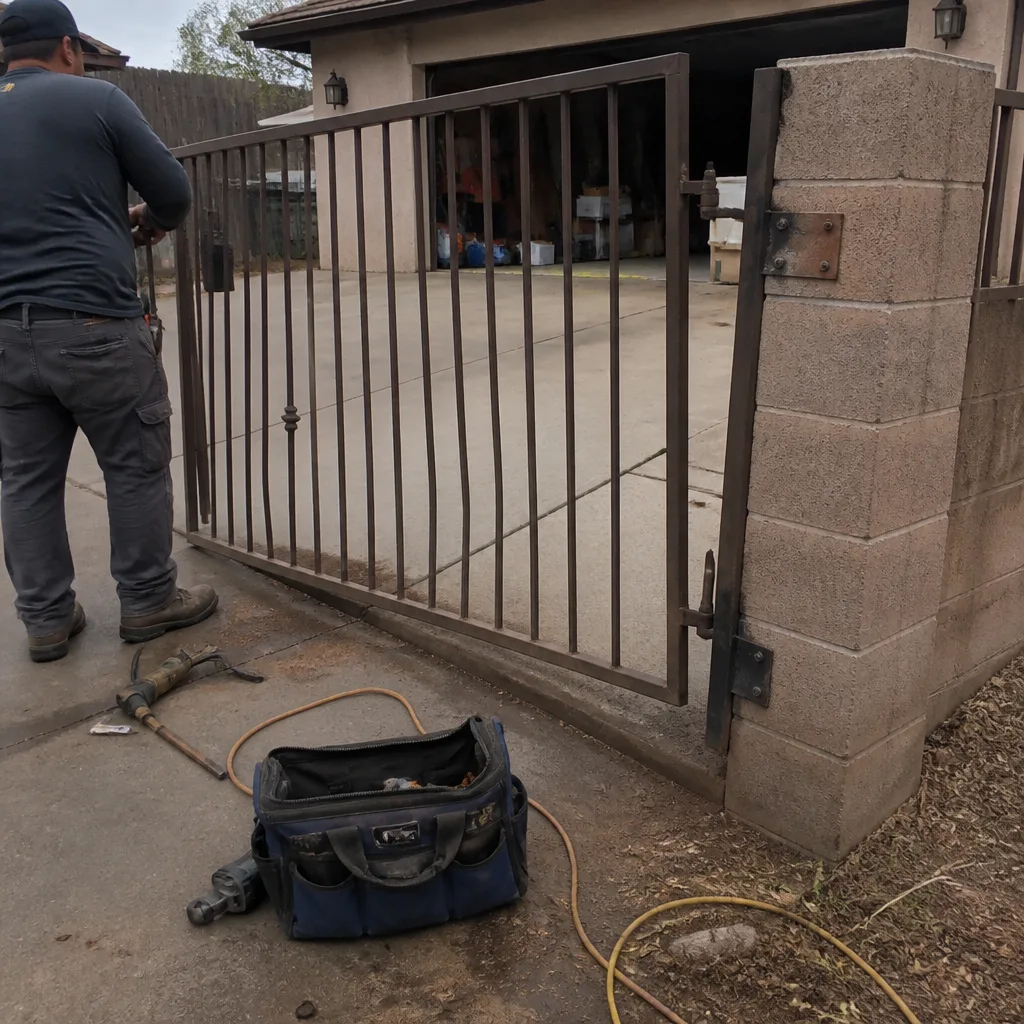 Before
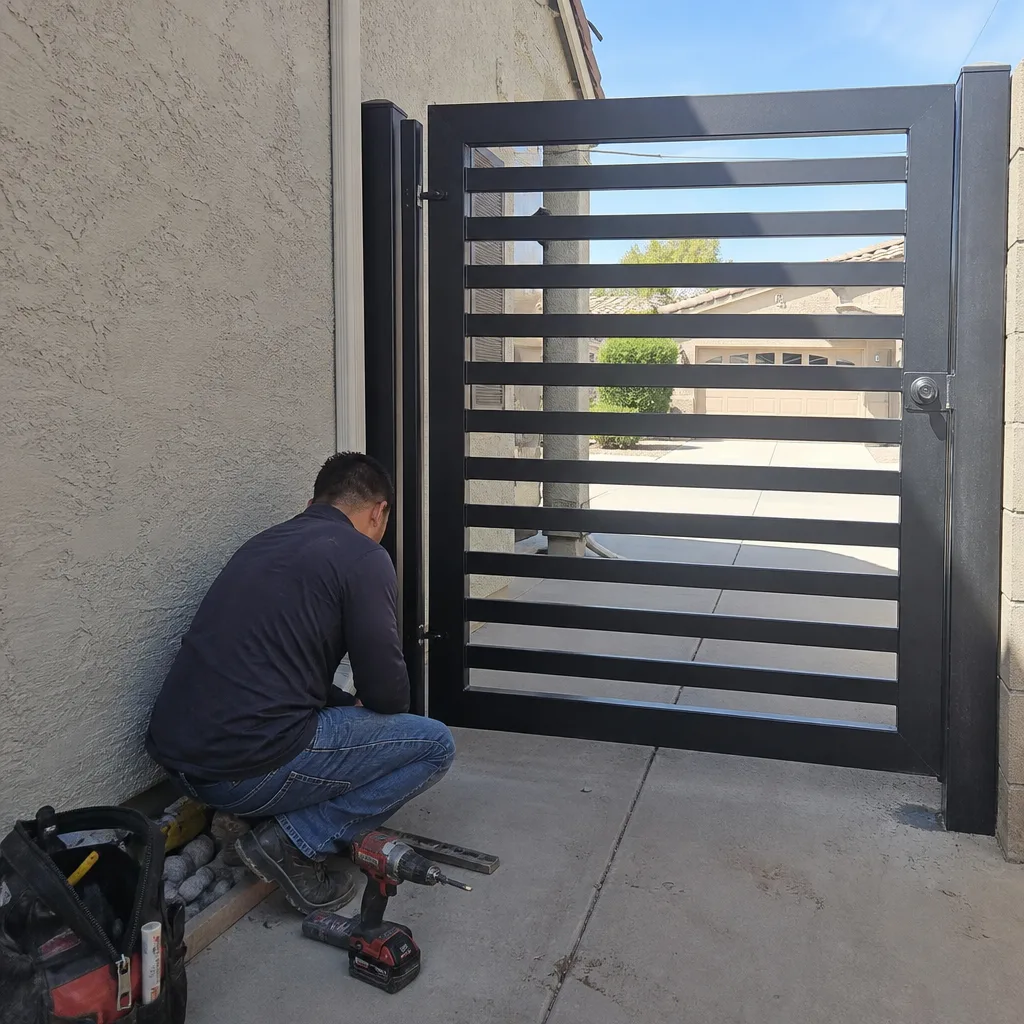 After
After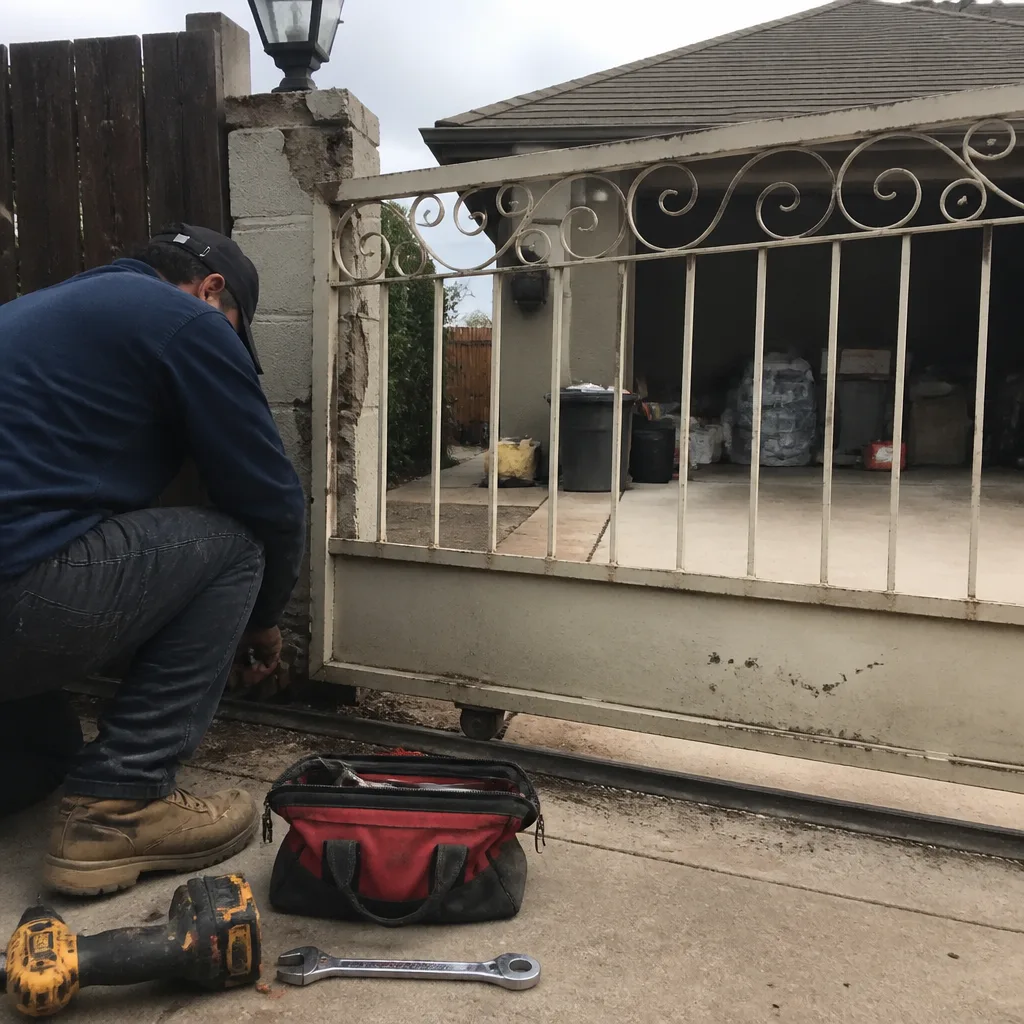 Before
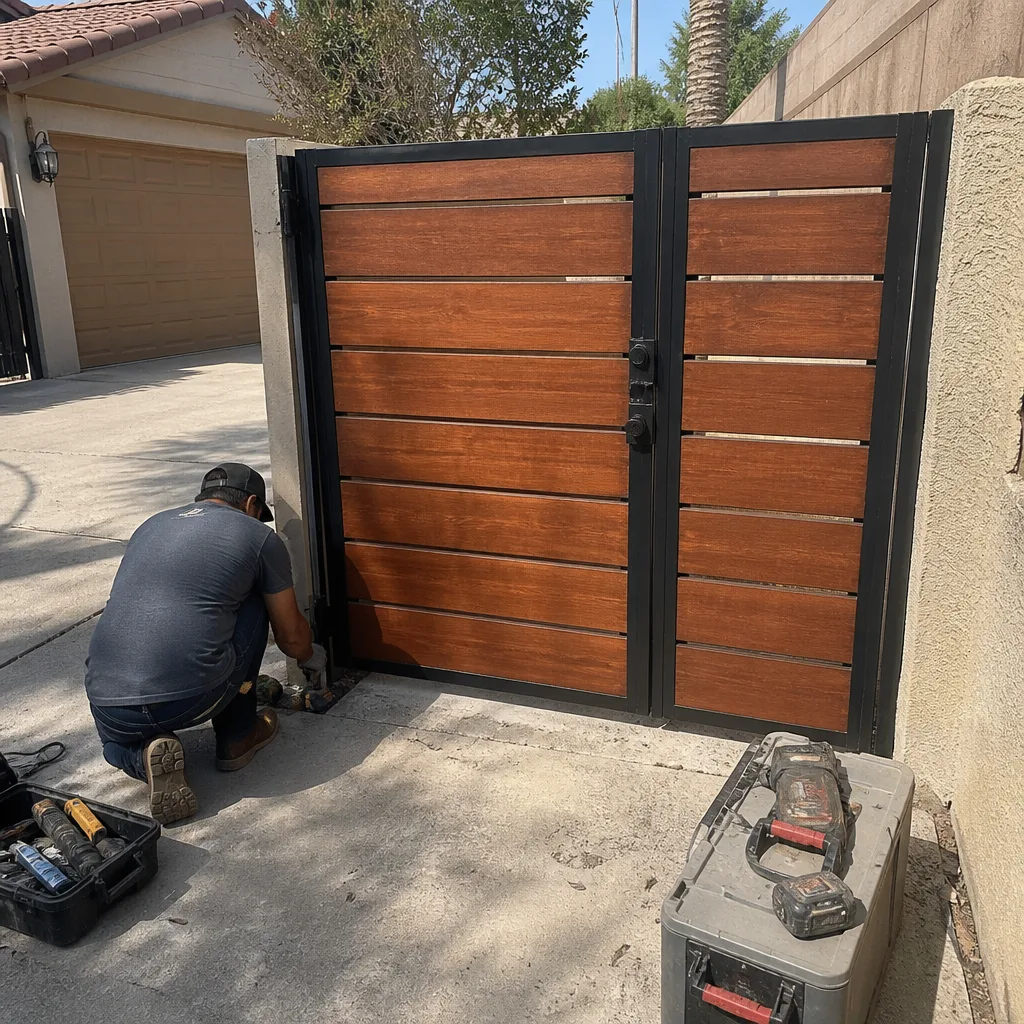 After
AfterGate Repair Permits, Codes & Inspections in AZ: What You Need to Know
Replacing a gate operator in Mesa can require a permit even if nothing structural changes - the electrical connection is the trigger most homeowners don’t see coming. We’ve watched customers in Dobson Ranch and Red Mountain Ranch alike get blindsided mid-project when an inspector flags work that started without the right paperwork. This guide maps the actual permit thresholds across Arizona gate work, explains where Mesa’s definitions of “repair” and “replacement” diverge from neighboring cities, and shows you how to walk away with documented proof of compliance that holds up at closing. For more guides & resources on Mesa home projects, visit our blog.
Quick Answer
Most gate repairs in Mesa don’t need a permit if you’re fixing existing components without altering the structure, electrical service, or safety systems. A permit is typically required when you’re installing a new automated gate operator, changing the gate’s footprint or height, upgrading electrical supply to the operator, or modifying safety devices like photo-eyes and edge sensors. The specific trigger depends on whether Mesa Building Safety classifies your project as “like-for-like replacement” or “new installation” - and that distinction is narrower than most homeowners expect.
Table of Contents
- Mesa’s “Like-for-Like” Rule: The Repair vs. Replacement Line
- When Electrical Work Triggers Its Own Permit
- HOA Architectural Review vs. City Permits: Which Comes First
- What an Inspector Actually Checks on Your Gate
- Getting Documented Proof for Resale Disclosure
- Brand-Specific Code Compliance: FAAC, BFT, Linear, Viking
- Common Mistakes to Avoid
- When to Call a Professional
- Frequently Asked Questions
- The Bottom Line
 Before
 After
AfterMesa’s “Like-for-Like” Rule: The Repair vs. Replacement Line
Mesa Building Safety draws a finer line than most homeowners realize between repair and replacement. The city defines “like-for-like replacement” as swapping a failed component with an identical or substantially equivalent unit - same voltage, same mounting configuration, same safety features, no change to the structural load path. Cross that line in any dimension, and you’re into “new installation” territory requiring a full permit package.
Here’s where it gets specific. Replacing a failed FAAC 422 operator with another FAAC 422 on the same post, using the existing 115V supply and the same photo-eye loop? That’s like-for-like in Mesa’s interpretation. No permit needed, provided the original installation was permitted and the safety devices remain unmodified.
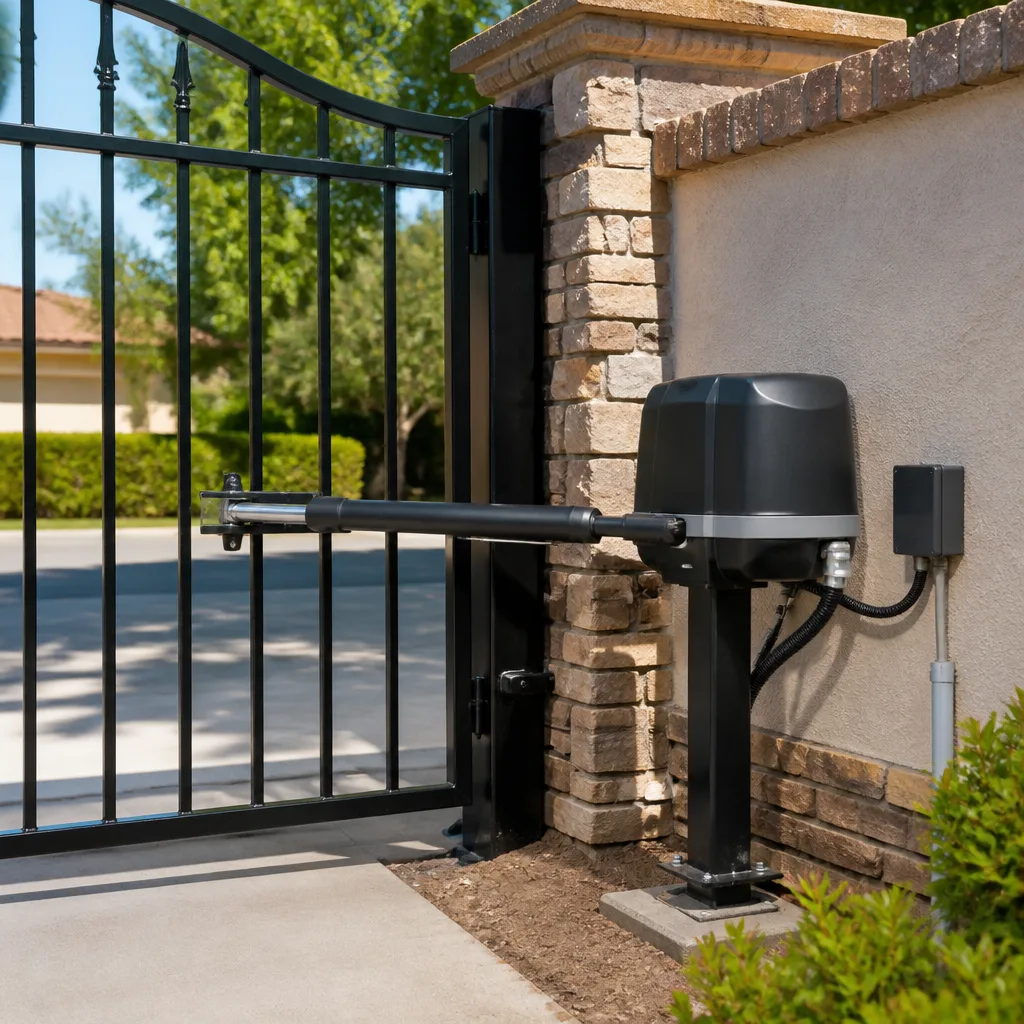
But swap that FAAC for a BFT Phobos BT with different voltage requirements, and the electrical inspector wants to see a permit. The new operator draws from the same gate, but the changed electrical characteristics trigger review. Same story if you’re moving from a Linear LSQ to a Viking G-5 and the mounting bracket requires drilling new holes in a masonry column - now you’ve altered the structural load path, and Mesa wants eyes on it.
The practical test we apply in the field: if we’re touching three or more of these five elements, we flag it for permit review -
- Electrical supply voltage or amperage
- Gate weight or dimensional footprint
- Mounting structure or foundation
- Safety device type or quantity
- Control access method (keypad, remote, telephone entry)
We’ve seen homeowners in Mesa’s Alta Mesa neighborhood assume that “it’s just a motor swap” and start work on a Saturday, only to have a neighbor’s complaint bring Building Safety out on Monday. If you’re unsure whether your project needs approval, our Gate Repair Warning Signs: A Mesa Homeowner’s Reference Guide can help you spot when professional evaluation makes sense. The fine isn’t catastrophic - typically a stop-work order and doubled permit fees - but the delay is. Better to spend twenty minutes on the phone with Mesa’s permit desk before the first wrench turns.
Mesa’s online permit portal lists gate operator replacement under “Miscellaneous Electrical” when the operator is hardwired, or “Minor Repair” when it’s a plug-in residential unit under specific wattage thresholds. The distinction matters because Miscellaneous Electrical requires a licensed electrician’s signature, while Minor Repair does not. Most automated driveway gates in Mesa are hardwired, so plan for the electrical route.
When Electrical Work Triggers Its Own Permit
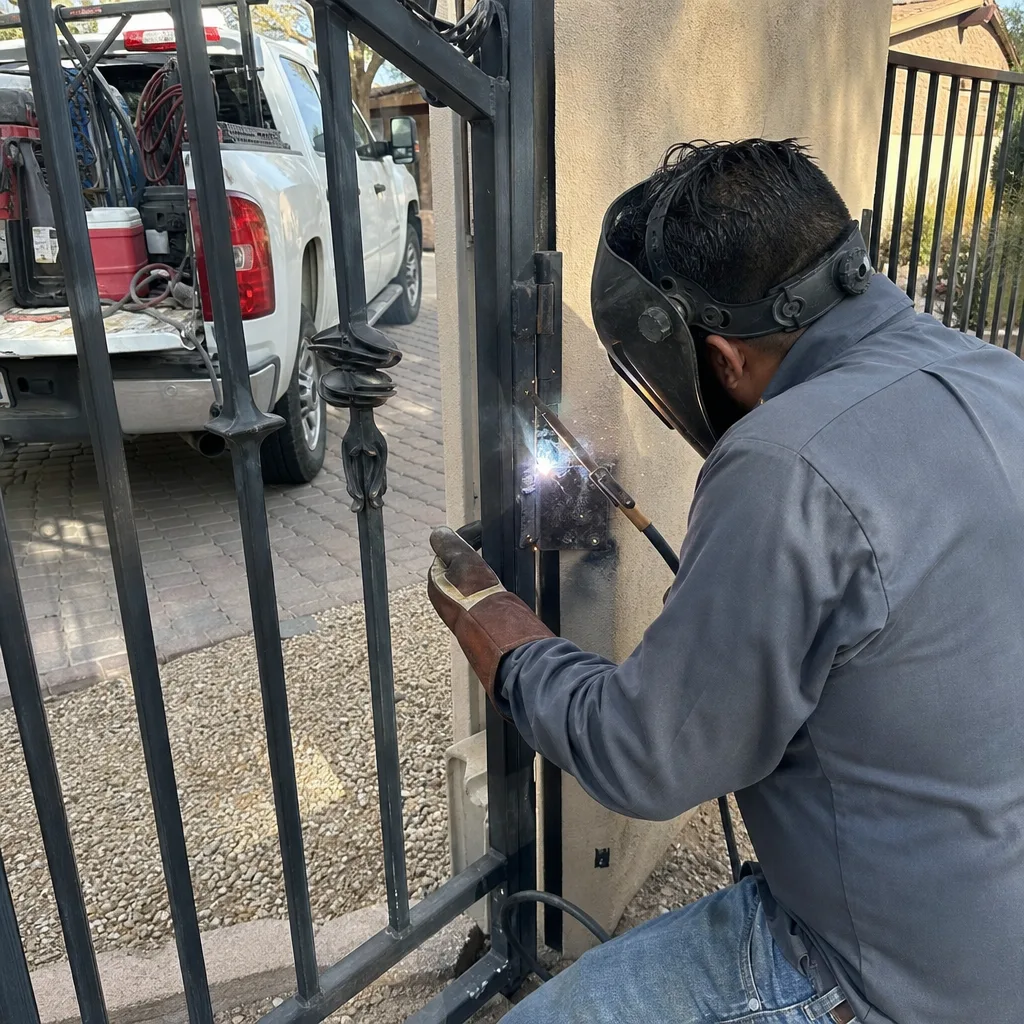
The electrical permit is the hidden tripwire in Arizona gate work. Homeowners fixate on the gate itself - the ironwork, the hinges, the motor housing - but inspectors often care more about what’s happening in the conduit run.
Arizona follows the 2023 National Electrical Code with state amendments, and Article 430 (Motors) applies to all automated gate operators. The specific scenario that catches Mesa homeowners: upgrading from an older operator with internal transformer to a modern unit requiring dedicated 240V service. The new operator may fit the same bracket, but the wiring upgrade is new electrical work by definition.
We’ve documented this exact situation in Mesa’s Las Sendas area. A homeowner replaced a 15-year-old Viking operator with a newer model, same brand family, same gate. The Viking unit required a neutral wire the old installation didn’t run. The technician pulled new 12/3 UF cable through existing conduit, upgraded the breaker to GFCI, and called it a day. Mesa Building Safety saw it differently - new conductor, new overcurrent protection, new grounding verification. Permit required. Inspection failed initially because the GFCI location wasn’t labeled per NEC 110.22.
The compliance path looks like this:
- Determine if your operator replacement changes voltage, amperage, conductor size, or overcurrent protection
- If yes, file a Miscellaneous Electrical permit through Mesa’s Development Services portal or at the counter on Center Street
- Schedule rough inspection if new conduit or boxes are exposed; otherwise proceed to final
- Have a licensed electrician present for inspection, or ensure your gate contractor holds an Arizona CR-67 (Electrical) or CR-11 (Elevator) license with electrical endorsement
- Pass final inspection and receive the green tag or electronic sign-off
Mesa allows homeowner-performed electrical work on owner-occupied single-family residences, but the permit still requires inspection and the work must meet NEC standards. For gate operators, we don’t recommend this path - the safety-interlock wiring (photo-eyes, edge sensors, loop detectors) has zero tolerance for error, and a miswired safety circuit can crush a child or pet without warning.
The heat factor matters too. Mesa’s summer temperatures push conductor ampacity derating per NEC 310.16. A wire size that works in Flagstaff may fail inspection here because the ambient temperature correction drops allowable current below the operator’s nameplate rating. We’ve found 14 AWG circuits that passed in Prescott get red-tagged in Mesa for exactly this reason. Our documentation includes temperature-corrected load calculations on every electrical gate job - under Haven Standard Clause 4, you get that calculation sheet with your photo record.
HOA Architectural Review vs. City Permits: Which Comes First
Mesa’s older planned communities - Dobson Ranch, Leisure World, parts of Alta Mesa - operate with architectural review committees that can stop your gate project before the city ever sees paperwork. The sequencing question matters because some HOAs require city permit approval as part of their packet, while others issue conditional approval that expires if city permits take too long.
The rule we’ve developed across hundreds of Mesa jobs: architectural approval first, then city permit. Here’s why. HOAs control aesthetics - material, color, height, placement relative to property lines. Cities control safety and code compliance. An HOA might approve a wrought-iron gate design that Mesa Building Safety rejects for insufficient wind load per the 2018 International Building Code. Getting the HOA’s aesthetic sign-off first prevents you from paying permit fees on a design you’ll later modify.
The specific sequence for Mesa’s HOA-governed neighborhoods:
- Submit architectural application with renderings, material samples, and proposed dimensions to HOA board or management company
- Receive written HOA approval with any conditions (paint color, landscaping screening, construction hours)
- File Mesa building permit using HOA-approved plans; attach HOA approval letter as supporting document
- Complete construction within HOA’s stated timeline - typically 90 to 180 days from approval
- Pass city inspection first, then schedule HOA final walk-off if required
Some Mesa HOAs, particularly in gated communities like Red Mountain Ranch, require the contractor’s license and insurance documentation at the architectural review stage. Others want the final inspection tag posted before they’ll release the compliance letter. We’ve learned to ask for the HOA’s complete checklist on day one, because “we’ll tell you if something’s missing” costs two weeks every time.
The intersection gets messy when HOA rules exceed city code. A Mesa HOA might mandate manual gates only, or prohibit operators above certain decibel levels, or require specific paint colors that aren’t factory standard. None of these are city enforceable, but they’re contractually binding on the homeowner. We’ve advised customers to get explicit HOA variance documentation before installing a Linear operator that exceeds the HOA’s noise threshold - even when the unit meets Mesa’s noise ordinance comfortably.
What an Inspector Actually Checks on Your Gate
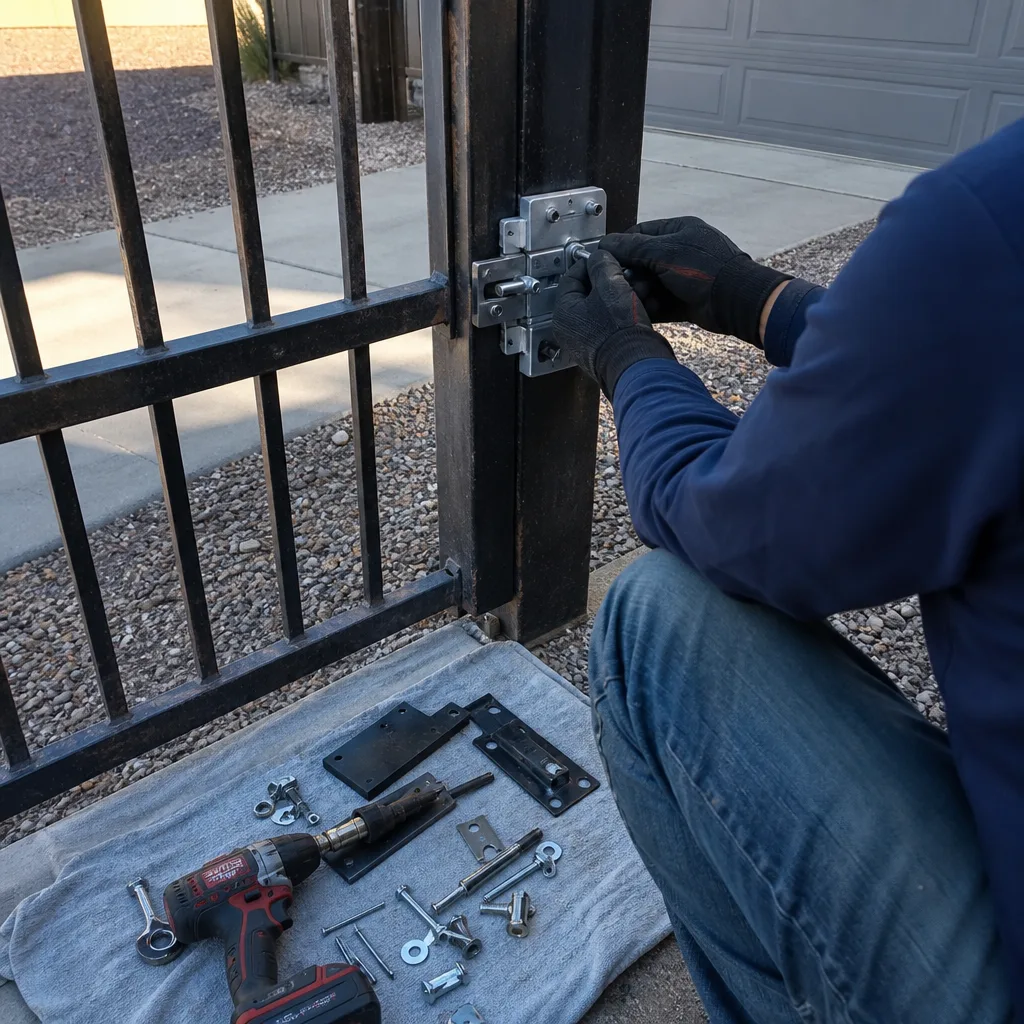
Mesa building inspectors don’t simply glance at your gate and sign off. Residential automated gate inspections follow a protocol derived from UL 325 (Standard for Door, Drapery, Gate, Louver, and Window Operators and Systems) and local amendments. Knowing the checklist helps you prepare and helps you evaluate whether your contractor’s work will pass.
For a typical residential swing gate installation in Mesa, the inspector verifies:
- Gate weight and dimension match permit plans within 10% - significant deviation requires revised engineering
- Gate structure can withstand wind load per IBC Table 1609.3.1, modified for Arizona’s 115 mph design wind speed in Mesa’s risk category
- Operator mounting is secured to structure rated for dynamic gate load, not just static weight - the kick when a 400-pound gate starts moving multiplies forces significantly
- Safety reversal system functions: photo-eye interruption stops and reverses gate within 2 seconds; edge sensor contact stops and reverses immediately
- Entrapment protection covers all accessible crush, shear, and draw-in points per UL 325 Section 31
- Control devices are located where user can observe gate operation - no remote activation from inside the house with no sightline to the gate
- Warning signage visible from both sides of gate, stating automatic operation and entrapment risk
- Electrical grounding and bonding verified with continuity test; GFCI protection where required by NEC
The load-bearing test is the one that surprises homeowners. The inspector doesn’t just look at the gate - they verify the post or pier specification. A typical Mesa installation on a 16-foot single swing gate needs a concrete pier 36 inches deep minimum, 12 inches diameter, with rebar cage, in native soil or compacted fill. Cut corners on the pier, and the gate fails before it ever moves.
We’ve accompanied inspectors in Mesa’s Eastmark development where expansive clay soil required pier depth to 48 inches per geotechnical recommendation. The original contractor went 36 inches to save a morning’s labor. Inspector red-tagged it, gate came down, pier went deeper, customer paid twice. Under Haven Standard Clause 1, our written scope would have specified 48 inches before excavation started, with photographic depth verification - the documentation that prevents that scenario.
The safety-reversal test is unforgiving. Inspector places a test object (specified weight and dimension per UL 325) in the gate path, activates closure, and times the response. Two seconds is the absolute maximum; most quality operators reverse in under one. We’ve adjusted BFT operators in Mesa where the factory setting was 1.8 seconds - technically passing, but we reset to 0.9 seconds because factory settings drift in desert heat, and a future inspector won’t care that it passed last year.
Getting Documented Proof for Resale Disclosure
Arizona is a disclosure state for residential real estate. When you sell, the Seller Property Disclosure Statement asks about structural modifications, permits, and code compliance. A gate installation without documented inspection sign-off becomes a negotiation point, a price reduction, or a deal killer.
The documentation you need isn’t just the permit card. Here’s what we deliver under Haven Standard Clause 4, and what you should demand from any contractor:
- Copy of the building permit application showing scope, approved plans, and permit number
- Inspection sign-off tags or electronic verification - Mesa now uses an online system, but physical green tags still appear and should be photographed
- Contractor’s documentation of work performed: wiring diagrams, limit-switch settings, safety-device test results
- Photo record of installation: post excavation with depth verification, operator mounting, electrical connections, safety device placement, warning signage
- Manufacturer’s installation manual with model and serial number recorded
- Maintenance schedule and warranty documentation
The specific resale scenario we’ve encountered: a Mesa homeowner in the Buckhorn neighborhood installed an automated gate in 2019, used a contractor who pulled permits but never provided copies. In 2024, selling the house, the buyer’s inspector found the gate but no permit record in Mesa’s online system. The 2019 records hadn’t been digitized. Three weeks of delay while the homeowner reconstructed documentation from memory, contractor was out of business, no paper trail. Sale nearly fell through.
Our practice: every job gets a PDF packet emailed within 24 hours of final inspection. Permit number, inspection date, pass status, all photos, all settings. Stored in our system and in the customer’s hands. If Mesa’s records ever glitch, our customer has primary-source documentation.
For existing gates where documentation is missing, Mesa Building Safety will research permit history for a fee - currently $35 per address for records search. If no permit exists and the installation predates current ownership, the path is either voluntary retrofit inspection (expensive, no guarantee of pass) or disclosure of non-permitted work with buyer acceptance. Neither is ideal. The prevention is demanding documentation on the front end.
Brand-Specific Code Compliance: FAAC, BFT, Linear, Viking
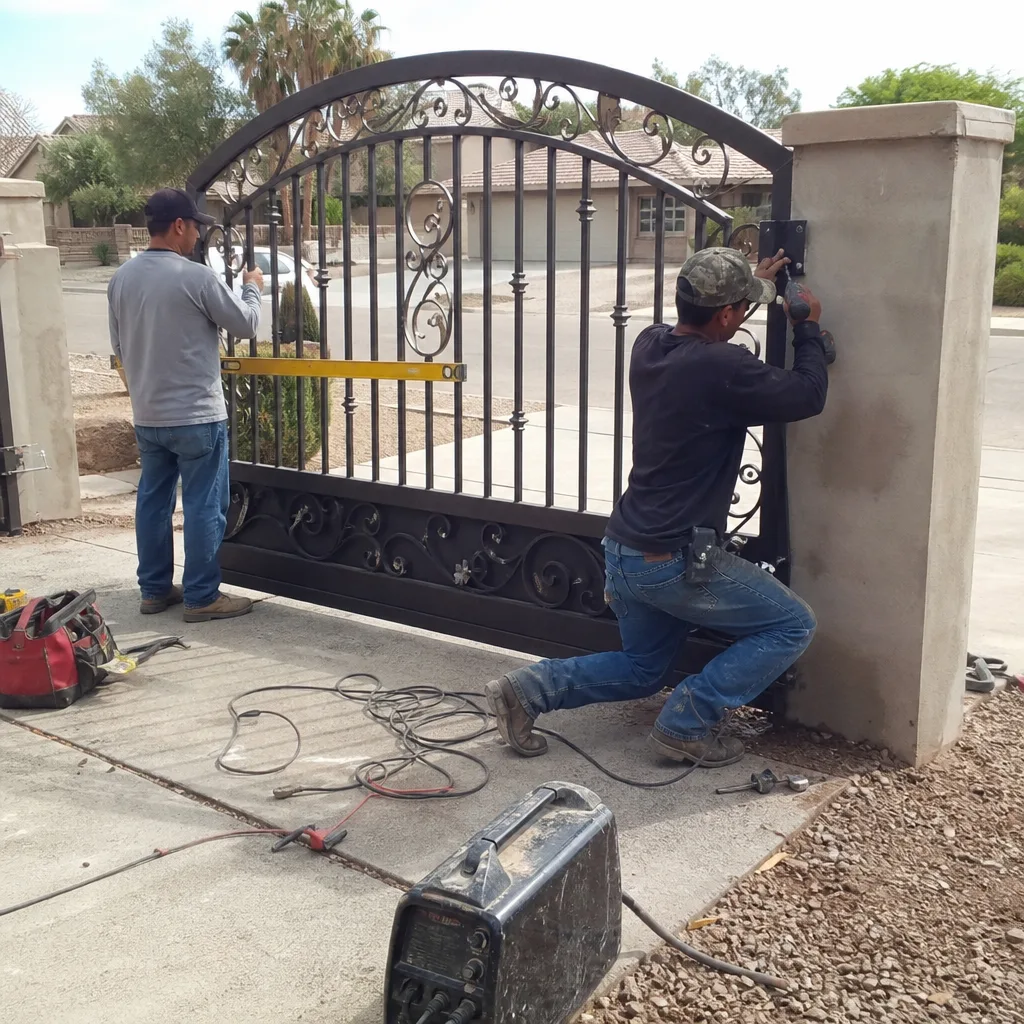
Not all automation brands ship with the same compliance documentation, and Mesa inspectors have brand-specific expectations based on what they’ve seen fail. Understanding these differences helps you choose equipment that passes inspection cleanly.
FAAC - Italian manufacture with strong commercial presence in Arizona. FAAC operators typically include extensive UL 325 compliance documentation in the box, but the manuals are translated and occasionally miss Mesa-specific amendments. We’ve found FAAC’s 770 series swing gate operators require explicit verification that the emergency release mechanism is accessible without tools - a Mesa inspector preference, not a factory default. We document the release location photographically on every FAAC install.
BFT - Another European brand with growing residential share. BFT’s Phobos BT line includes built-in obstacle detection that satisfies UL 325 without external photo-eyes in some configurations. Mesa inspectors accept this for single-family residential, but multi-family or commercial applications still want redundant protection. We always install photo-eyes with BFT operators in Mesa, even when the factory says they’re optional - the inspection pass rate is higher, and the safety margin is worth the marginal cost.
Linear - Domestic brand, widely distributed, generally inspector-friendly documentation. Linear’s Pro Access series includes installation templates that Mesa Building Safety recognizes. The specific caution: Linear’s default setting for “auto-close” is often enabled from factory. In Mesa, we disable auto-close on residential installations unless specifically requested - the liability exposure if a visitor gets trapped is significant, and our 365-Day Done Right Promise covers adjustment if the customer later wants auto-close enabled.
Viking - Premium positioning, excellent build quality, but Viking’s proprietary accessories can complicate inspection. Viking’s loop detectors require specific sensitivity settings for Mesa’s soil conditions - high mineral content in some areas creates false triggers. We tune loop detectors in the field and record settings in the job documentation. Viking’s warranty also requires factory-authorized installation for full coverage; we maintain that authorization and provide the certificate with each install.
The broader point: brand choice affects not just performance but documentation completeness. A no-name import operator from an online marketplace may cost half as much but ship with no UL listing, no compliance manual, and no inspector recognition. Mesa Building Safety can reject the installation for lack of listed equipment, and the 365-Day Done Right Promise doesn’t cover equipment we didn’t supply - another reason we stick to the nine brands we know and can support.
Common Mistakes to Avoid
- Assuming “repair” means no permit. In Mesa, replacing an operator with different electrical characteristics crosses into permit territory even if the gate itself doesn’t change. Always verify with the permit desk if you’re changing voltage, amperage, or conductor size.
- Pulling the city permit before HOA approval. Some Mesa HOAs require their architectural review complete before they’ll accept permit applications in the packet. Reverse the order and you may pay permit fees twice - once for the design the HOA rejects, again for the modified design they accept.
- Using a contractor without Arizona ROC license and appropriate classification. Gate work in Mesa requires a CR-67 (Electrical) or CR-11 (Elevator) license for automated systems, or a KB-2 (Dual) or B (General) for structural gate work. An unlicensed contractor’s permit application gets rejected, and their work isn’t warrantable under Arizona’s Registrar of Contractors system.
- Ignoring the wind load calculation. Mesa’s 115 mph design wind speed sounds abstract until a monsoon microburst tests your gate. We’ve replaced gates in Mesa’s Falcon Field area where the original builder skipped engineering and the gate folded in 2020’s storm season. The permit process exists partly to prevent this.
- Failing to request documented compliance records. The permit card on the wall isn’t enough for resale. Demand the full packet: application, approved plans, inspection sign-offs, contractor’s installation record, photos. If your contractor won’t provide this, that’s information about their operation you should weigh heavily.
- Installing safety devices after inspection. Mesa inspectors verify photo-eyes, edge sensors, and loop detectors at final inspection. Removing or bypassing them after pass is a code violation and voids your compliance. We’ve been called to repair “mystery” gate damage where the homeowner had disabled safety devices and the gate struck their own vehicle.
- Assuming neighboring cities match Mesa’s thresholds. Chandler requires permits for operator replacement above 1 horsepower regardless of electrical changes. Gilbert triggers review for any gate over 6 feet height in front setback. Scottsdale has historic district overlays that add a layer. Mesa’s rules are Mesa’s rules - verify for your specific address.
When to Call a Professional
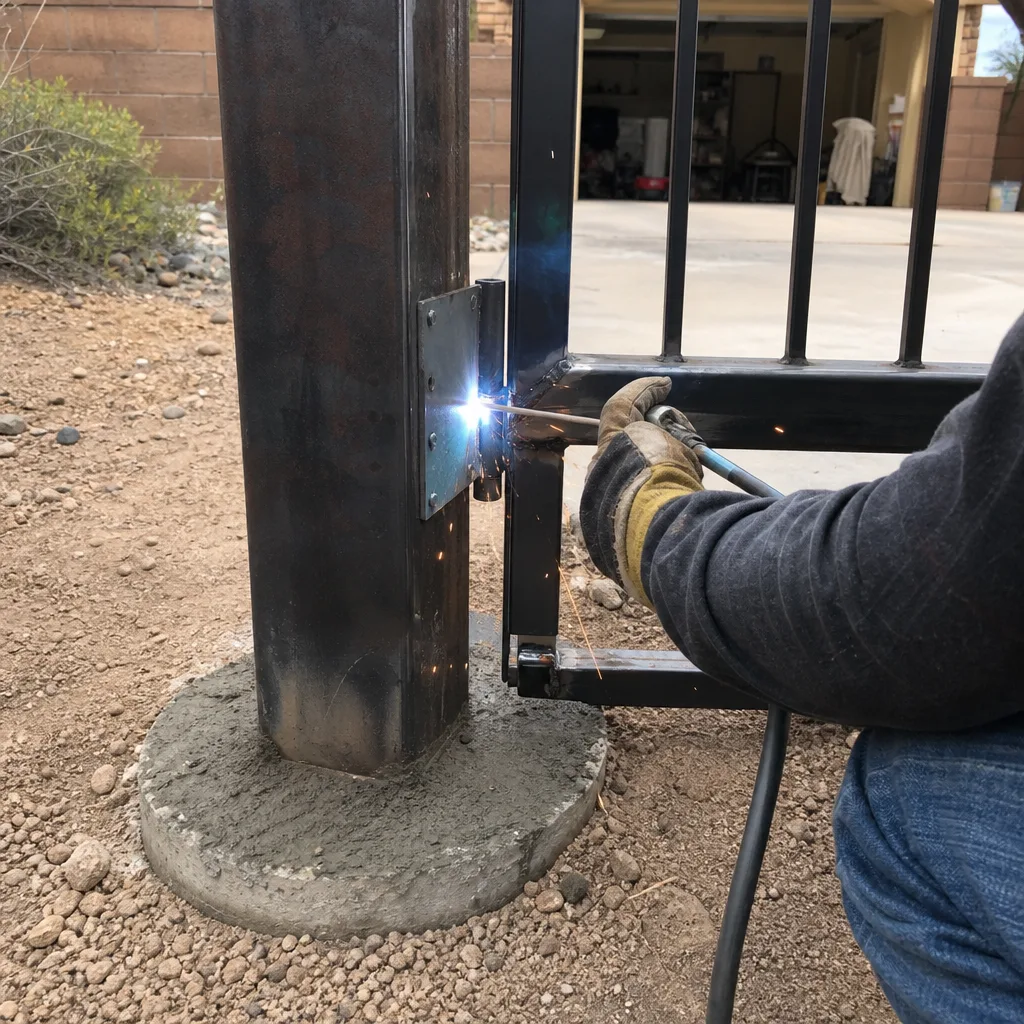
Call a licensed gate contractor when your project involves any electrical work, structural modification, or safety device change - which describes most automated gate projects beyond simple hinge lubrication or keypad battery replacement. For guidance on vetting professionals, see our How to Hire a Gate Repair Contractor in Mesa: A Step-by-Step Guide. The permit research alone is worth professional involvement; we’ve seen homeowners spend six hours on Mesa’s permit portal for questions we can answer in a ten-minute site visit.
Specific scenarios where professional involvement is essential: operator replacement with unknown permit status, gate installation on a new pier or post, any work in an HOA-governed community, safety device troubleshooting where the gate currently operates without confirmed protection, and pre-sale compliance verification where documentation is missing or incomplete.
Vance Gate Repair Mesa offers free estimates in Mesa - call (520) 666-6834. We pull permits when required, document every visit photographically under Haven Standard Clause 4, and leave you with written proof of compliance for your records and your eventual resale. Our technicians are background-checked, uniformed, and licensed; you’ll get a name and photo before anyone arrives.
Frequently Asked Questions
No, if the repair is truly like-for-like - fixing hinges, replacing a damaged picket, adjusting limit switches, or swapping a failed component with an identical unit. Yes, if the repair changes electrical supply, safety devices, structural load path, or gate dimensions. When in doubt, Mesa’s permit desk at (520) 666-6834 can confirm in minutes. Call (520) 666-6834 and we’ll research it for you at no charge during your estimate.
Residential gate permits in Mesa typically run $85 to $250 depending on scope - electrical-only permits are at the lower end, full structural and electrical packages at the higher end. Plan review fees add $50 to $100 if engineering drawings are required. Mesa’s fee schedule is published online and updated annually; we quote permit costs in writing before any application is filed, under Haven Standard Clause 1.
Yes. HOA covenants are private contracts that can restrict gates more stringently than city code. The city governs safety; the HOA governs aesthetics and use. We’ve seen Mesa HOAs prohibit automated gates entirely, mandate specific materials, or require architectural committee approval that the city doesn’t review. Always get HOA approval before filing city permits - the sequence matters.
Mesa Building Safety can issue a stop-work order, double the permit fees for retroactive application, and require exposed work to be uncovered for inspection. In extreme cases, unpermitted structures must be removed. For gates, the more common consequence is the lack of documented compliance becoming a problem at resale. The fix is usually more expensive and time-consuming than doing it properly from the start.
Simple electrical permits for operator replacement typically issue same-day or next-day through Mesa’s online portal. Full installation permits with structural review take 5 to 10 business days for initial review, longer if corrections are required. Mesa offers expedited review for 150% of standard fees. We file permits as part of our installation service and track status so you don’t have to.
Keep the permit application, approved plans, all inspection sign-offs, the contractor’s written scope and invoice, manufacturer manuals with serial numbers recorded, and any photographic documentation of the installation. Store these with your home records; you’ll need them for insurance claims, warranty service, and resale disclosure. Under Haven Standard Clause 4, we provide a complete digital packet within 24 hours of final inspection - no extra charge, no expiration.
The Bottom Line
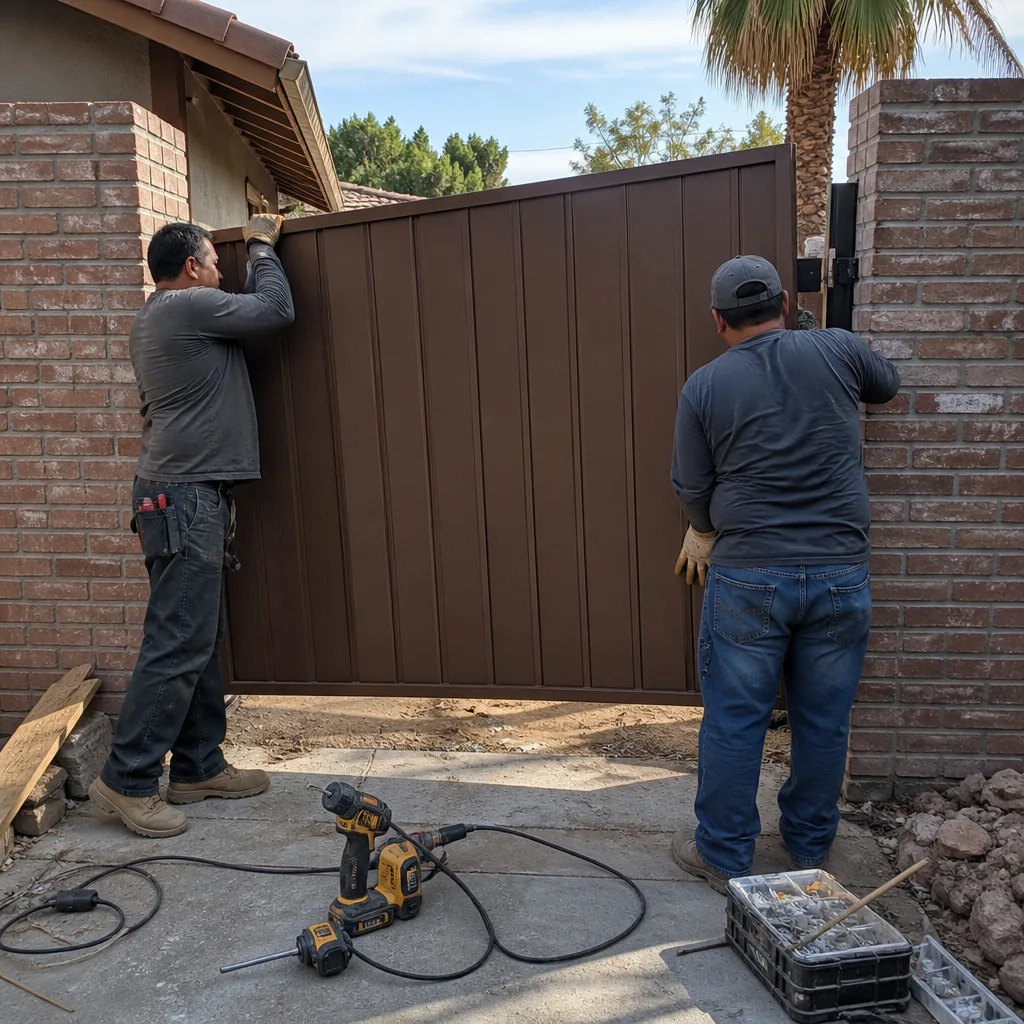
Arizona gate permits aren’t uniform, and Mesa’s thresholds for “repair” versus “replacement” are narrower than most homeowners expect. The electrical connection - not the gate structure - triggers many permit requirements. HOA approval must precede city permits, not follow. Inspectors verify load-bearing capacity and safety-reversal performance with specific, timed tests. And the documentation you collect today prevents headaches at resale tomorrow.
The through-line across every section: know before you start, document everything, and work with contractors who put the proof in your hands. That’s the habit we formed in commercial access control starting in 2014, and it’s the standard we apply to every residential gate in Mesa.
Written by Adrian Vance, Owner at Vance Gate Repair Mesa, serving Mesa since 2014.