
Free on-site gate assessment - hinges, posts, and your LiftMaster or Nice gate operator checked before anything is quoted
The assessment is free and the quote is the invoice.
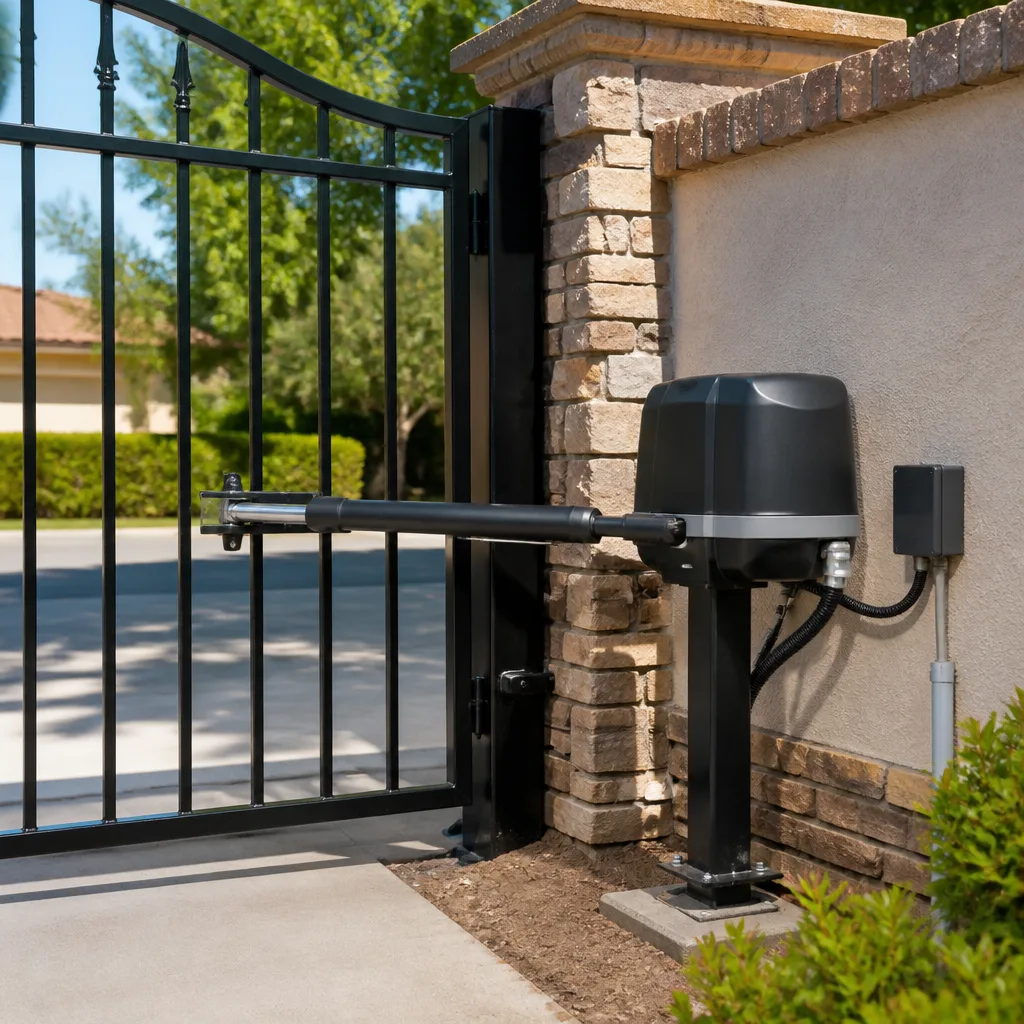
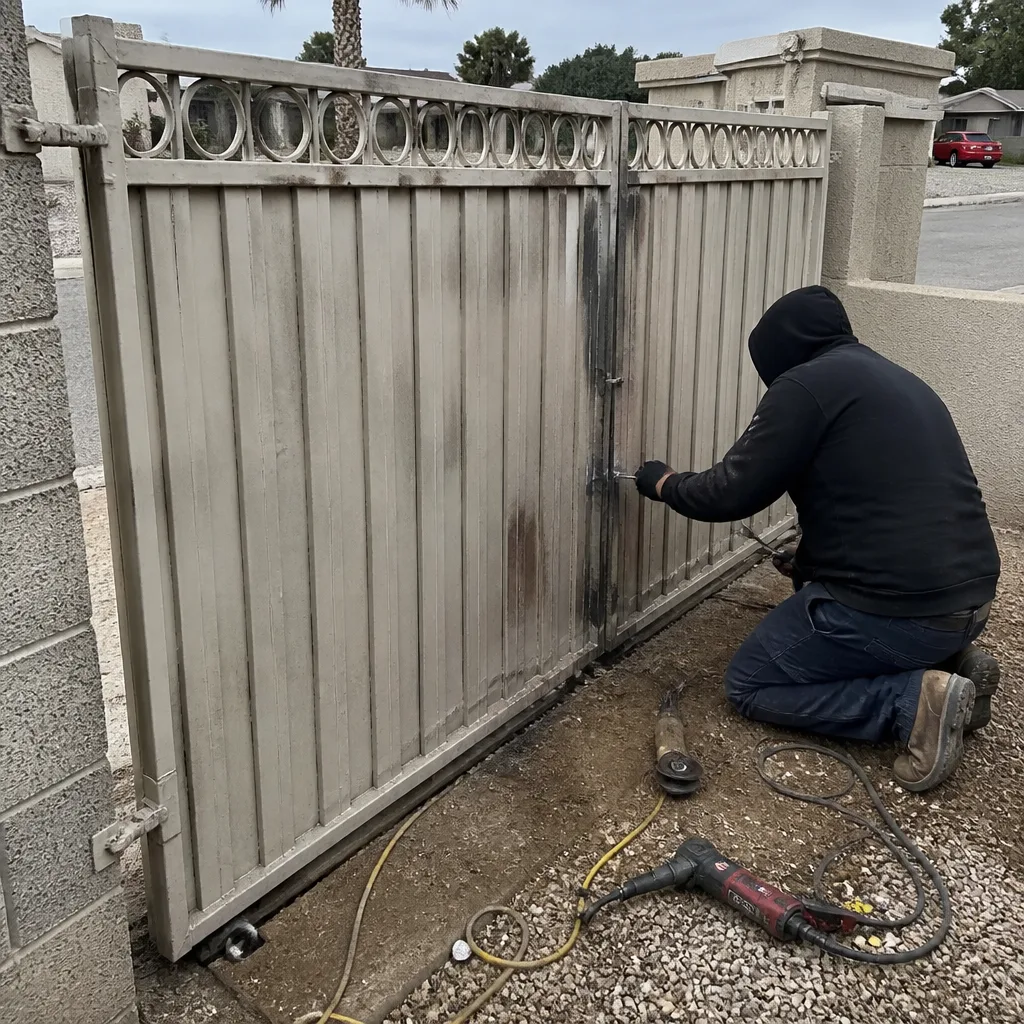 Before
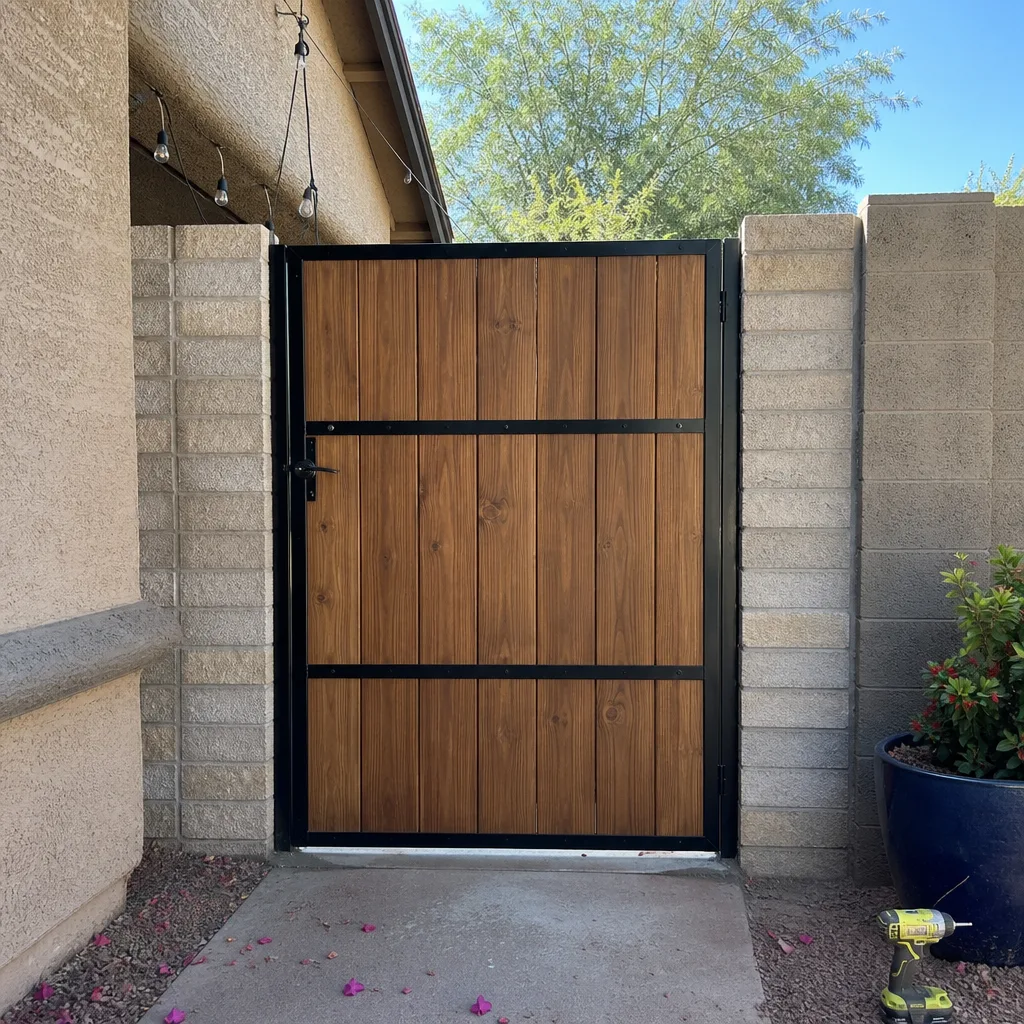 After
After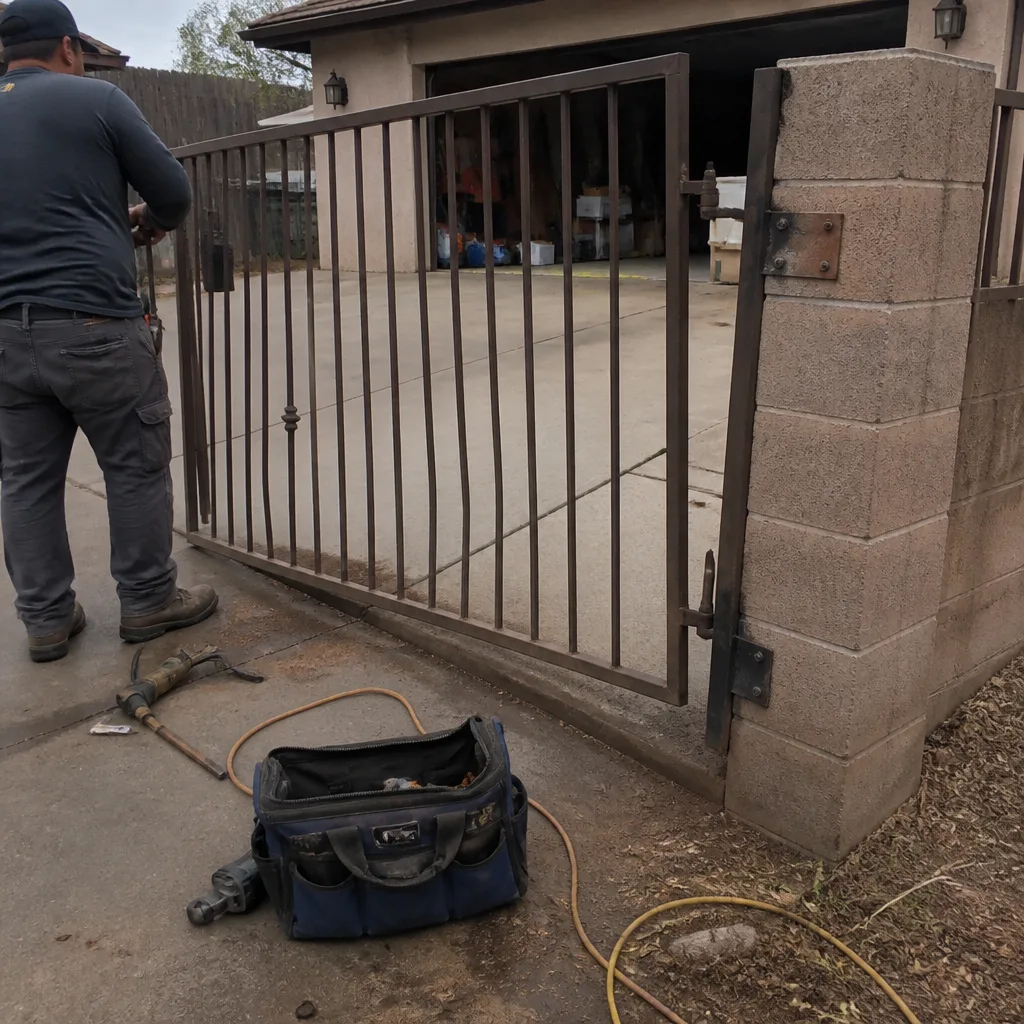 Before
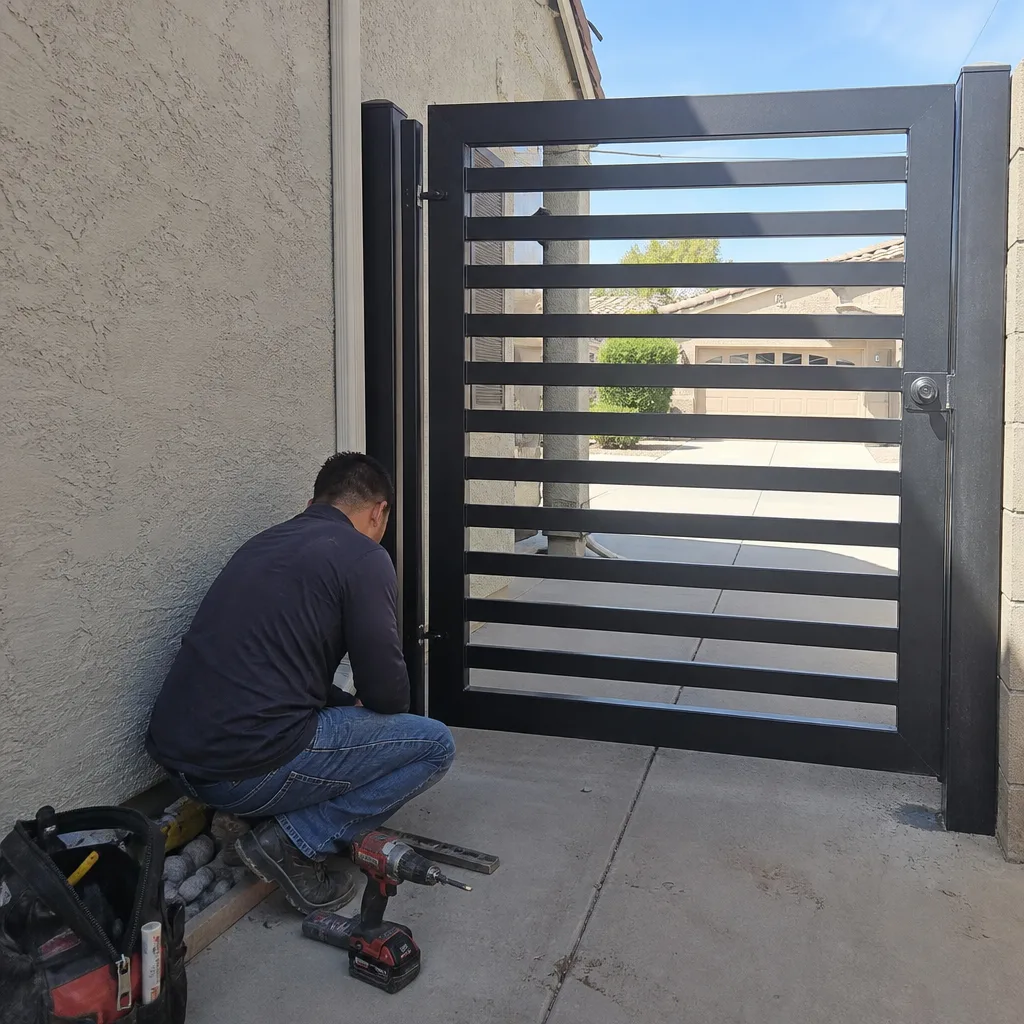 After
After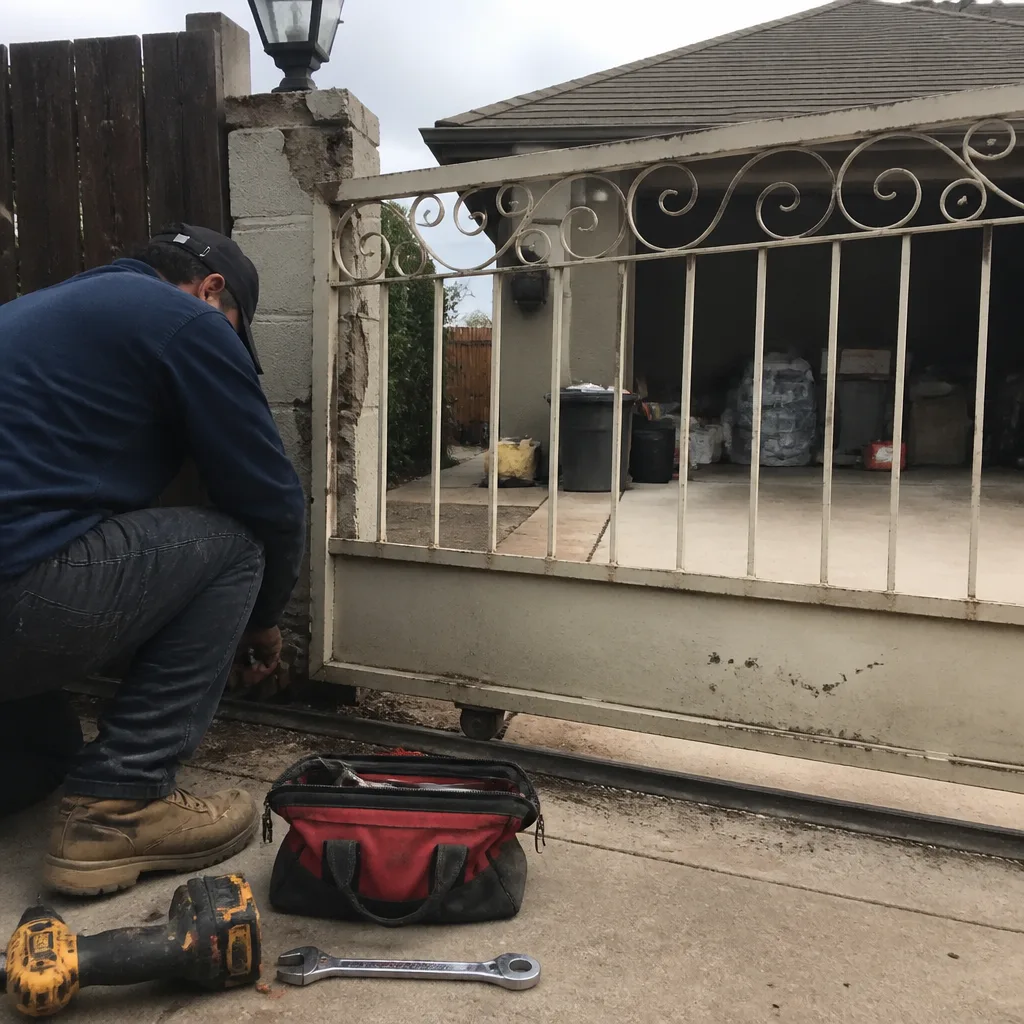 Before
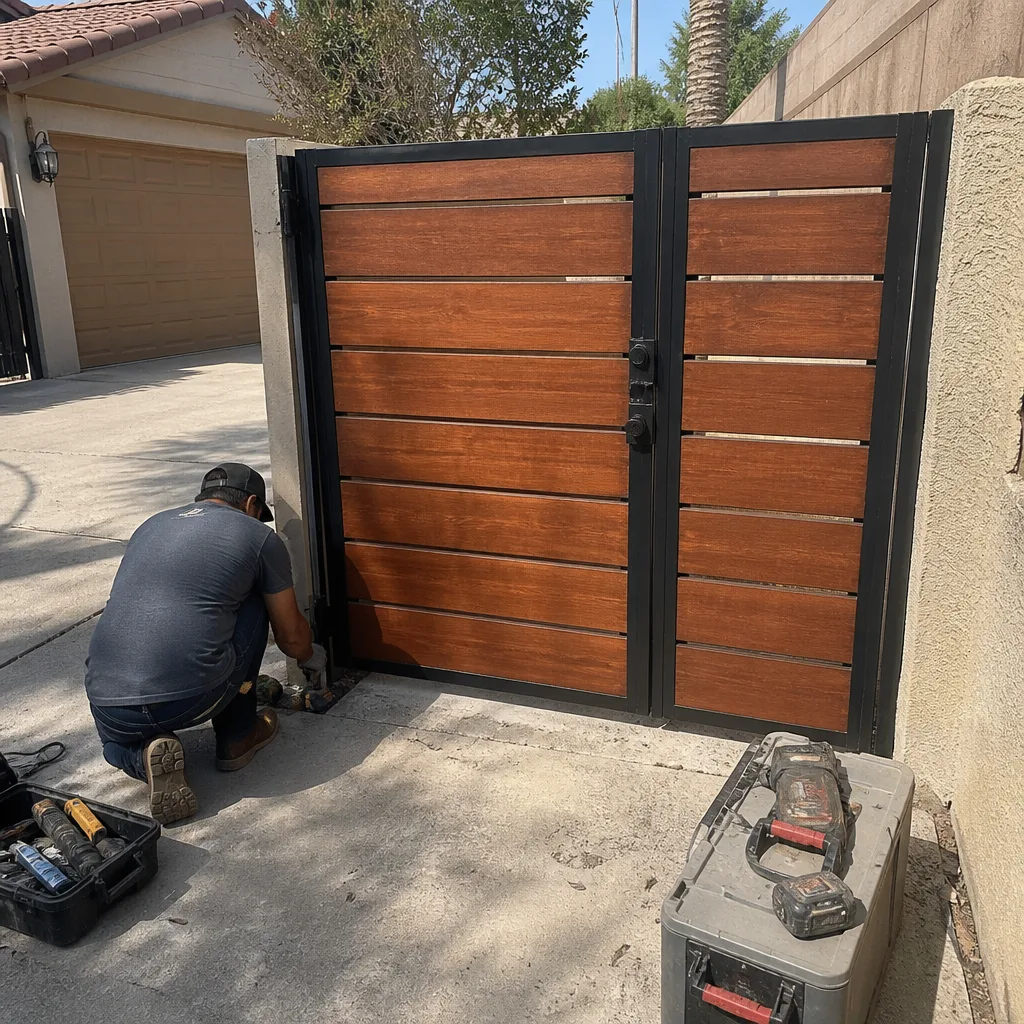 After
AfterMighty Mule Keypad & Intercom Repair: The Mesa Owner’s Guide
We stock and install Mighty Mule-compatible keypad and intercom repair in Mesa, with most jobs running $180-$340 installed and same-day service available when you call before noon. The keypad or intercom fails when the membrane switches wear through, the speaker coil cracks in dry heat, or the low-voltage wiring at the gate post corrodes from irrigation runoff and monsoon moisture cycling.
Most Mesa homeowners figure out something’s wrong when the keypad still lights up but doesn’t beep on button press, or when visitors press the call button and hear static instead of the chime inside the house. Sometimes the gate opens on its own because the intercom’s relay is sticking closed after years of Arizona dust working into the contact points. We’ve traced enough of these in Dobson Ranch and the East Valley to know the failure pattern before we pull the cover.
Which Mighty Mule Models This Applies To
The keypad and intercom units we’re talking about cover the Mighty Mule FM137, FM136, FM200, and the older FM500 series wireless intercom systems. The FM137 and FM136 are the surface-mount keypads you’ll see on most residential swing and slide gates in Mesa; the FM200 is the wireless intercom with the indoor base station that rings through to a handheld or wall-mounted receiver.
To identify yours, pop the keypad cover and read the label on the back of the circuit board, not just the outer case. Mighty Mule printed the series number in small type near the terminal strip. The FM136 and FM137 look nearly identical from the front, but the FM137 added the “party mode” intercom feature and uses a different membrane matrix. If you’re holding an FM500, the wireless frequency is 900 MHz and the indoor base is a larger white box; parts for that series are getting scarce, though we still stock the speaker modules and relay boards.
OEM Mighty Mule keypads run higher and carry the factory 12-month warranty. We also install quality aftermarket equivalents from US Automatic and Aleko for the FM136/FM137 form factor, which match the mounting hole pattern and voltage spec (12-24 VAC/DC) at roughly 30% less. The aftermarket units don’t carry the Mighty Mule logo, but the membrane material on the ones we use is actually thicker than the OEM, which matters in Mesa’s UV exposure. We don’t push one over the other; we stock both and quote both in writing under Clause 1.
Signs Your Mighty Mule Keypad & Intercom Repair Is Failing
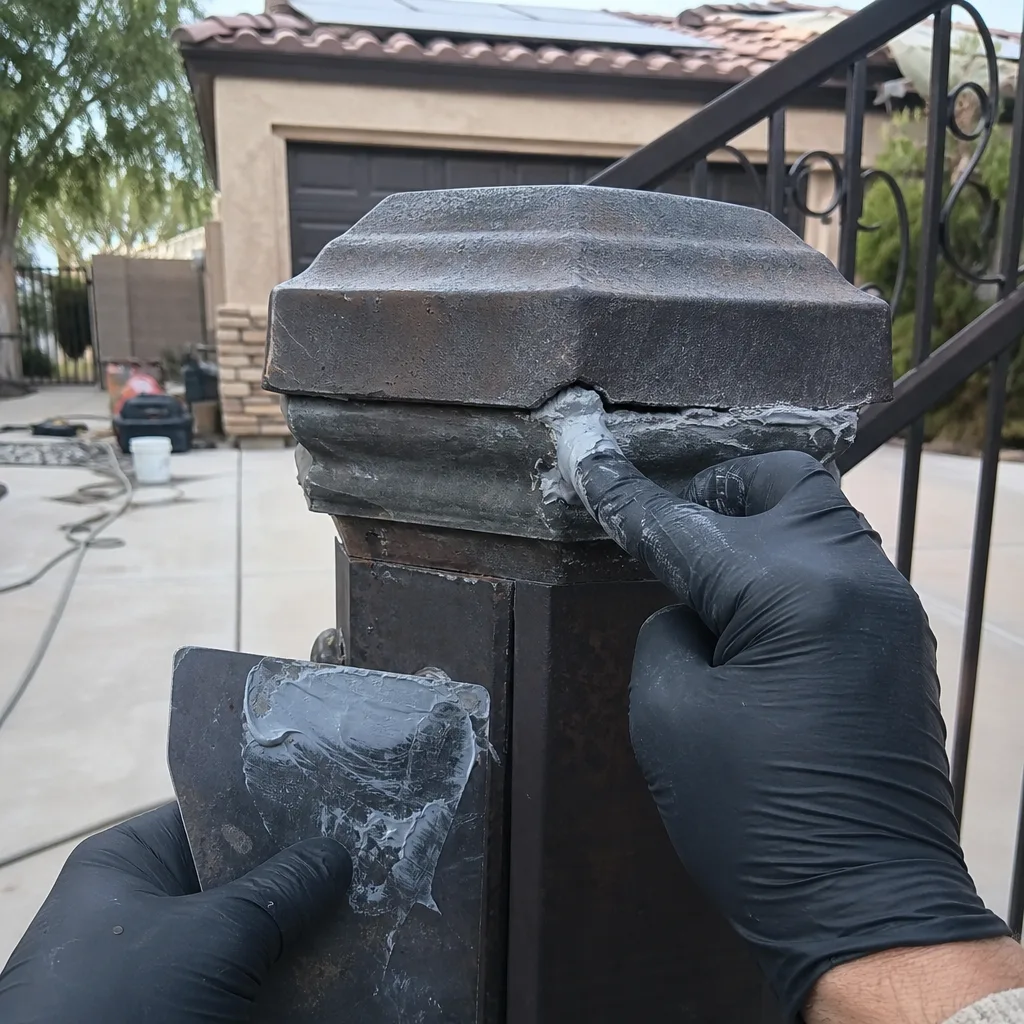
- Buttons light but don’t register. The LED backlight runs on a separate circuit from the membrane switch matrix. When the conductive layer beneath the buttons cracks from thermal cycling, you get illumination without input. In Mesa, we see this most on west-facing gates where summer surface temps on the keypad housing hit 140°F-plus by 3 p.m.
- Intercom transmits static or drops out entirely. The speaker cone dries and cracks in low humidity, and the antenna connection on the FM200 series loosens from gate vibration. We check the antenna first; it’s a $12 part versus a full intercom replacement.
- Gate opens without code entry. This is the stuck relay we mentioned. The intercom or keypad sends a continuous “open” signal because the contact points are fused by arcing. It’s a security issue, not just a nuisance, and we treat it as a same-day priority.
- Keypad works in morning, fails by afternoon. Heat expansion separates a cold solder joint on the board. We’ve resoldered these successfully, but only when the joint is accessible and the board isn’t also UV-brittled. Most of the time, replacement is the honest call.
- Moisture inside the housing after monsoon season. The gasket on FM137 units shrinks after three to four Arizona summers. Once water reaches the terminal strip, corrosion spreads to the low-voltage wiring run. We replace the gasket, the terminal block, and any wire back to the first dry splice.
 Before
 After
AfterReplacement Cost & What’s Included
| Service | Price Range |
|---|---|
| FM136/FM137 keypad replacement (OEM) | $220-$290 |
| FM136/FM137 keypad replacement (aftermarket) | $180-$240 |
| FM200 intercom base + outdoor station | $280-$340 |
| Individual component repair (speaker, relay, antenna) | $95-$160 |
| Low-voltage wiring repair/replacement | $85-$140 per run |
The range depends on three things: whether we can reuse the existing mounting post and conduit, how far the low-voltage run extends back to the gate operator, and whether the failed part damaged anything downstream. Every quote is written and handed over before we pick up a tool, per Haven Standard Clause 1. The 365-Day Done Right Promise covers all completed work; if the keypad fails again in that window, we make it right at no charge.
Under Clause 4, you get a photo log of the old part, the wiring termination, and the new unit’s settings before we leave. The part number, serial, and our limit-switch or code settings are recorded in your job file. Find it, price it, fix it - then document it so nobody’s guessing later.
DIY or Call Us?
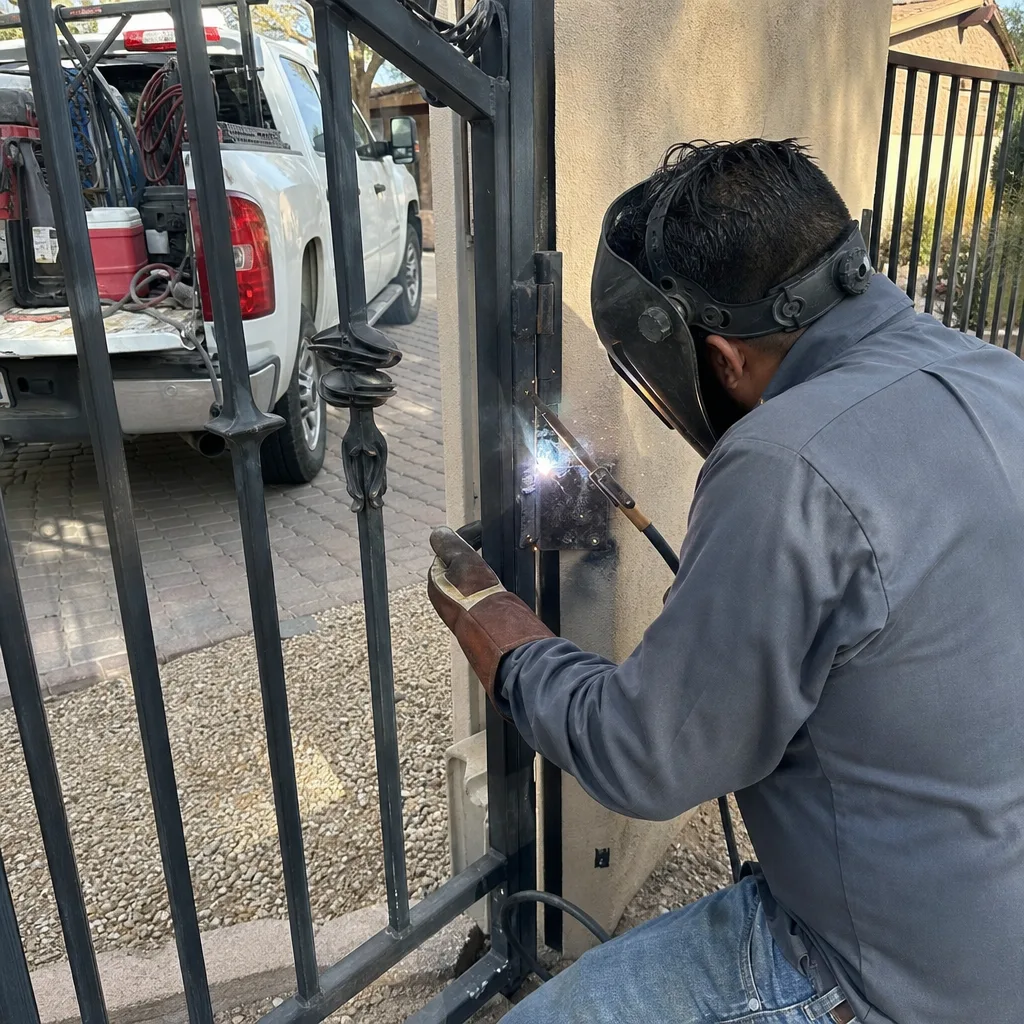
There’s no high-tension spring or lethal voltage here, but there are two honest gotchas. First, Mighty Mule keypads store the access codes in volatile memory; disconnect power without the programming guide handy and you’re rebuilding the user list from scratch. Second, the low-voltage wiring at the gate post is often spliced underground with waterproof nuts that aren’t actually waterproof after five Mesa summers. A homeowner can swap the keypad and wonder why it still doesn’t work, not realizing the fault is six feet back in a corroded splice they didn’t know existed.
What you can safely check: verify 12-24 V at the terminal strip with a multimeter, confirm the antenna isn’t snapped off on an FM200, and try a factory reset per the manual. What we handle: tracing the wiring run, identifying whether the fault is the keypad, the intercom, the operator’s receiver board, or the transformer output. Most Mesa calls we run for “keypad dead” turn out to be the transformer or the wiring, not the keypad at all. Call (520) 666-6834 and we’ll sort it without the guesswork.
FAQs
In Mesa’s climate, expect four to six years from an FM136 or FM137 before the membrane or gasket fails; west-facing units with direct afternoon sun tend toward the shorter end. The speaker in an FM200 intercom usually goes first, around year five, from dry-heat cone fatigue. Call (520) 666-6834 and we’ll check whether you’re due or whether a simple component swap buys you another two years.
Sometimes. We can resolder cold joints, replace individual speakers or relays, and clean corrosion from terminal blocks. We don’t recommend membrane replacement; the aftermarket membranes don’t seat reliably in the OEM housing, and the labor to attempt it approaches replacement cost. We’ll tell you straight after diagnosis whether repair or replacement is the better value, and we’ll put that in writing before any work starts.
A straightforward keypad replacement on existing wiring takes 45 minutes to an hour, including programming your codes back in and testing all user slots. If we need to pull new low-voltage wire or replace a transformer, plan on two to three hours. We don’t charge by the hour; the written price covers the completed job regardless of time.
Yes. We carry FM136 and FM137 keypads in both OEM and aftermarket, FM200 speaker modules and relay boards, antennas, transformers, and 18/2 low-voltage wire. We also stock parts for LiftMaster, Ghost Controls, and DoorKing systems on the same truck, so if your gate operator needs attention while we’re there, we handle it without a return trip. Not every Mesa gate company keeps Mighty Mule inventory on hand; we do, because it’s one of the nine brands we service and we don’t steer customers toward replacement when repair is the right call.
Written by Adrian Vance, Owner, Vance Gate Repair Mesa at Vance Gate Repair Mesa, serving Mesa and nearby areas.