
Free on-site gate assessment - hinges, posts, and your LiftMaster or Nice gate operator checked before anything is quoted
The assessment is free and the quote is the invoice.

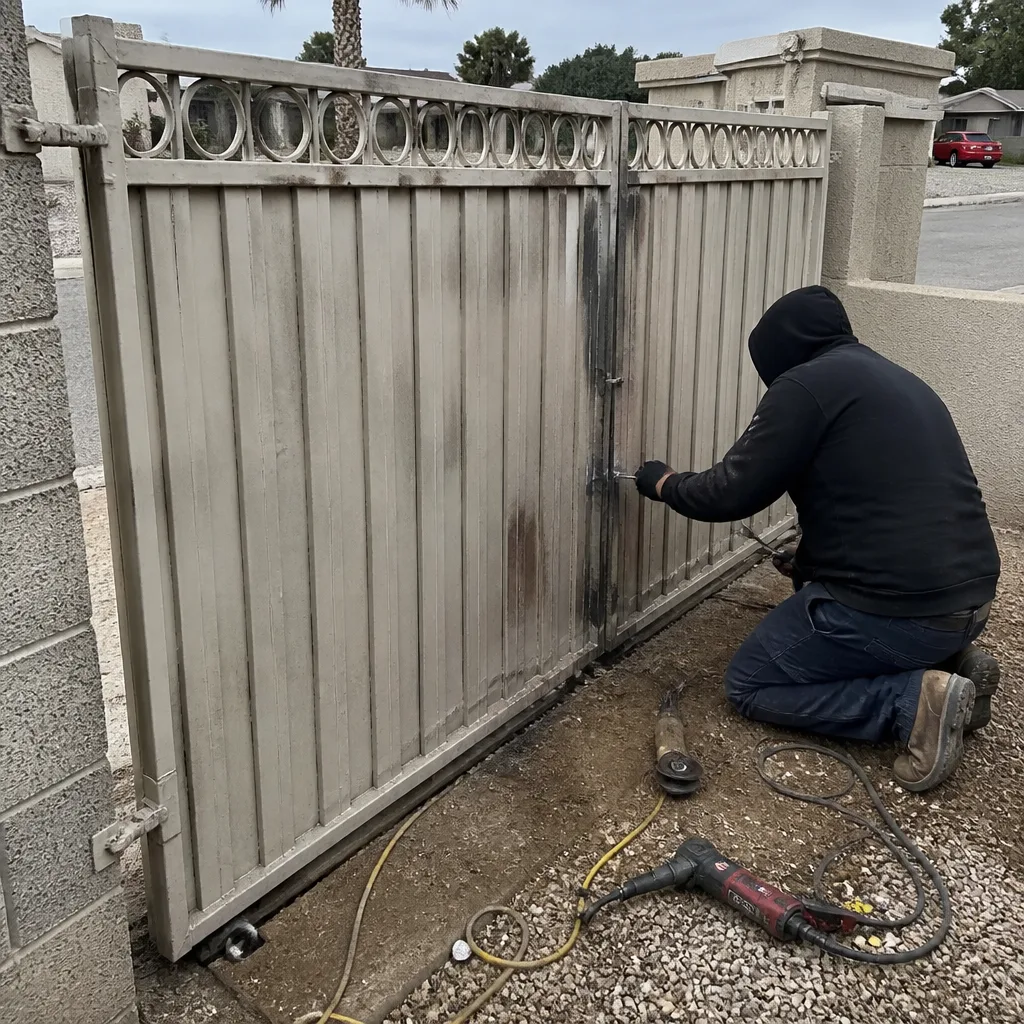 Before
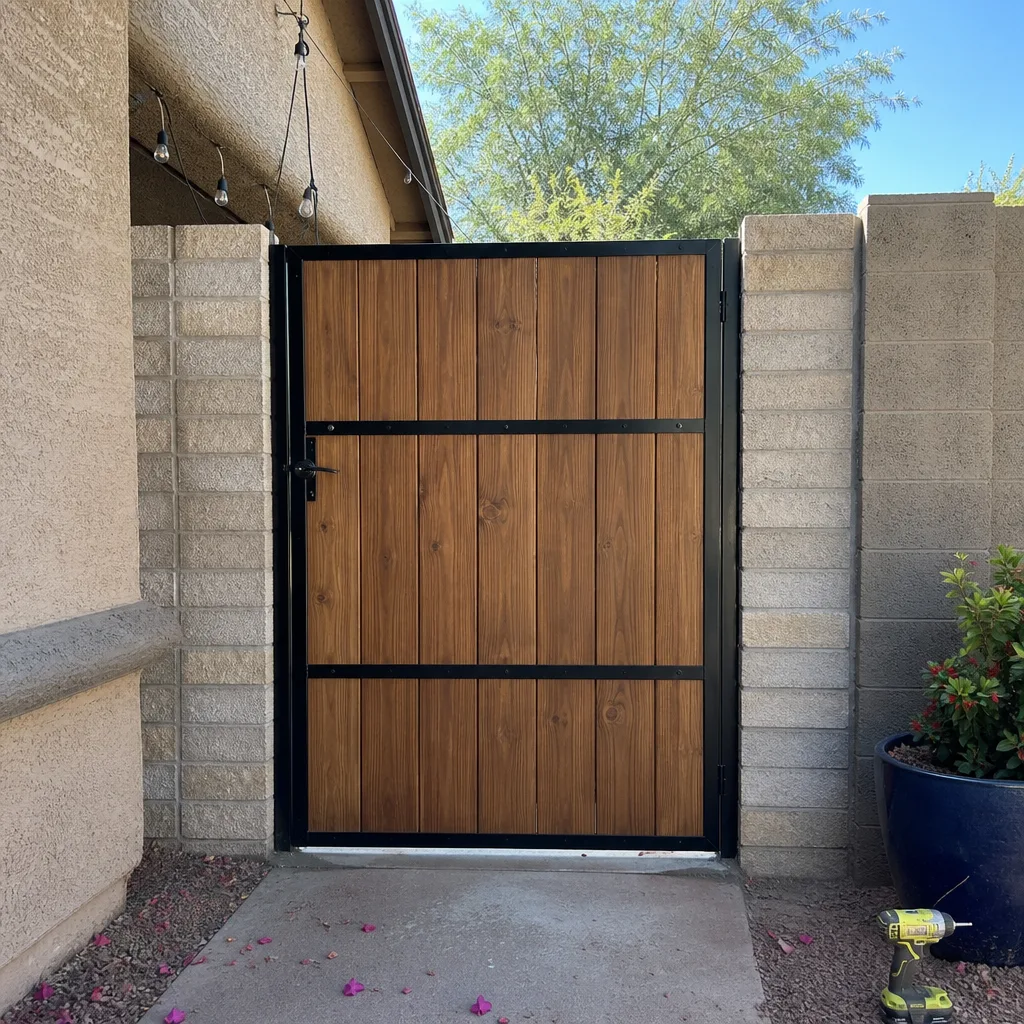 After
After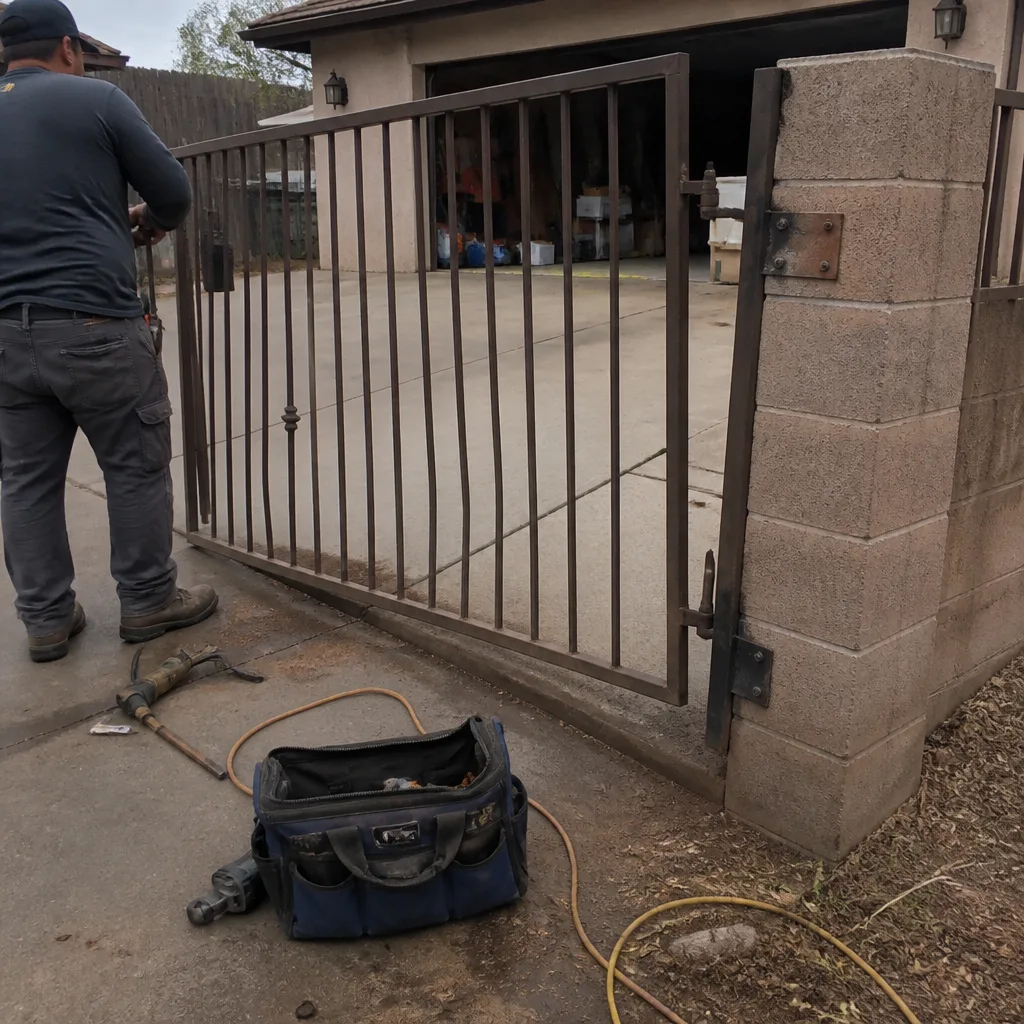 Before
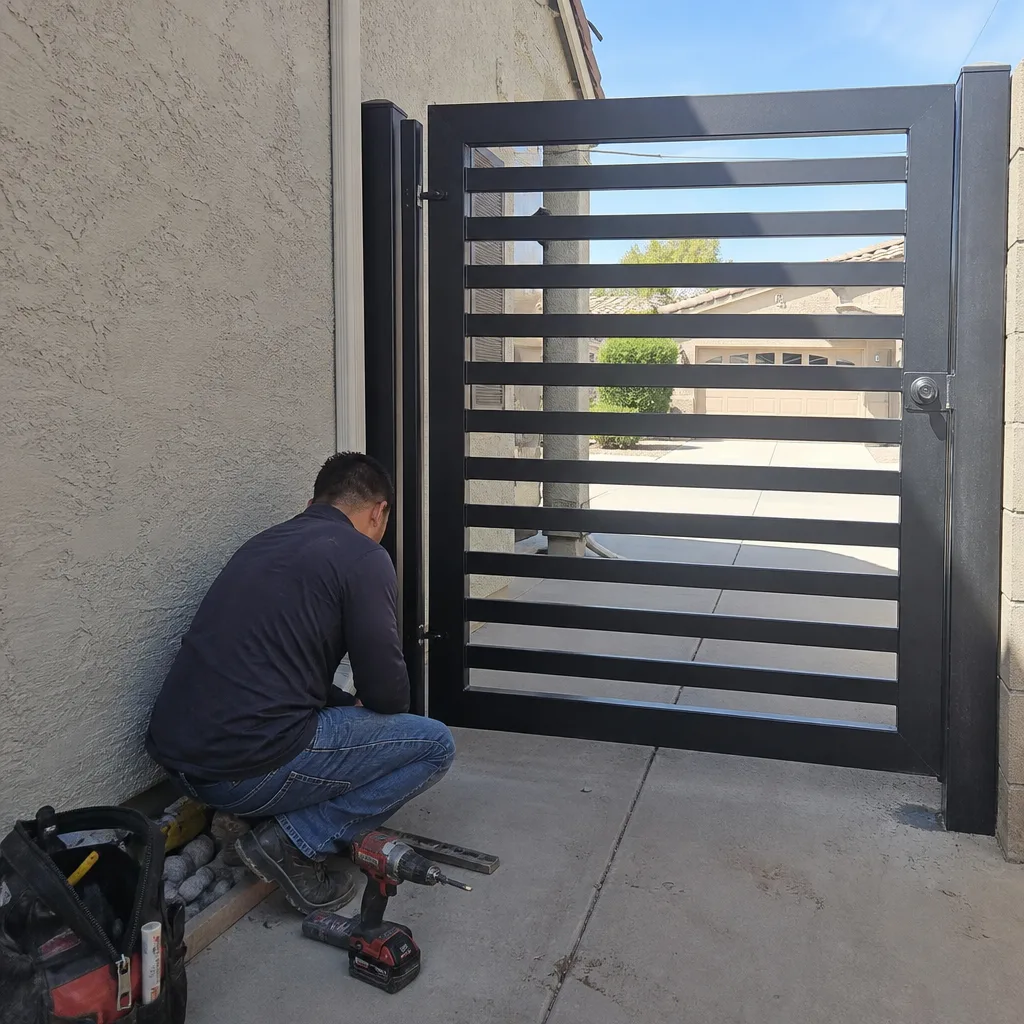 After
After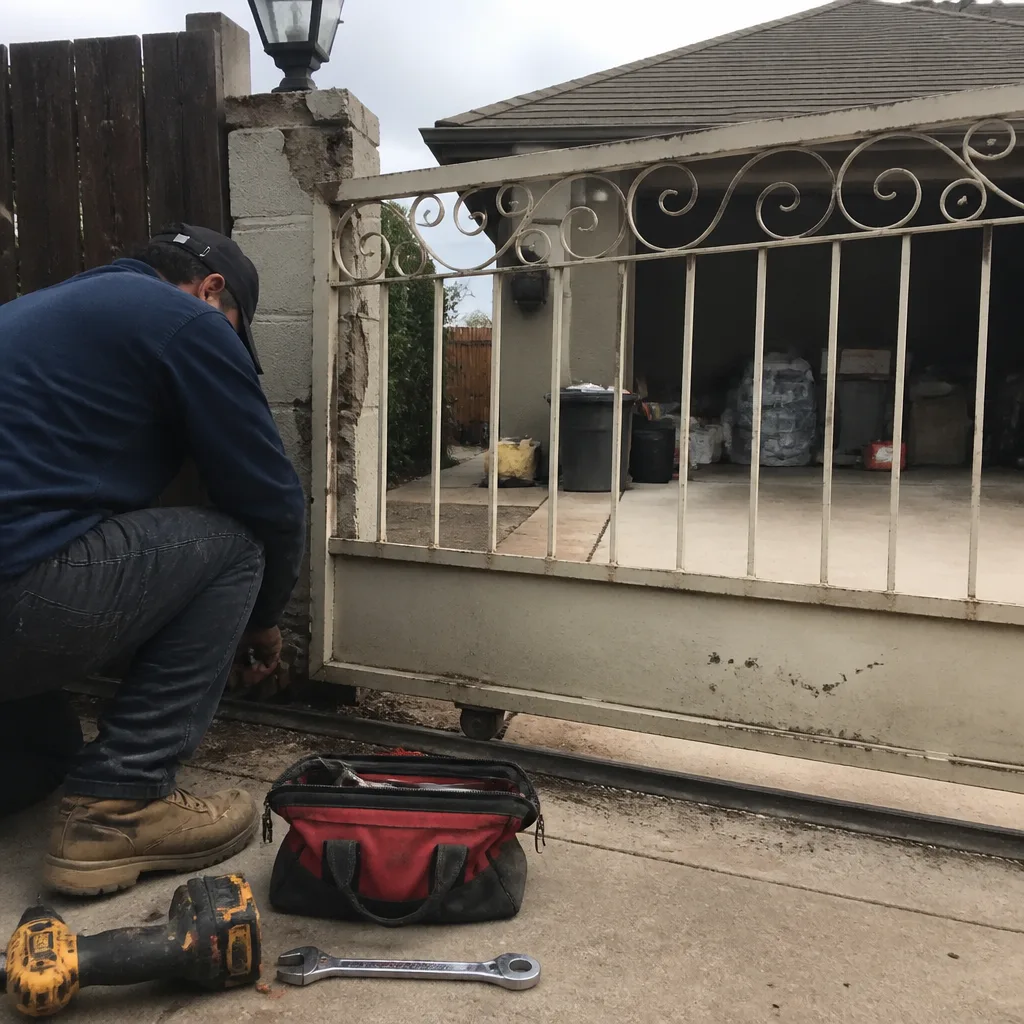 Before
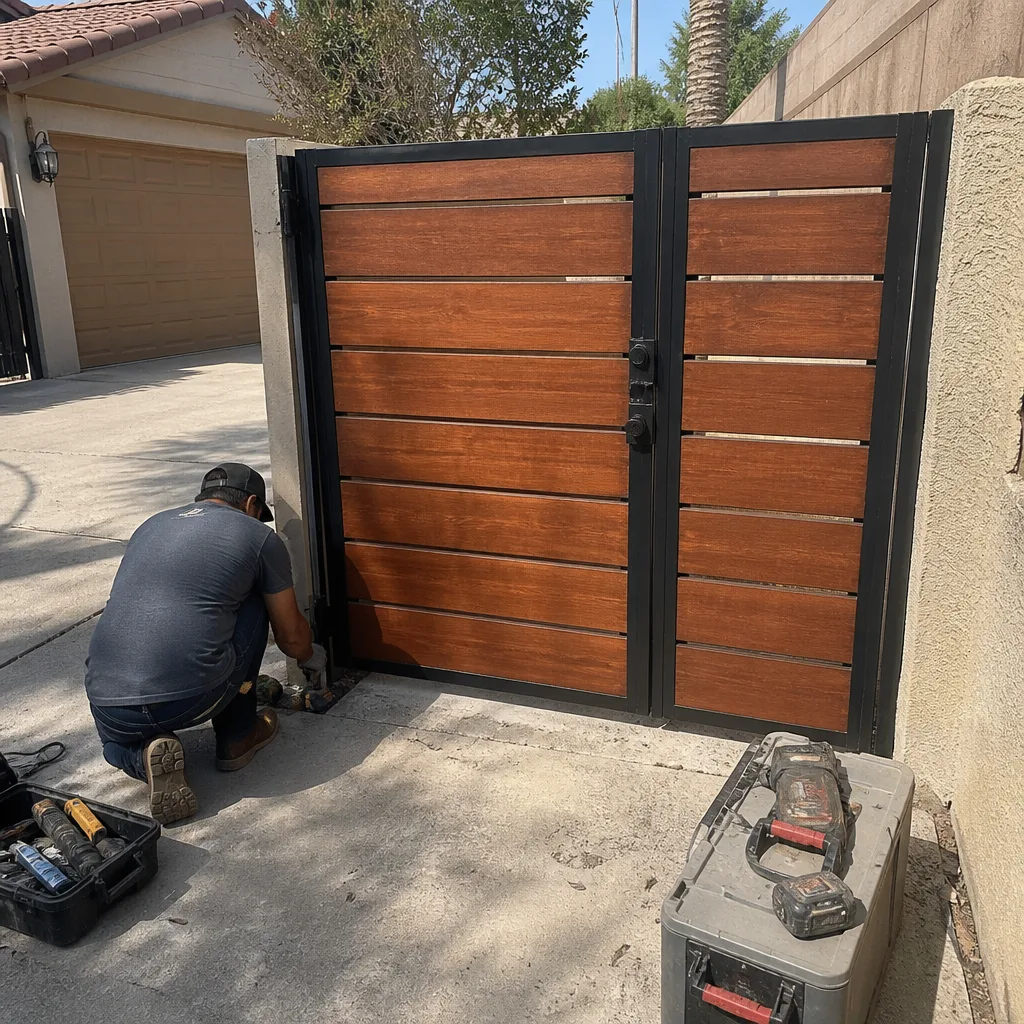 After
AfterFAAC Access Control Installation: The Mesa Owner’s Guide
FAAC access control installation in Mesa typically runs $1,200-$2,800 for a complete keypad, card reader, or telephone entry system, depending on whether we’re running new low-voltage cable or integrating with existing FAAC gate operators. Most FAAC access control jobs in Mesa are scheduled within 24-48 hours, measured on-site, and installed once parts are confirmed - we don’t guess at wiring distances over the phone. Homeowners usually discover a failing FAAC access system when the keypad stops responding to PIN entry, the card reader flashes red on valid credentials, or the telephone entry module dials out but won’t release the gate - often during our hottest months, when heat stress on outdoor electronics peaks.
Which FAAC Models This Applies To
FAAC access control hardware breaks down into a few distinct product lines, and matching the right component matters more than with most brands because FAAC uses proprietary communication protocols between its entry devices and gate operators.
The FAAC XK keypad series (XK13, XK15, XK30) remains the most common retrofit we see in Mesa’s older gated communities, especially around Dobson Ranch and the original Sun Lakes-adjacent developments. These keypads communicate via simple relay or FAAC’s own bus protocol, depending on the vintage. The FAAC XS keypad replaced the XK line for residential swing and slide gates, adding backlit buttons and a slightly narrower housing - same mounting footprint, but the terminal block orientation changed, which matters when you’re fitting into an existing masonry pillar.
For telephone entry, the FAAC 746 and 844 series units are still widely installed in Mesa’s light commercial and HOA properties. The 746 uses a two-wire connection to the FAAC control board; the 844 adds proximity card capability that requires a separate 12V feed. We’ve found that aftermarket proximity readers claiming “FAAC compatible” often lack the proper Wiegand output mapping for the 844 - the LED flashes, the card reads, but the relay never triggers. We stock OEM FAAC readers for that reason, and we’ll tell you before we quote which route makes sense for your specific board revision.
The FAAC E024S control board and its variants (E145, E024) are the brains that tie everything together. If you’re adding access control to an existing FAAC operator, we check the board’s auxiliary relay capacity first - some early E024 boards shipped with only one programmable relay, which means either keypad or safety loop, not both, without a relay expansion module.
Signs Your FAAC Access Control Installation Is Failing
- Keypad buttons register intermittently or not at all. On the FAAC XK and XS series, the membrane switch matrix degrades from UV exposure and monsoon humidity cycling. In Mesa, we typically see this failure mode after 6-8 years of direct sun exposure, sooner if the keypad face is south-facing with no overhang.
- Valid PIN or card produces a red LED or no response. This points to either a corrupted credential database in the entry device or a failed communication link to the FAAC control board. We test the voltage at the keypad terminal block first - anything below 10.5V DC on a 12V system causes erratic behavior that looks like a software fault.
- Telephone entry dials but gate doesn’t release after tenant presses 9. The DTMF decoder in the FAAC 746/844 series can lose calibration, or the auxiliary relay that simulates a button press to the gate board may have welded contacts. We see this more often in Mesa’s 480-area-code exchanges where voltage drop on long loop runs compounds the issue.
- Proximity cards work at 2 inches but not at the rated 4-inch range. The FAAC RP reader antenna degrades gradually; we’ve measured output on failing units at 40% of factory spec. Heat is the accelerator - readers mounted on steel posts in direct Mesa summer sun run 30°F above ambient, which cooks the tuning capacitor over time.
- System works fine at 8 AM, fails by 3 PM. Thermal shutdown in the FAAC power supply or control board. We log this with a non-contact thermometer during our site visit - if the supply housing hits 140°F, the internal regulator drops out. Shading, ventilation, or upgrading to a higher-temp-rated supply solves it.
 Before
 After
AfterReplacement Cost & What’s Included
| Component | Typical Installed Price in Mesa | What’s Included |
|---|---|---|
| FAAC XK/XS keypad replacement | $380-$620 | OEM keypad, mounting adapter if footprint changed, weatherproofing, credential reprogramming, written test record |
| FAAC 746/844 telephone entry module | $890-$1,450 | Module, phone line integration or cellular dialer option, programming of up to 100 directory numbers, documentation of all programmed codes |
| FAAC proximity reader (RP series) | $340-$520 | Reader, Wiegand cable run if needed, mounting hardware, card enrollment of existing valid cards |
| Complete access control system (new installation) | $1,200-$2,800 | Entry device, low-voltage cable run to operator, control board integration or relay module, power supply, testing and documentation |
| E024S board replacement with access control integration | $780-$1,180 | Board, firmware matched to operator model, all auxiliary relays configured, limit settings preserved and documented |
The range depends on three factors: cable distance from entry point to gate operator (we measure on-site, never estimate), whether we’re integrating with an existing FAAC operator or installing standalone, and whether the existing low-voltage infrastructure meets current NEC requirements for outdoor wet locations. We quote the full installed price in writing before any work starts - that’s Haven Standard Clause 1. The 365-Day Done Right Promise covers all access control work; if the reader range drops or the keypad flakes within that year, we make it right at no charge.
DIY or Call Us?
There’s a safe middle ground here, and then there’s the part where a mistake costs more than the original call would have.
What you can check safely: verify that the FAAC keypad or reader has 12-14V DC at the terminal block with a multimeter. Low voltage causes most “mysterious” failures. Check that the photocell or safety loop isn’t latched open - a red LED on the FAAC control board usually tells you this. Confirm that the circuit breaker feeding the gate operator hasn’t tripped; access control devices typically draw power from the operator’s internal supply, not independently.
Where DIY goes wrong: programming FAAC credentials requires entering a master code sequence that, if botched, can lock the device and require a factory reset with specialized software. The telephone entry modules store directory numbers in non-volatile memory that can be corrupted by power interruption during programming - we’ve been called to Mesa homes where the homeowner spent a weekend re-entering numbers, only to lose them all to a monsoon-induced power flicker. And any work inside the FAAC operator enclosure exposes you to 120V AC mains and charged capacitor banks on the control board. We don’t recommend it.
If you’re holding a FAAC part number and aren’t sure whether it’s the right match for your operator board, call us at (520) 666-6834. We’ll cross-reference it over the phone - no charge for the verification, and we’ll tell you honestly if it’s a job you can handle or one where our documentation habit will save you trouble later.
FAQs
Most FAAC keypads and readers last 7-10 years in Mesa’s climate, but we’ve replaced units as early as 4 years when they’re mounted on unshaded west-facing pillars. The monsoon humidity cycle - dry May, wet July-August - accelerates seal degradation on the membrane switches. Telephone entry modules tend to outlast keypads because they’re typically mounted in shaded call boxes. Call (520) 666-6834 and we’ll assess your specific mounting location during a free site visit.
Sometimes. A loose terminal block or corroded low-voltage splice is a 20-minute fix. But FAAC doesn’t sell individual keypad membranes or reader antenna components - they ship complete assemblies. We evaluate this on every call: if the housing is intact and the failure is in the wiring path, we repair. If the electronics are faulted, we quote replacement with the exact OEM part number. The written price we give you before work starts includes both options when repair is viable.
A straightforward keypad swap on an existing FAAC operator takes 45-90 minutes, including credential reprogramming and testing. A new telephone entry system with underground low-voltage cable run to a slide gate operator typically takes a half day. We schedule by the job, not the hour - the price is fixed, so there’s no pressure to rush. Under Clause 4 of our Haven Standard, you get a photographed record of every connection and setting before we leave.
We stock the most common FAAC keypad, reader, and relay modules on our Mesa-area trucks - the XK15, XS, RP proximity reader, and standard 2-relay expansion boards. Less common items like the 844 telephone entry with built-in camera or legacy 746 modules for older installations are sourced overnight from our distributor. We’ll confirm stock when you call and schedule accordingly; we don’t send a technician to tell you “the part’s on order.”
Written by Adrian Vance, Owner, Vance Gate Repair Mesa at Vance Gate Repair Mesa, serving Mesa and nearby areas.